Choosing the right flooring matters when your training includes racks, dumbbells, kettlebells, or machines. The best gym flooring for heavy weights should cushion impact, resist denting, and stay locked in place under real-world use.
Below, we focus on options that balance thickness, durability, traction, and ease of installation so you can match the floor to your lifting setup and room size.
Best 10 Gym Flooring for Heavy Weights Picks for 2026
Heavy-Lift Tile Pick
Durable ½ in TPE Tiles for Heavy Training

- ½-inch TPE feels rubber-like, not foam
- Interlocking design helps reduce gapping
- No odor and easy wipe-clean care
Best For: Garage lifters who want firm, durable tiles for heavy equipment
Balanced Comfort Pick
Rubber Top with Cushioned Foam Base

- Dual-layer design adds grip and cushioning
- Handles equipment and vigorous movement
- Interlocking tiles with detachable borders
Best For: Mixed-use home gyms that need comfort and traction
Reinforced Tile Upgrade
0.56" Heavy-Duty Interlocking Rubber-Top Tiles

- EVA core plus EPDM rubber surface
- Built for heavy equipment and lifting
- Shock-absorbing, low-noise design
Best For: Home gyms needing durable, grippy tiles for heavy training
Dual-Layer Heavy-Duty Pick
AIRHOP 0.79in Thick 48 Sq Ft Exercise Equipment Mats

- 0.79-inch dual-layer rubber and EVA build
- Made for heavy machinery and weight-room protection
- Interlocking tiles with secure larger locks
Best For: Thicker home gym flooring for heavy weights and equipment
Budget-Thickness Runner Up

- 0.56-inch rubber top over EVA foam
- Non-slip and abrasion-resistant surface
- Helps reduce noise and protect against weights
Best For: Lower-profile home gym flooring with solid protection
Low-Profile Heavy Lift Choice
AIRHOP 0.56in Thick 48 Sq Ft Exercise Equipment Mats

- 0.56-inch dual-layer rubber and EVA design
- Made to protect floors from heavy weights and dents
- Waterproof, interlocking tiles for easy setup
Best For: Thinner heavy-lift flooring for compact home gyms
Heavy-Duty Coverage Pick
SUPERJARE 30" x 30" Rubber Top Gym Flooring
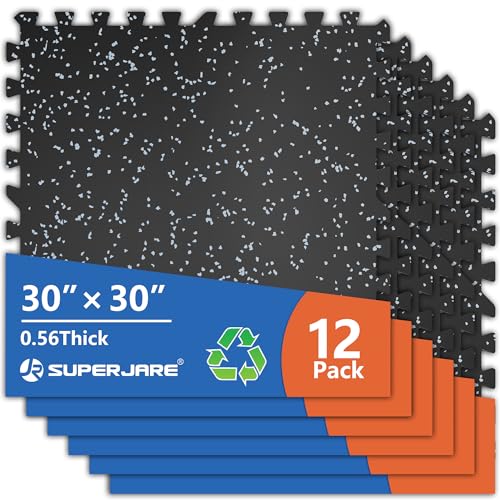
- 30" x 30" tiles reduce seams and shifting
- Rubber top with EVA foam base for durability
- Good for heavy equipment, impact work, and easy cleanup
Best For: Lifters who want wider coverage and a stable, cleaner-looking gym floor
Thickest Budget-Sized Set
0.79" Heavy Duty Interlocking Gym Mats
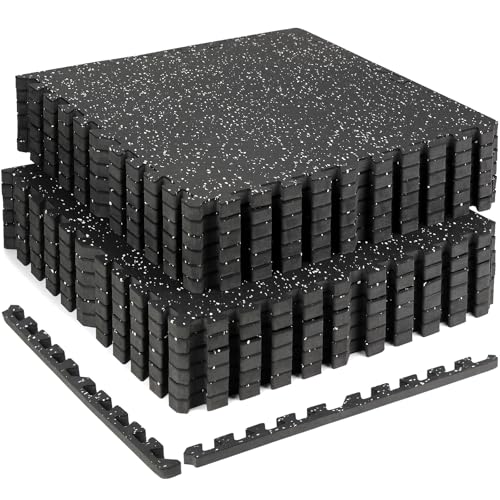
- 0.79" thick for extra cushioning and noise reduction
- Rubber top improves grip and abrasion resistance
- 24" x 24" interlocking tiles are easy to assemble
Best For: Garage or home gym users who want a thick, compact floor setup
Best Grip and Noise Control
SUPERJARE 0.79" Rubber Top Gym Flooring

- 0.79" thickness adds durability and cushioning
- Rubber top improves traction for lifting
- EVA foam base reduces noise and vibration
Best For: Lifters who want grip, shock absorption, and quieter workouts
Heavy-Lift Tile Pick – Durable ½ in TPE Tiles for Heavy Training
If you want gym flooring for heavy weights that feels firmer than foam but still adds some cushion, this Baselayer Performance Series set is built for that job. The ½-inch TPE tiles are made for weights and heavy equipment, with a no-slip texture, low odor, and a flush interlocking fit that helps the floor stay stable through training.
Best For: Garage or home gym setups that need durable, rubber-like tile flooring for lifting and high-impact work.
Pros:
- Premium TPE construction offers a rubber-like feel without foam
- Interlocking tabs create a secure, low-gap fit
- No odor, non-toxic material, and easy damp-cloth cleaning
- Cord channels underneath help reduce trip hazards
Cons:
- Edges and corners are sold separately
- 15 sq ft coverage is relatively small per pack
This is a practical pick if you want a firmer surface than EVA foam and value easy maintenance plus a cleaner-looking installation. It’s especially appealing for compact lifting zones where durability matters more than plush cushioning.
Heavy-Duty Rubber Option – 0.56" Thick Heavy-Duty Gym Tiles
For buyers comparing gym flooring for heavy weights, this thick rubber tile set focuses on protection, grip, and durability. The 0.56-inch dense rubber build is meant to absorb shock, reduce noise, and hold up under repeated use, while the textured non-slip surface helps keep equipment stable during workouts.
Best For: Home gym users who want thick, heavy-duty rubber mats for weightlifting and cardio equipment.
Pros:
- Dense rubber construction helps protect floors and reduce noise
- Textured non-slip surface improves equipment stability
- 0.56-inch thickness adds a sturdy, cushioned feel
- Non-porous surface wipes clean easily
Cons:
- Coverage is 48 sq ft, so larger rooms may need multiple sets
- Heavier rubber tiles may be less convenient to move often
This option is a straightforward choice if your top priorities are floor protection and a stable platform for equipment. It gives you a thick rubber surface without extra complexity, making it a strong all-around home gym base.
Balanced Comfort Pick – Rubber Top with Cushioned Foam Base
This SUPERJARE set is a flexible choice if you need gym flooring for heavy weights plus extra comfort underfoot. It combines a high-density EVA foam base with a rubber top, giving you a cushioned surface with better traction for lifting, kettlebells, treadmills, and other equipment.
Best For: Home gym owners who want a cushioned, grippy floor that can handle equipment and mixed workouts.
Pros:
- Dual-layer build pairs foam cushioning with a rubber top
- Designed to handle heavy exercise equipment and vigorous movement
- Rubber surface improves traction and grip
- Interlocking edges and detachable borders make layout easy
Cons:
- At 0.4 inches thick, it’s thinner than some heavy-duty rubber-only options
- Coverage may be more than needed for smaller workout areas
If you want a balance of comfort and stability, this set lands in a useful middle ground. It’s especially practical for mixed-use spaces where you lift weights but also want a softer feel for general training.
Reinforced Tile Upgrade – 0.56" Heavy-Duty Interlocking Rubber-Top Tiles
If you’re shopping for gym flooring for heavy weights and want a more durable, equipment-friendly surface, this rubber-top tile set is built for that role. The high-density EVA core and EPDM rubber surface are designed to support heavy equipment, resist tearing, and provide grip and shock absorption for a home gym or garage setup.
Best For: Buyers who want heavy-duty interlocking flooring for lifting, machines, and full-body training.
Pros:
- High-density EVA core with durable EPDM rubber top
- Textured surface offers strong traction and stability
- Cushioned base helps absorb impact and reduce noise
- Interlocking format with detachable borders for a cleaner finish
Cons:
- Only 48 sq ft per set, so larger gyms need more than one package
- Hand-wash care is less convenient than simple wipe-clean maintenance
This is a strong pick when you want floor protection and long-term durability in a modular tile format. It should suit lifters who need dependable traction and a surface that can stand up to regular heavy use.
Dual-Layer Heavy-Duty Pick – AIRHOP 0.79in Thick 48 Sq Ft Exercise Equipment Mats
If you want gym flooring for heavy weights that can take real abuse, this AIRHOP tile set is built with a textured rubber top and high-density EVA foam base for grip, cushioning, and floor protection. The thicker 0.79-inch profile is aimed at home gyms where dumbbells, kettlebells, benches, and even heavier equipment need a stable surface that helps reduce noise and vibration.
Best For: Garage or home gym setups that need extra thickness and a more substantial feel under heavy equipment.
Pros:
- 0.79-inch dual-layer build with rubber top and EVA foam bottom
- Designed to support heavy machinery and protect against scratches, scuffs, and dents
- Interlocking tiles with larger locks for a secure fit
- Waterproof and easy to wipe clean
Cons:
- Only covers 48 sq ft, so larger spaces may need multiple sets
- Heavier 14.4 kg package may be less convenient to move around
This is the strongest match of the three if thickness and extra cushioning are top priorities. It leans toward a more protective, heavy-duty feel, which makes it a solid pick for weight-focused training areas.
Budget-Thickness Runner Up – 0.56" Rubber Top Gym Flooring
For gym flooring for heavy weights on a tighter thickness profile, this 0.56-inch tile set uses a rubber top with EVA foam underneath to provide grip, abrasion resistance, and cushioning. It is positioned for home gyms, garages, and basements where you want a non-slip surface that helps protect floors from scratches and scuffs while also reducing workout noise.
Best For: Home gym buyers who want a durable interlocking floor with a lower-profile feel.
Pros:
- Double-layer rubber top and EVA foam construction
- Non-slip surface with abrasion-resistant durability
- Helps protect floors from weights, scratches, and scuffs
- EVA foam layer adds shock absorption and noise reduction
Cons:
- At 0.56 inches, it is thinner than the thickest option here
- Less cushioning than a heavier 0.79-inch mat set
This is a practical middle-ground choice if you want dependable floor protection without going as thick as the premium option. It still checks the main boxes for lifting spaces, especially if easier handling and a lower profile matter.
Low-Profile Heavy Lift Choice – AIRHOP 0.56in Thick 48 Sq Ft Exercise Equipment Mats
If you need gym flooring for heavy weights but prefer a thinner setup, this AIRHOP option uses the same dual-layer rubber top and high-density EVA foam formula in a 0.56-inch profile. It is designed to provide a tough, non-slip surface with shock absorption, floor protection, and easy interlocking assembly for garage, basement, or home gym use.
Best For: Space-conscious buyers who still want durable, weight-room-friendly tile flooring.
Pros:
- Dual-layer rubber top and EVA foam construction
- Protects floors from scratches, scuffs, and dents caused by weights and equipment
- Interlocking tiles are easy to assemble and detach
- Waterproof surface is simple to wipe clean
Cons:
- 0.56-inch thickness offers less cushioning than the 0.79-inch version
- May be better for general lifting areas than the heaviest-duty setups
This is the best fit if you want the AIRHOP build style but do not need the extra thickness of the top pick. It is still positioned for heavy weight workouts, but with a slimmer footprint that can be easier to work around.
Heavy-Duty Coverage Pick – SUPERJARE 30" x 30" Rubber Top Gym Flooring
If you want gym flooring for heavy weights that also covers a larger area with fewer seams, this SUPERJARE set is built for that job. The 30.1″ x 30.1″ tiles and 0.56″ thickness make it a practical fit for a home gym where you want steadier placement, floor protection, and a cleaner finished look.
Best For: Home gym lifters who want broad coverage, quieter training, and a durable mat setup for equipment and mixed workouts.
Pros:
- Large 30″ x 30″ tiles reduce seams and help minimize edge lifting or shifting.
- Dual-layer build combines a rubber top with EVA foam for durability and cushioning.
- Designed to handle heavy equipment and high-impact training, including weight drops and HIIT.
- Textured, non-slip, water-resistant surface is easy to wipe clean.
Cons:
- At 0.56″, it is thick, but not the thickest option in this group for very heavy lifting.
- The larger tile size may be less convenient in tight or unusually shaped rooms.
This is a solid choice if you want a balance of coverage, stability, and sound control without moving to an ultra-thick tile. It makes sense for general strength training and equipment zones where cleaner installation matters.
Thickest Budget-Sized Set – 0.79" Heavy Duty Interlocking Gym Mats
For gym flooring for heavy weights, this set stands out for thickness: each tile is 0.79″ thick, which helps with cushioning, durability, and noise reduction. The rubber top and EVA foam build is aimed at protecting floors while giving you a more forgiving surface for garage or home gym lifting.
Best For: Home gym and garage users who want extra thickness, easy assembly, and a compact 24″ x 24″ tile format.
Pros:
- 0.79″ thickness offers strong cushioning and quietness.
- Rubber-surfaced top adds grip and abrasion resistance.
- Interlocking design with removable borders makes setup and expansion simple.
- Good floor protection against scratches and scuffs in garages, basements, and home gyms.
Cons:
- Covers only 48 sq ft, so larger spaces will need more sets.
- Smaller 24″ x 24″ tiles mean more pieces and seams than oversized flooring.
If thickness is your top priority, this is one of the most practical picks here. It is especially appealing when you want a compact, easy-to-build flooring layout that can handle regular lifting and equipment use.
Best Grip and Noise Control – SUPERJARE 0.79" Rubber Top Gym Flooring
If you are shopping for gym flooring for heavy weights, this SUPERJARE set is designed to support lifting while keeping traction and noise under control. The 0.79″ thickness, EPDM rubber top, and high-density EVA foam base give it a sturdy feel for equipment zones, deadlifts, and other vigorous workouts.
Best For: Lifters who want strong floor grip, quiet cushioning, and a durable interlocking surface for a home gym or workout room.
Pros:
- 0.79″ thick construction is built for durability and tougher training use.
- Rubber top provides strong floor traction and grip.
- EVA foam base helps absorb shock and reduce noise and vibrations.
- Supports heavy exercise equipment and helps protect floors from friction and impact.
Cons:
- 48 sq ft coverage may be limiting for larger training areas.
- Best results depend on proper interlocking assembly and room layout.
This is a strong all-around option if you care most about grip, cushioning, and a quieter training area. It fits well in spaces where heavy equipment and free weights share the same floor.
How We Picked the Best Gym Flooring for Heavy Weights
For Gym Flooring for Heavy Weights, we prioritized impact protection, load support, traction, thickness, and long-term durability. We also considered whether a product is suitable for repeated drops, whether it helps reduce vibration and noise, and how easy it is to install, trim, and replace.
Quick Comparison
The fastest way to narrow your choice is by training style. Thicker tiles tend to do better under barbells, racks, and machines, while denser surfaces are better for minimizing compression and keeping equipment stable. If you need coverage for a larger area, compare the square footage per pack first, then look at tile size and edge fit.
Key Buying Factors for Gym Flooring for Heavy Weights
Thickness and Density
Thickness helps with shock absorption, but density matters just as much. A thicker floor that is too soft can compress under heavy equipment, so look for a balanced construction that supports weight without feeling spongy.
Surface Grip
A non-slip surface helps keep benches, racks, and mats from shifting during training. Good traction is especially important if you deadlift, do loaded carries, or use sleds and machines that move slightly during use.
Noise and Vibration Control
If you train in a garage, basement, or upstairs room, choose flooring that helps dampen noise and vibration. This makes lifts more comfortable and can also reduce stress on the subfloor.
Modularity and Coverage
Interlocking tiles make it easier to build a custom layout and replace damaged sections later. Check total coverage carefully so you do not end up short on space around a rack, platform, or machine area.
Material and Odor
Rubber-style tops generally offer better durability and cleaner traction, while foam-backed designs can add comfort and insulation. For enclosed spaces, low-odor materials are often more pleasant to install and live with.
Who Should Buy Which Gym Flooring for Heavy Weights?
If you are setting up a serious lifting zone with barbells or equipment that stays planted, choose the densest, thickest option you can fit into your budget. If you want broader coverage for a multipurpose training room, a slightly thinner tile with a tough rubber top may offer the best balance of protection and value. For lighter accessory work or space where comfort matters as much as impact resistance, a hybrid rubber-top and foam design can be a smart middle ground.
In short, the best Gym Flooring for Heavy Weights is the one that matches your loads, your floor type, and how often you train. Start with thickness and density, then confirm traction, coverage, and installation ease before you buy.