Choosing a rehab walking treadmill is about more than speed and features. The right model should feel stable, start slowly, and support confident daily walking during recovery.
Below, we focus on options that prioritize safety, handrail support, low-impact movement, and practical home use so you can narrow the field quickly.
Best 10 Rehab Walking Treadmill Picks for 2026
Senior Rehab Support Treadmill
Redliro 0.3 MPH Slow-Start Walking Treadmill

- Starts at 0.3 MPH for very gentle walking
- Front and side handrails improve stability
- Flat surface plus 0-2% incline options
Best For: Seniors and rehab users who need slow, steady support
Compact Recovery Walker
REDLIRO JK09F Senior Treadmill

- Extended rails help improve balance
- 0%, 1%, and 2% manual incline levels
- Foldable frame with transport wheels
Best For: Compact home rehab walking with simple senior-friendly controls
Stable Incline Rehab Walker
Walking Pad with Extra-Long Handrail
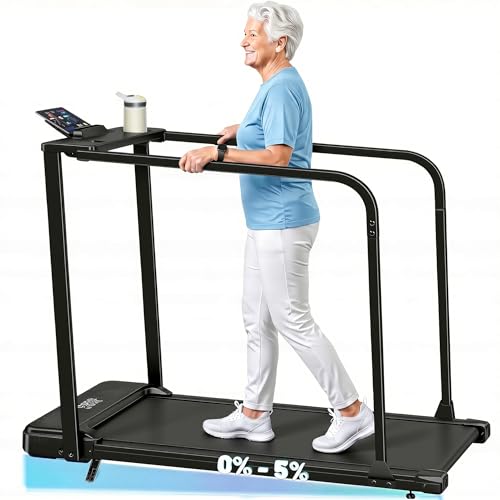
- Extra-long handrail improves stability
- 5% incline for gentle added effort
- Quiet brushless motor with remote control
Best For: Home rehab walking with mild incline and strong hand support
Joint-Friendly Home Rehab Treadmill

- Extended rails support safer walking
- Shock absorption helps protect knees and joints
- FitShow app and LED tracking add convenience
Best For: Seniors and rehab users wanting cushioned home walking with app support
Senior Stability Pick
Redliro Long-Handrail Walking Treadmill
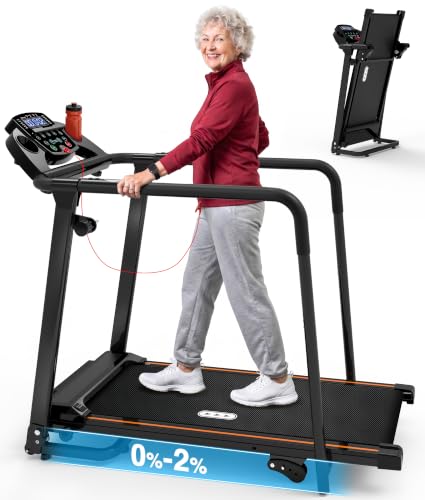
- Long handrails help support balance during walking.
- 0.5–5 mph range suits gentle rehab progressions.
- Foldable frame and wheels help with storage.
Best For: Seniors and light rehab walking at home
Clinic-Grade Rehab Choice
Body-Solid Endurance T50 Rehab Treadmill
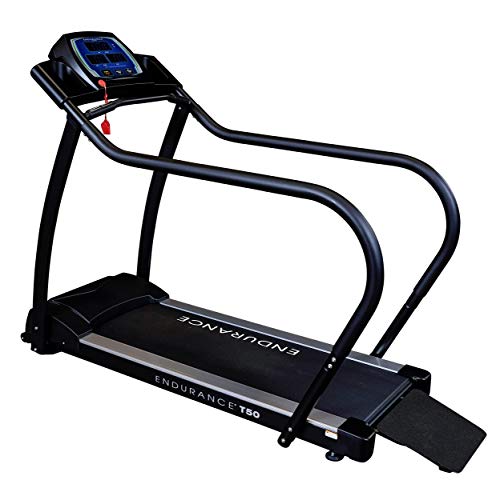
- Starts at 0.1 mph for careful recovery walking.
- Wide belt, ramp entry, and padded handrails add support.
- Heavy-duty build suits home or commercial use.
Best For: Injury rehab and mobility-focused walking
Safety-Focused Walking Pick
Yesoul Long-Handrail Rehab Treadmill

- Emergency stop and safety key boost confidence.
- Wraparound handrails support steady walking.
- Cushioned belt and quiet motor suit low-impact use.
Best For: Seniors and recovery walkers who value safety
Rehab-friendly versatility
Ksports Advanced Rehab Walking Treadmill with Handrails
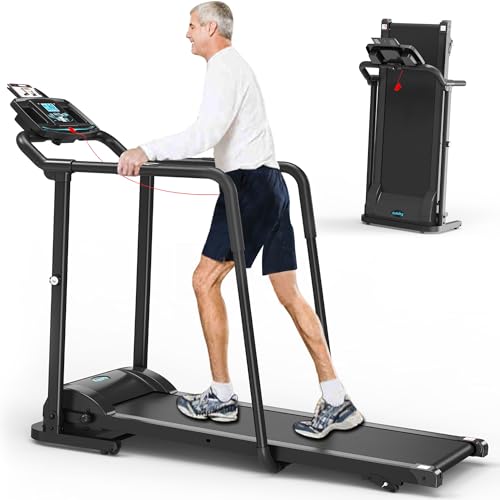
- Extended multi-grip handrails for stability
- Starts as low as 0.4 MPH for gradual walking
- Shock absorption plus Bluetooth app support
Best For: Seniors and rehab users who want balance support and gradual progression
Wide-support walker
Lastforever Extra-Long Handrail Treadmill

- Full-length handrails support balance from start to finish
- 16.5-inch belt offers a roomy walking surface
- 0.5 MPH start and app-guided programs aid recovery
Best For: Seniors and rehab users who want maximum support and a wider belt
Compact recovery choice
Lastforever Rehab Walking Treadmill

- Extra-long handrails improve stability
- Low-impact cushioning with 6 shock absorbers
- Compact design with simple handrail controls
Best For: Home recovery walkers who want simple controls and low-impact support
Senior Rehab Support Treadmill – Redliro 0.3 MPH Slow-Start Walking Treadmill
If you want a rehab walking treadmill that starts extremely gently, this Redliro model is built around slow, controlled home walking. The 0.3 MPH minimum speed, dual handrails, and flat walking option make it a practical fit for cautious daily movement, recovery sessions, and low-impact exercise.
Best For: Seniors, rehab users, and beginners who need a very slow start with extra support.
Pros:
- Starts as low as 0.3 MPH for careful, low-impact walking.
- Front and side handrails add support and confidence.
- Flat setting and 0-2% incline options suit recovery and joint-sensitive use.
- Foldable design with wheels helps in smaller homes.
Cons:
- The compact deck is more suited to walking than longer-stride training.
- Manual incline adjustment is less convenient than powered incline systems.
Overall, this is a strong rehab-friendly treadmill for users who prioritize stability, slow pacing, and easy home storage. Its safety-focused design stands out more than speed or advanced training features.
Compact Recovery Walker – REDLIRO JK09F Senior Treadmill
This rehab walking treadmill focuses on safe, simple daily use for older adults and recovery walking. With extended handrails, a 0-2% manual incline, and a compact folding frame, it is designed to make home walking more manageable without taking over the room.
Best For: Seniors and recovery users who want a compact treadmill with easy controls and steady support.
Pros:
- Extended support rails help with balance and confidence.
- Three incline levels, including flat walking, add flexibility.
- Screen-off and one-touch mute features reduce distraction.
- Compact folding design and transport wheels simplify storage.
Cons:
- The minimum speed is 0.5 MPH, so it is not as slow-starting as some rehab models.
- The narrower belt is better for walking than broader stride movement.
For users who want a practical home walking treadmill with senior-friendly details, this model balances support, convenience, and space-saving design well. It is especially appealing if quiet operation and low-maintenance use matter.
Stable Incline Rehab Walker – Walking Pad with Extra-Long Handrail
For buyers looking for a rehab walking treadmill with a little more incline and strong hand support, this walking pad is aimed at gentle recovery use at home. The extra-long handrail, 5% incline, and quiet brushless motor create a calm setup for low-impact walking and mobility work.
Best For: Seniors and beginners who want a stable walking pad with a mild incline and simple remote control.
Pros:
- Extra-long ergonomic handrail adds reliable stability.
- 5% incline can increase effort without raising speed much.
- Quiet brushless motor is suited to home use.
- LED display, remote control, phone holder, and cup tray add convenience.
Cons:
- The 0.6 MPH minimum speed is higher than the slowest rehab treadmills.
- Incline is adjusted by foot pads rather than a powered system.
This is a solid option if you want a supportive walking pad that feels secure yet still offers a mild challenge. Its mix of stability features and simple controls makes it practical for home recovery routines.
Joint-Friendly Home Rehab Treadmill – Long-Handle Walking Treadmill
This rehab walking treadmill is built for users who want stable support, cushioned walking, and easy tracking at home. Extended handrails, shock absorption, and a 300 lb capacity make it a strong fit for seniors, recovery routines, and family walking workouts.
Best For: Seniors, rehab users, and households that want a supportive treadmill with app connectivity.
Pros:
- Extended side rails improve balance and safety.
- Shock absorption and a 5-layer belt help reduce joint impact.
- Quiet 2.5HP motor supports walking and light jogging.
- LED display, 12 programs, and FitShow app support add flexibility.
Cons:
- The 0.5 MPH minimum speed may feel less gentle than ultra-slow rehab models.
- App features may be more than some users need for simple walking.
If you want a well-rounded treadmill for home rehab and everyday walking, this one blends support, cushioning, and modern tracking well. It offers more versatility than basic senior walkers while still keeping safety central.
Senior Stability Pick – Redliro Long-Handrail Walking Treadmill
If you’re shopping for a rehab walking treadmill that feels steady and simple, this Redliro model is built around support first. The long handrails, low starting speed, and compact frame make it a practical option for controlled home walking, especially when balance and confidence matter more than speed.
Best For: Seniors, light recovery walking, and home users who want extra handrail support.
Pros:
- Extended handrails provide continuous grip support during walking sessions.
- 0–2% manual incline adds a small range of intensity without making the machine complicated.
- Starts at 0.5 mph and supports up to 5 mph for gradual walking progress.
- Foldable, wheeled design makes it easier to store in smaller spaces.
Cons:
- Manual incline is limited to just 0–2%.
- Deck size is more compact than larger rehab treadmills.
- Best suited to walking and light use rather than more demanding training.
Overall, this is a straightforward rehab walking treadmill for users who want a quiet, space-saving machine with dependable handrail support. It’s a sensible fit if safety, simplicity, and easy home storage are your top priorities.
Clinic-Grade Rehab Choice – Body-Solid Endurance T50 Rehab Treadmill
The Body-Solid Endurance T50 is a rehab walking treadmill aimed at users who need a more clinic-style walking platform at home or in a commercial setting. Its slow 0.1 mph start, wide belt, rear ramp entry, and padded handrails make it well suited to cautious step-by-step recovery work.
Best For: Injury rehab, mobility recovery, and users who want a wide, supportive walking deck.
Pros:
- Starts as low as 0.1 mph for very controlled rehab walking.
- Rear ramp entry and 2-inch padded handrails improve accessibility and support.
- Wide 18.9″ x 53″ walking belt offers more room for secure steps.
- Jumbo LED display and oversized buttons simplify tracking and adjustments.
Cons:
- At 155 pounds, it is much heavier than compact home treadmills.
- Listed with a monitor not included, so tracking setup may be more basic.
- Larger footprint may be less convenient for small rooms.
For buyers who prioritize accessibility and a stable walking surface, the T50 stands out as a serious rehab-focused treadmill. It’s a strong match when smooth low-speed control matters more than portability or a compact frame.
Safety-Focused Walking Pick – Yesoul Long-Handrail Rehab Treadmill
This rehab walking treadmill is built for users who want reassurance built into every session. With long wraparound handrails, an emergency stop button, a safety key, and a cushioned belt, the Yesoul model is designed to make low-impact walking feel more secure and approachable at home.
Best For: Seniors, beginners, and recovery users who want strong safety features and app-connected walking.
Pros:
- Full-length handrails and non-slip grips help with balance and confidence.
- Emergency stop button and safety key add a strong layer of protection.
- 6-layer shock absorption is designed to cushion joints during walking.
- Quiet 2.5HP motor and app connectivity support simple, guided sessions.
Cons:
- Top speed is 3.8 mph, so it stays focused on walking rather than faster training.
- Smaller walking belt may feel limiting for taller users.
- App features may not matter if you want a fully manual machine.
If safety and comfort are your top priorities, this treadmill offers a thoughtful mix of stability and low-impact cushioning. It’s a practical choice for controlled rehab walking, especially for users who like a quieter machine with app-based guidance.
Rehab-friendly versatility – Ksports Advanced Rehab Walking Treadmill with Handrails
If you want a rehab walking treadmill that can support careful recovery and later grow with your fitness level, this Ksports model covers a lot of ground. The long handrails, 0.4 MPH starting speed, shock absorption, and incremental speed control make it easier to walk with confidence while keeping impact low.
Best For: Users who want strong balance support, gradual speed progression, and a foldable treadmill for rehab or daily walking.
Pros:
- Extended multi-grip handrails add stability for rehab users and seniors.
- Very low 0.4 MPH minimum speed supports gradual return-to-walk routines.
- Shock absorption and 3-level manual incline add comfort and training flexibility.
- Bluetooth app compatibility with Kinomap, Zwift, and FitShow adds workout variety.
Cons:
- The 15-inch deck is narrower than some wider walking treadmills.
- Manual incline means you adjust intensity by hand rather than automatically.
- Heavier-duty features may be more than needed for very casual walkers.
Overall, this is a practical rehab walking treadmill for anyone who wants safety-focused handrails, low starting speed, and app-connected training in one foldable package. The combination of balance support and workout flexibility makes it especially appealing for recovery and controlled indoor walking.
Wide-support walker – Lastforever Extra-Long Handrail Treadmill
This rehab walking treadmill is built around stability, comfort, and easy day-to-day use. With extra-long full-length handrails, a 16.5-inch wide belt, and a gentle 0.5 MPH starting speed, it’s designed to help walkers feel secure while keeping movement smooth and low impact.
Best For: Users who want a wide walking surface, full-length rail support, and app-guided workouts for home recovery.
Pros:
- Extra-long handrails provide continuous support throughout the walk.
- 16.5-inch wide belt adds space and confidence underfoot.
- Joint-friendly cushioning helps reduce impact on knees and ankles.
- App connectivity includes training videos and guided programs.
Cons:
- The treadmill is not as compact as smaller home walkers.
- 3-level and program-based setup may be more than some users need.
- It focuses on walking and light cardio rather than higher-speed training.
For buyers prioritizing safety and stability, this is a strong rehab walking treadmill option. The wider belt and continuous rail support make it a reassuring choice for seniors, daily walkers, and recovery-focused home workouts.
Compact recovery choice – Lastforever Rehab Walking Treadmill
For shoppers looking for a rehab walking treadmill that keeps things simple, quiet, and supportive, this Lastforever model is a solid fit. It pairs extra-long handrails with a 0.5 MPH minimum speed, a joint-friendly cushioning system, and easy handrail controls so walking stays comfortable and manageable.
Best For: Home users who want a compact, low-impact treadmill with easy controls and strong safety features.
Pros:
- Extra-long handrails help users feel stable and supported.
- 0.5 to 6 MPH speed range suits recovery and light cardio.
- 5-layer belt, dual-layer deck, and 6 shock absorbers reduce impact.
- Handrail-mounted controls and LED display keep operation simple.
Cons:
- The top speed is lower than some other walking treadmills.
- It does not include the wider 16.5-inch belt found on the other Lastforever model.
- Designed for walking and light cardio rather than more intense training.
This is a good pick if you want a rehab walking treadmill that emphasizes ease of use and low-impact movement over advanced features. Its compact design, safety key, and app-based training options make it practical for everyday home recovery routines.
How We Picked the Best Rehab Walking Treadmill
For this roundup, we prioritized rehab-friendly design over fitness extras. The strongest picks offer slow starting speeds, dependable handrails, a low-impact walking feel, and weight capacities that suit home recovery use. We also looked for compact frames, simple controls, and features that help new users feel steady from the first step.
Quick Comparison
Most buyers will choose between three broad categories: ultra-stable models with long handrails, compact folding units for smaller spaces, and higher-powered treadmills with more speed range or incline. A Rehab Walking Treadmill for early recovery should favor balance and ease of use, while a more advanced user may want a wider speed range and extra training flexibility.
Key Buying Factors for Rehab Walking Treadmill
Stability and Handrail Design
Longer handrails can make a major difference for balance, confidence, and safe step transitions. Look for sturdy rail placement that lets you hold on naturally without crowding your walking stride.
Low Starting Speed and Smooth Control
Recovery walking often begins at very slow speeds, so a gentle start range matters. Simple remote or console controls are helpful if you want to adjust pace without distraction.
Impact Reduction and Deck Comfort
A cushioned deck and joint-friendly walking surface are valuable if you are easing back into activity. These features may not replace medical guidance, but they can make daily walking more comfortable.
Motor, Capacity, and Build Quality
Choose a motor and weight capacity that match the user and expected frequency of use. Home users often do well with moderate power, while more frequent or commercial-style use may call for a stronger build and higher-capacity frame.
Space and Storage
If the machine will live in a bedroom or apartment, foldability, transport wheels, and a compact footprint can matter as much as workout features. A space-saving Rehab Walking Treadmill can be easier to use consistently because it is easier to keep accessible.
Who Should Buy Which Rehab Walking Treadmill?
Beginners or post-injury walkers should lean toward models with extra handrail support, slow starts, and simple operation. Users who want more progression room may prefer a treadmill with a broader speed range, incline options, and stronger motor performance. If your main goal is safe daily walking at home, choose the most stable model you can fit comfortably in your space.