If you want a foam roller that focuses on the back without placing a straight cylinder directly over the spine, this Rollga PRO review examines its contoured 18-inch design and firm feel.
The Rollga PRO 18-Inch Foam Roller is aimed at experienced users seeking targeted deep-tissue work, mobility support, and post-workout recovery.
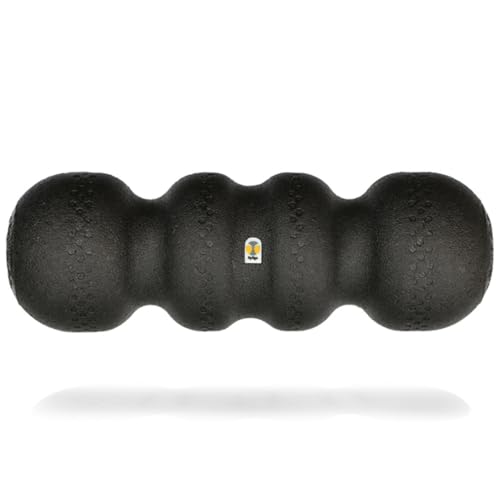
Rollga PRO Review Summary
The Rollga PRO makes the strongest case for itself through its unusual shape.
According to the product listing, its patented grooves support the spine and shoulder blades while the raised bumps target pressure points.
That combination is intended to let you work around the back rather than simply roll over a uniform surface.
The roller is also listed as 20% harder than the standard Rollga, so it suits buyers who already have some foam-rolling or deep-tissue massage experience.
For the right user, that means one tool can cover warm-ups, soreness relief, flexibility work, and routines involving the back, legs, neck, arms, or feet.
For a beginner who prefers gentle, predictable pressure, the same firmness and textured profile may feel like too much.
The central buying decision is whether you want a specialized, assertive roller rather than a basic smooth foam cylinder.
Review Scorecard
| Category | Editorial score | Buyer-focused rationale |
|---|---|---|
| Back-focused design | 9/10 | Contoured grooves are designed to support the spine and shoulder blades. |
| Pressure targeting | 9/10 | Raised bumps are intended to reach deeper pressure points. |
| Firmness for experienced users | 9/10 | The PRO version is listed as 20% harder than the standard model. |
| Body-part versatility | 8/10 | The listing identifies use across the neck, back, legs, arms, and feet. |
| Mobility support | 8/10 | Regular use is positioned for improved flexibility and range of motion. |
| Portability | 8/10 | Its lightweight, durable design is intended for home, gym, and travel. |
| Beginner accessibility | 5/10 | The firmer build is specifically recommended for users with prior experience. |
Key Features and Specifications of Rollga PRO
The Rollga PRO is an 18-inch high-density foam roller with a grooved, contoured body.
Its most distinctive feature is the space and shaping around the center.
The product listing says this design protects the spine and bone while supporting the areas around them.
That matters for buyers who find conventional rollers too broad or uncomfortable across the back.
The outer profile is not merely decorative.
The listing describes the bumps as reaching deeper and the overall design as mimicking hands-on massage.
In practical buyer terms, this points toward a more concentrated sensation than a smooth roller provides.
It may help users focus on particular areas, but it also reduces the margin for error: smaller pressure points can be more intense when body weight is applied.
The PRO model is described as 20% harder than the standard Rollga.
Firmness can be useful for experienced foam rollers who feel that soft equipment does not provide enough resistance.
It is less obviously suitable for someone just learning how to regulate pressure, especially when working around sensitive areas.
The listing presents the roller as a multi-purpose tool for pre-workout warm-ups, post-workout soreness relief, yoga, Pilates, and physical therapy routines.
It also names the neck, back, legs, arms, and feet as target areas.
These are manufacturer or listing-supported use cases, not a claim of personal testing or a substitute for professional medical advice.
Portability is another practical strength.
Rollga describes the design as lightweight and extremely durable, with use at home, in a gym, or while traveling.
The 18-inch length gives it a substantial working surface without making it a full-length recovery device.
The available evidence does not provide a product weight, foam density specification beyond “high density,” or a detailed materials list, so those should not be assumed.
Pros and Cons of Rollga PRO
Pros
- Back-conscious contouring: The grooved shape is intended to support the spine and shoulder blades while contacting surrounding muscle.
- Strong pressure profile: Raised bumps and the harder PRO construction are suited to buyers seeking deeper, more targeted work.
- Broad use case: The listing supports use for warm-ups, soreness relief, flexibility routines, and several body regions.
- Travel-friendly concept: The product is described as lightweight and durable for home, gym, and travel use.
- Useful for structured movement routines: Its stated fit with yoga, Pilates, and physical therapy routines expands its role beyond post-exercise recovery.
Cons
- Not the gentlest option: A roller that is 20% harder than the standard version may be challenging for newcomers.
- Specialized shape: The contour that helps distinguish it from a standard roller may not be preferred by people wanting uniform pressure.
- Limited published specifications in the supplied evidence: Weight, exact materials, and other technical details are not provided here.
- Requires pressure control: The deeper bumps can make placement and body-weight adjustment more important than with a smooth roller.
- No personal-use evidence: This assessment is based on the product listing, not hands-on testing.
Who Should Buy Rollga PRO?
The best match is an experienced foam-rolling user who wants more targeted pressure and a back-oriented design.
If you already understand how to shift your weight, shorten a movement, or stop when pressure becomes uncomfortable, the firm PRO construction may be a meaningful upgrade from a softer, flatter roller.
It also makes sense for people building a recovery kit around several activities, since the listing supports use for warm-ups, soreness relief, flexibility, yoga, Pilates, and physical therapy routines.
It may appeal particularly to buyers who dislike placing a conventional cylindrical roller directly against the spine.
The grooves and contoured support are designed to let the roller engage the surrounding areas instead.
That is a design intention rather than a guarantee of pain relief, but it is the clearest reason to choose this model.
Consider skipping it if you are completely new to foam rolling, highly sensitive to firm pressure, or specifically want a simple smooth surface for broad, even contact.
A beginner may find a less aggressive roller easier to learn on.
Anyone dealing with persistent or unexplained pain should also seek qualified medical guidance rather than treating a foam roller as a diagnosis or cure.
How Rollga PRO’s Grooved Design Changes Foam Rolling
Support Around the Spine
The listing’s key design claim is that the patented grooves support the spine and shoulder blades.
This gives the Rollga PRO a different back-use rationale from a standard uninterrupted roller, where the user may feel pressure across the centerline.
Deeper Bump Contact
The raised bumps are intended to reach deeper pressure points.
That can make short, controlled passes more appealing than long, fast rolling.
It also means the user should adjust pressure deliberately instead of assuming every part of the roller will feel the same.
Firmness and Experience
Because the PRO version is listed as 20% harder than the standard version, its audience is clearer than that of a general-purpose soft roller.
Experienced users may value the added resistance; beginners may prefer to build tolerance with a gentler surface first.
Mobility and Recovery Routines
The product is positioned for both recovery and preparation.
Used within a broader routine, its stated role includes post-workout soreness relief, pre-workout warm-up, and improved flexibility or range of motion with regular use.
Those are intended benefits from the listing, not measured outcomes.
Alternatives to Rollga PRO
If you want a more conventional learning curve, compare the TriggerPoint GRID foam roller.
Its familiar cylindrical format is a sensible direction for buyers who prefer broad, consistent contact.
For a budget-oriented category comparison, look at Amazon Basics foam rollers.
This route may suit shoppers who do not need Rollga’s specialized back contouring or extra-firm positioning.
If your priority is a smaller, more portable pressure tool rather than an 18-inch roller, consider Lacrosse massage balls.
They offer a different approach to targeted points, though they do not provide the same rolling surface or spine-oriented shape.
Buyers who want a very firm, textured option can also compare RumbleRoller foam rollers.
That category is worth investigating when aggressive surface texture matters more than Rollga’s central contour design.
Is Rollga PRO Worth It?
Rollga PRO is worth considering when you specifically want a firm, grooved roller designed around the back and targeted pressure. Its 18-inch format, multi-area use case, portability, and stated compatibility with warm-up, recovery, flexibility, yoga, Pilates, and physical therapy routines give it useful range.
The trade-off is equally clear: the 20% harder PRO build and pronounced bumps are better suited to experienced users than to first-time foam rollers.
Choose it for the contoured back support and deeper pressure profile, not because a listing can promise identical results for every body.
If that specialized design matches your routine and you already know how to manage firm pressure, Rollga PRO has a strong buyer-focused rationale.
If you want gentle, uniform contact, start with a smoother and less aggressive alternative.