A cable crossover can add pressing, pulling, fly, row, and core exercises to a home gym without requiring a room full of single-purpose machines. The best setup depends on your available space, resistance system, adjustment range, and installation needs.
We compare 10 plate-loaded and cable-based crossover machines to help you choose a practical option for strength training, functional fitness, and shared home-gym use.
Best 10 Plate Loaded Cable Crossover Machines Picks for 2026
Best Adjustable Home-Gym Pick

- 17 adjustable pulley positions
- Accepts standard and Olympic plates
- Includes pull-up and pulldown attachments
Best For: Versatile home and garage gyms
Best Complete Training Package

- Combines rack, crossover, bench, barbell, and plates
- Supports broad full-body training
- Includes frame and accessory warranties
Best For: Building a complete home gym
Best Commercial-Style Functional Trainer
Body-Solid Powerline Cable Crossover

- Dual independent 160-pound weight stacks
- Wide range of cable exercises
- 10-year frame warranty
Best For: Weight-stack functional training
Best Space-Saving Wall-Mount Pick
19-Position Dual Pulley Machine

- Uses only about 6.16 square feet
- Offers 19 adjustable pulley positions
- Accepts standard and Olympic plates
Best For: Compact wall-mounted home gyms
Compact Full-Body Trainer

- 15 pulley height positions for varied exercises
- Triangular frame uses about 12.1 sq. ft.
- Includes pull-up and cable attachments
Best For: Freestanding home gyms needing broad exercise variety
Fold-Away Wall Trainer

- Folds flat against the wall
- 26 height holes and 13 arm angles
- Offers both 2:1 and 1:1 ratios
Best For: Small gyms with secure wall-mounting space
Heavy-Duty Space Saver
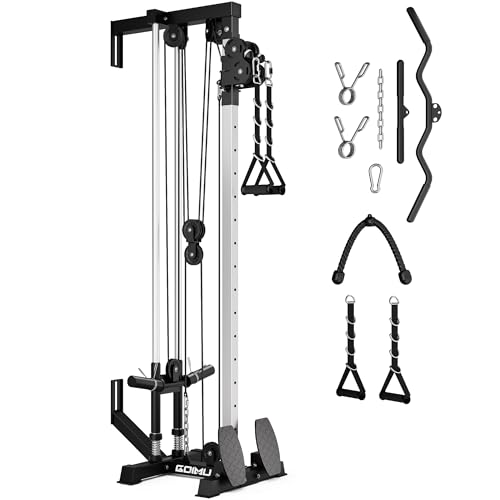
- Compact wall-mounted footprint
- 17 positions with dual independent pulleys
- Switches between 1:1 and 2:1 ratios
Best For: Space-limited gyms needing stable adjustable cables
Best Space-Saving Pick
AY013 Wall-Mount Cable Crossover

- 400-pound maximum load
- 16 adjustable height positions
- Includes multiple cable attachments
Best For: Compact home gyms needing versatile plate-loaded training
Best Hybrid System
WM2-V4 Selectorized and Plate-Loaded Cable Station

- 155-pound weight stack plus plate loading
- 33 adjustable positions
- Switchable 2:1 and 1:1 cable ratios
Best For: Users wanting both quick weight-stack changes and plate loading
Best Stability Features
Mikolo M-G3 Wall-Mount Cable Station
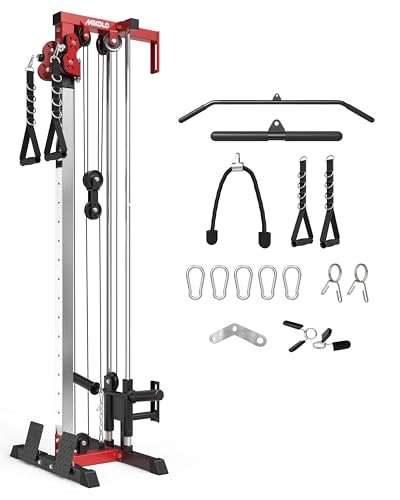
- H-shaped base for added stability
- 400-pound maximum load
- 19 adjustable pulley positions
Best For: Home gyms prioritizing stability and practical dual-pulley training
Best Adjustable Home-Gym Pick – Valor Fitness Cable Crossover
For shoppers comparing plate loaded cable crossover machines, the Valor Fitness model offers broad exercise coverage in a standalone home- or garage-gym station. Its 17 pulley positions and compatibility with standard and Olympic plates make it a flexible choice for varied strength routines.
Best For: Home-gym users who want one adjustable station for cable work, pull-ups, rows, pulldowns, and accessory exercises.
Pros:
- 17 adjustable pulley positions support high, low, and functional training movements.
- Plate-loaded resistance supports up to 200 pounds and accepts 1-inch and 2-inch plates with adapter sleeves.
- Includes pull-up bar, lat pulldown attachment, curl/row bar, handles, storage pegs, and mounting hardware.
Cons:
- Its 200-pound capacity is lower than some larger cable systems.
- The 56-inch depth and 81-inch height require dedicated floor and ceiling clearance.
The dual-track design and included attachments make this a versatile option for progressive home training, especially where exercise variety matters more than maximum resistance capacity.
Best Complete Training Package – RitFit PPC-P3 Power Cage
Among plate loaded cable crossover machines, the RitFit PPC-P3 stands out as a broader home-gym package rather than a cable station alone. It combines a power cage, cable crossover, adjustable bench, Olympic barbell, bumper plates, and collars for a ready-to-build training setup.
Best For: Lifters creating a comprehensive home gym who need cable exercises alongside squats, presses, deadlifts, rows, and pull-ups.
Pros:
- Combines a power cage, squat rack, cable crossover, bench, barbell, and bumper plate set.
- Supports a wide range of full-body exercises, including cable flys, pulldowns, rows, bench presses, and landmine movements.
- Heavy-duty steel station is rated at 1,000 pounds, while the listed system maximum is 1,200 pounds.
- Includes a 36-month warranty on main steel frames and 12 months on accessories.
Cons:
- The complete package requires more space than a standalone cable machine.
- Assembly is required, even though hardware, an illustrated manual, and an installation video are included.
This is the strongest fit for buyers starting or expanding a full training space, particularly if the included rack, bench, barbell, and plates provide value beyond cable crossover functionality.
Best Commercial-Style Functional Trainer – Body-Solid Powerline Cable Crossover
The Body-Solid Powerline takes a different approach to plate loaded cable crossover machines by using dual independent weight stacks instead of plates. Its wide frame and isolateral pulley setup are designed for smooth, varied cable training in home or commercial-gym environments.
Best For: Users who prefer integrated weight-stack resistance and independent cable movement for functional and full-body workouts.
Pros:
- Dual 160-pound weight stacks provide dedicated resistance for independent movements.
- Supports a broad exercise menu, from crossovers and presses to pulldowns, rows, kickbacks, and core work.
- Heavy-duty frame measures 42.3 by 62.6 by 83 inches and weighs 476 pounds.
- Includes a 10-year frame warranty and one-year parts warranty.
Cons:
- It is not plate loaded, so it may not suit buyers specifically wanting plate-based resistance.
- The 476-pound machine requires substantial delivery space and a permanent workout area.
Although it does not use weight plates, the Powerline is worth considering when quick resistance changes, independent sides, and a substantial functional-training platform matter more than plate-loading flexibility.
Best Space-Saving Wall-Mount Pick – 19-Position Dual Pulley Machine
For compact spaces, this wall-mounted option is one of the more practical plate loaded cable crossover machines to consider. It uses a dual pulley system with 19 height positions, a fold-down footplate, and a footprint of about 6.16 square feet.
Best For: Space-conscious home-gym owners who can securely mount a cable station to a wall and want plate-loaded versatility.
Pros:
- 19 adjustable positions accommodate different cable exercise heights.
- Dual pulley system supports up to 400 pounds and uses cables rated for up to 2,200 pounds of tensile strength.
- Compact wall-mounted design includes a fold-down footplate and measures 33.5 by 26.5 by 82.7 inches.
- Weight bar accepts both 1-inch and 2-inch plates and includes locking clips and adjustable hooks.
Cons:
- Wall mounting is required, so installation conditions and wall strength are important considerations.
- The 82.7-inch height may not suit rooms with limited ceiling clearance.
This machine is a sensible fit when floor space is limited, provided the mounting location can support a secure installation and offers enough vertical clearance for the station and exercises.
Compact Full-Body Trainer – CC01 Cable Crossover
For shoppers comparing plate loaded cable crossover machines for a home gym, the CC01 emphasizes broad exercise variety in a relatively compact freestanding frame. Its triangular design provides a 64-inch front training space, while the adjustable pulley system supports movements from rows and pulldowns to flyes and leg work.
Best For: Home-gym users who want a freestanding functional trainer with pull-up capability and a space-conscious footprint.
Pros:
- Supports 15 pulley height positions and a wide range of upper- and lower-body exercises.
- Triangular frame occupies about 12.1 square feet while providing a broad training area.
- Includes pull-down, low-row, and triceps-rope accessories, plus pull-up handles.
- Uses 50×50 mm commercial steel tubing and lists a 500-pound capacity for the detachable pull-up bar.
Cons:
- Assembly is recommended for two or three people and takes approximately 1.5 hours.
- As a freestanding unit, it requires more floor space than the wall-mounted alternatives.
The CC01 is a versatile choice when you want one station for cable work, pull-ups, and functional training without committing to a large commercial-style footprint. Confirm your available ceiling and floor space before ordering.
Fold-Away Wall Trainer – GMWD Dual Swivel Arms
Among plate loaded cable crossover machines, the GMWD stands out for its wall-mounted, foldable format. Dual swivel arms, 26 height holes, and 13 arm-angle settings give it the adjustment range needed for presses, flyes, rows, pulldowns, and other cable exercises while helping conserve floor space.
Best For: Space-conscious home-gym owners who can securely mount a foldable cable station to a suitable wall.
Pros:
- Foldable wall-mounted design can be stored flat against the wall when not in use.
- Offers 26 height adjustment holes, 13 arm-angle settings, and 180-degree arm movement.
- Switches between 2:1 and 1:1 cable ratios for different training loads and goals.
- Includes mounting hardware intended for wood and concrete surfaces, along with several attachments.
Cons:
- Requires a suitable wall and secure installation rather than simple freestanding placement.
- The listed setup dimensions are 39 inches deep by 25.8 inches wide by 77 inches high, so wall clearance still matters.
The GMWD is a practical pick for a compact training area where fold-away storage is important. Its extensive adjustment range is useful, but installation requirements should be checked before purchase.
Heavy-Duty Space Saver – WM1 Wall Cable Station
The WM1 is a wall-mounted option for shoppers seeking plate loaded cable crossover machines in a very small footprint. Its dual independent pulleys provide 17 height positions, while the cable adaptor lets you choose between 1:1 and 2:1 ratios for heavier work or lighter, higher-repetition training.
Best For: Garage and home gyms that prioritize wall-mounted stability, adjustable cable angles, and minimal floor use.
Pros:
- Compact assembled dimensions are listed at 24.8 inches long, 18.11 inches wide, and 78.74 inches high.
- Provides 17 height positions and dual independent pulleys for varied exercise angles.
- Supports both 1:1 and 2:1 cable ratios, with a stated 300-pound tension capacity.
- Includes a lat pull bar, cable bar, triceps/biceps rope, dual handles, and cable adaptor.
Cons:
- Wall mounting is required, and the notes specifically identify concrete or masonry installation.
- Its narrow wall-mounted format may provide less standalone training space than a freestanding crossover.
With its small footprint, reinforced wall-mounted design, and selectable cable ratios, the WM1 suits owners who need a stable station without giving up useful cable adjustments. Verify wall compatibility and installation requirements first.
Best Space-Saving Pick – AY013 Wall-Mount Cable Crossover
For shoppers comparing plate loaded cable crossover machines, the AOWINNOX AY013 stands out as a compact wall-mounted option with a 400-pound maximum load. Its 16 height positions and included attachments support exercises ranging from lat pulldowns and rows to curls and triceps work.
Best For: Home gyms that need broad exercise variety in a compact wall-mounted footprint.
Pros:
- Compact 26.7-by-23.5-inch footprint with an 83-inch height.
- Supports up to 400 pounds and uses nylon-coated, aircraft-quality cables.
- Includes a lat bar, single strap handles, triceps rope, and locking clips.
- Compatible with both 1-inch and 2-inch weight plates.
Cons:
- Requires secure wall installation and careful bracket alignment.
- Its 83-inch height may be unsuitable for rooms with low ceilings.
The AY013 is a practical choice when floor space is limited but you still want plate-loaded cable training and multiple attachment options. Confirm your wall, ceiling clearance, and plate setup before ordering.
Best Hybrid System – WM2-V4 Selectorized and Plate-Loaded Cable Station
Among plate loaded cable crossover machines, the WM2-V4 offers unusual flexibility by combining a 155-pound selectorized weight stack with loading pins for 1-inch and 2-inch plates. Its 33 adjustment positions and switchable cable ratios make it suitable for both controlled accessory work and heavier pulls.
Best For: Lifters who want the convenience of a weight stack alongside the progression potential of plates.
Pros:
- Combines a 155-pound weight stack with plate-loading capability.
- Offers 33 adjustable height positions for varied training angles.
- 2:1 and 1:1 cable ratios support lighter endurance work and heavier lifts.
- Compact wall-mounted design uses approximately a 24-by-33-inch footprint.
Cons:
- Maximum recommended load is listed as 350 pounds.
- Warranty coverage is listed as one year.
- Wall mounting is required for installation.
The WM2-V4 is the most adaptable option in this group for users who do not want to choose between selectorized and plate-loaded resistance. Its aluminum pulleys and commercial steel tubing add to its long-term-use appeal, while the compact design helps conserve floor space.
Best Stability Features – Mikolo M-G3 Wall-Mount Cable Station
The Mikolo M-G3 is a strong contender among plate loaded cable crossover machines, pairing a dual adjustable pulley with a 400-pound maximum load. Its H-shaped base, seated-row footboard, rotating pulley bracket, and included attachments are geared toward practical home-gym training.
Best For: Home users who value a stable base and straightforward dual-pulley exercise setup.
Pros:
- Commercial-grade 14-gauge steel frame with an H-shaped stabilizing base.
- Supports up to 400 pounds with nylon-coated aircraft-quality cables.
- Offers 19 height positions and a rotating pulley bracket.
- Includes sleeves for 1-inch and 2-inch plates, plus three attachments.
Cons:
- The listed 19 positions provide less adjustment range than the WM2-V4.
- Its 82-inch height requires adequate ceiling clearance.
- Component replacement service is listed at eight months, despite a two-year warranty description.
The M-G3 balances compact dimensions with useful stability and exercise-support features, including a footboard for seated rows. It is worth considering if you want a wall-mounted, plate-compatible station with a broad 400-pound capacity.
How We Picked the Best Plate Loaded Cable Crossover Machines
We focused on the features that have the greatest effect on everyday training: pulley adjustability, frame construction, resistance capacity, footprint, attachment compatibility, and installation requirements. The roundup includes wall-mounted stations, power-cage combinations, and larger functional trainers so different home gyms can be represented.
Product descriptions and specifications were compared for cable travel, adjustment positions, pulley configuration, included or optional attachments, weight-stack or plate-loaded resistance, and features such as pull-up bars or removable footplates. Because published capacities are not always measured the same way, treat them as useful reference points rather than direct performance comparisons.
Quick Comparison
| Best For | Look For |
|---|---|
| Small home gyms | Wall-mounted frames with compact footprints and multiple height positions |
| Maximum exercise variety | Dual independent pulleys, high and low cable positions, and broad attachment support |
| Heavy training | A rigid frame, strong mounting hardware, and a clearly stated high load capacity |
| All-in-one setups | A power cage or station that combines cables, pull-up work, and plate-loaded exercises |
| Fast, consistent resistance | A weight-stack model with a selectorized adjustment system |
Key Buying Factors for Plate-Loaded Cable Crossover Machines
Mounting and Available Space
Wall-mounted Plate Loaded Cable Crossover Machines save floor space, but they require a suitable structural wall and careful installation. Confirm ceiling height, wall construction, stud spacing, clearance for plates and handles, and enough room to step away from the pulleys. Freestanding units need more floor area but may be easier to reposition.
Resistance Type and Capacity
Plate-loaded systems usually offer simple, incremental loading and can be economical if you already own Olympic plates. Check whether plates, sleeves, collars, and a loading pin are included. Weight-stack systems are quicker to adjust and often feel more convenient for supersets, but their stated stack weight may not equal the resistance at the handle because pulley ratios vary.
Pulley Adjustment and Cable Travel
More adjustment positions improve exercise coverage, especially for flyes, lateral raises, rows, presses, and sport-specific movements. Look for independent left and right pulley adjustment, smooth cable travel, swivel arms, and enough vertical range for both standing and seated exercises.
Frame, Hardware, and Attachments
Inspect steel tubing, pulley housings, cable specifications, anchor points, and the quality of the included handles. Pull-up bars, low-row footplates, triceps ropes, ankle straps, and straight bars can add value, but optional bundles should be priced separately when comparing models.
Who Should Buy Which Plate Loaded Cable Crossover Machines?
Choose a wall-mounted station if floor space is limited and you can anchor the unit securely. Choose a power-cage crossover if you want cable work alongside squats, pull-ups, and barbell training. Choose a weight-stack functional trainer if multiple users need quick resistance changes. Choose a plate-loaded model if you value straightforward loading, already own plates, and want to control long-term equipment costs.
Before ordering, verify dimensions, delivery access, mounting instructions, warranty coverage, replacement-cable availability, and the manufacturer’s stated maximum load. A well-installed, rigid station with smooth pulleys is generally more useful than a larger model whose capacity cannot be safely supported by your room or mounting surface.