Choosing your first treadmill can feel overwhelming when compact walking pads, folding models, and full-size machines all promise an easier home workout. The right option depends on your available space, preferred speed, incline goals, and comfort with treadmill features.
We compared 10 treadmills for beginners across these practical considerations to help you find a machine that fits your routine, room, and budget.
Best 10 Treadmills for Beginners Picks for 2026
Best Smart Training Pick

- 10 MPH speed and 0–10% incline
- Cushioned 55-by-18-inch deck
- iFIT guided workouts and smart adjustments
Best For: Beginners seeking guided progression into jogging and running
Best Supported Incline Walker

- Automatic 0–12% incline
- Extended dual handrails for stability
- Folds to 5.5 inches high
Best For: Beginners prioritizing support, incline walking, and compact storage
Best High-Capacity Starter

- 400-pound stated weight capacity
- Manual 0%, 3%, and 10% incline
- Preset programs and pulse sensor
Best For: Beginners wanting a sturdier home treadmill with simple training options
Best Compact Walking Option

- Slim, lightweight design for small spaces
- 1–6 km/h walking speed range
- No assembly and remote control
Best For: Beginners focused on simple indoor walking and easy storage
Best for Incline Training
LONTEK 40% Incline Walking Pad

- Five manual incline levels up to 40%
- 51-inch handrails and 350-lb capacity
- Folds for compact home storage
Best For: Beginners focused on hill walking and added support
Best Budget-Friendly Starter

- 12 preset programs plus countdown modes
- Folds to 40.5 x 18 x 4.7 inches
- 0.6–6.2 MPH range for walking and jogging
Best For: Small-space beginners wanting simple workout controls
Best Versatile Compact Option

- Detachable handlebar enables under-desk use
- Up to 7.6 MPH with a 3.0HP motor
- 350-lb capacity and three countdown modes
Best For: Beginners needing walking and faster-workout flexibility
Best Incline Control
JELENS 15% Auto-Incline Treadmill
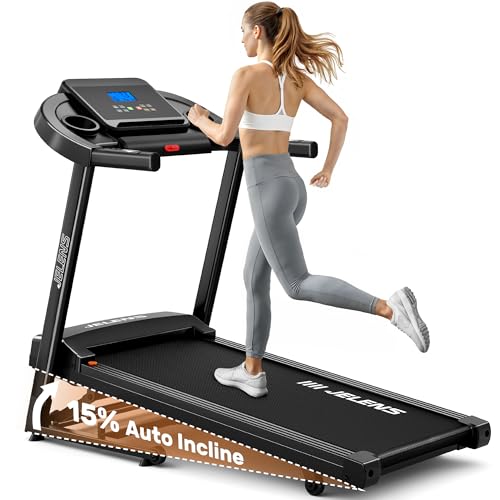
- Automatic 0–15% incline
- 330-pound capacity and 7.5 MPH top speed
- Folds for compact storage and connects to an app
Best For: Beginners building toward incline walking and light running
Best Low-Profile Design
LONTEK 15% Incline Walking Pad
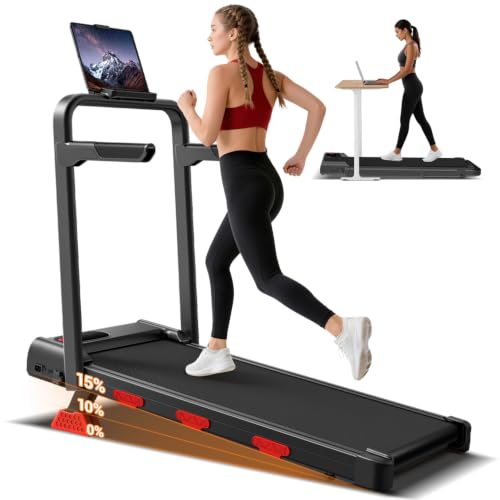
- Three manual incline positions
- 350-pound capacity with a quiet brushless motor
- Slim frame stores under furniture
Best For: Space-conscious beginners focused on walking and light jogging
Best Simple Pick

- Twelve preset programs and countdown modes
- Shock-absorbing belt with supportive handrails
- Folds compactly and weighs 55 pounds
Best For: Beginners needing a small treadmill for walking and jogging
Best Smart Training Pick – NordicTrack T Series
For beginners who want guided progression, the NordicTrack T Series combines a 10 MPH top speed, 0–10% incline, cushioned deck, and optional iFIT-connected training. It is a more feature-rich choice for home walking, jogging, and eventual running.
Best For: Beginners who want guided workouts and room to build endurance.
Pros:
- Supports walking, jogging, and running at speeds up to 10 MPH.
- 0–10% incline range adds variety and intensity.
- KeyFlex cushioning is designed to reduce impact during workouts.
- iFIT can provide trainer-led workouts, automatic adjustments, and app syncing with a membership.
Cons:
- Several smart-training features require an iFIT Train Membership.
- The 55-by-18-inch deck may feel less spacious than larger running surfaces.
- At 130 pounds, it may take effort to reposition.
This is a strong all-around option among treadmills for beginners, especially if structured coaching and future running capability matter more than the simplest setup.
Best Supported Incline Walker – Wellfit Walking Pad
The Wellfit Walking Pad is built for beginners who want extra stability without giving up incline training. Its extended handrails, automatic 0–12% incline, foldable design, and quiet brushless motor make it practical for home cardio and small-space workouts.
Best For: Beginners who value balance support, incline walking, and easy storage.
Pros:
- Automatic incline adjusts from 0% to 12% without manual repositioning.
- Extended dual handrails provide added support for beginners and seniors.
- Quiet operation under 40 dB and a 375-pound stated capacity suit shared spaces.
- Folds to a 5.5-inch height and includes transport wheels for storage.
Cons:
- The 7.6 MPH maximum speed is more suited to walking and light jogging than fast running.
- The 40-by-16-inch belt is relatively compact.
- App and connected-training features may require setup with compatible devices.
With substantial handrails and automatic incline control, this model is one of the more approachable treadmills for beginners who want a supported start and convenient storage.
Best High-Capacity Starter – Cardirun Foldable Treadmill
The Cardirun Foldable Treadmill offers a beginner-friendly combination of simple incline settings, a quiet motor, cushioning, and a high stated weight capacity. Its preset programs and pulse sensors also make it useful for users who want straightforward workout tracking at home.
Best For: Beginners who need a sturdier treadmill with basic training variety.
Pros:
- Supports up to 400 pounds according to the supplied specifications.
- Three manual incline levels—0%, 3%, and 10%—help vary workout intensity.
- Seven-layer belt, shock absorbers, and cushions are designed for a smoother stride.
- Includes 12 preset programs, countdown modes, pulse sensing, and app compatibility without subscription fees.
Cons:
- Incline changes are manual rather than automatic.
- The 7.6 MPH maximum speed may limit faster running.
- The 16-by-40-inch running area is compact for longer strides.
For beginners who want a stable-feeling, foldable machine with useful basics and a high capacity rating, the Cardirun is a practical step up from a flat walking pad.
Best Compact Walking Option – XM-A1 Walking Pad
The XM-A1 Walking Pad is a minimalist choice for beginners focused on everyday walking rather than running. Its slim profile, low weight, remote control, and no-assembly design make it easy to use in a home office, apartment, or other small space.
Best For: Beginners who want convenient indoor walking in a tight space.
Pros:
- Compact 42.91-by-19.69-inch footprint and approximately 4.33-inch height fit under furniture.
- Weighs about 36.4 pounds and includes transport wheels for easier movement.
- Arrives without assembly and includes a remote for speed adjustments.
- Five-layer belt, silicone shock absorbers, and rubber cushioning add walking comfort.
Cons:
- Its 1–6 km/h range is intended primarily for walking, not running.
- The 38.5-by-94 cm walking area is narrower and shorter than a full treadmill deck.
- It lacks incline and handrails.
If your beginner routine is centered on low-impact walking, the XM-A1 keeps the setup and storage demands low while still providing basic workout metrics.
Best for Incline Training – LONTEK 40% Incline Walking Pad
For shoppers comparing treadmills for beginners, the LONTEK stands out when incline walking is a priority. It offers five manual incline levels, from 0% to 40%, along with a 0.6–6.2 MPH speed range for walking, jogging, and light running.
Best For: Beginners who want challenging hill-style workouts, a supportive handlebar, and a higher weight capacity.
Pros:
- Five manual incline levels, reaching 40%.
- 51-inch dual handrails and a 350-pound user capacity provide added support.
- Brushless 3HP motor operates below 45dB, according to the supplied specifications.
- Folds to approximately 57.3 x 24.4 x 6.1 inches for storage.
Cons:
- The 38.6 x 15.4-inch belt is narrower than a full-size treadmill deck.
- Incline adjustment is manual rather than motorized.
- Its steep-incline focus may be more capability than some beginners need.
This is a strong pick for beginners who specifically want incline progression and extra stability. Its compact folding design keeps it practical for home use, but users seeking a simple flat walking machine may prefer a less specialized option.
Best Budget-Friendly Starter – Compact Folding Walking Pad
This compact model is a straightforward choice among treadmills for beginners, offering walking, jogging, and light running speeds without taking up much storage space. Its 12 preset programs and countdown modes also give new users simple ways to structure workouts.
Best For: Beginners in apartments, home offices, or small rooms who want basic programming and easy storage.
Pros:
- 0.6–6.2 MPH speed range supports walking through light running.
- Includes 12 preset programs and time, distance, and calorie countdown modes.
- Folds to 40.5 x 18 x 4.7 inches and has transport wheels.
- Manual incline supports added workout intensity.
Cons:
- The 35 x 14.4-inch running area is relatively compact.
- Maximum supported user weight is 220 pounds.
- Incline adjustment is manual.
With its simple controls, compact folded size, and moderate speed range, this treadmill is well suited to beginners building a consistent routine. Taller users or those wanting a roomier deck may need a larger model.
Best Versatile Compact Option – POTUPUS V300-VF4 Treadmill
The POTUPUS V300-VF4 is a flexible option for people shopping for treadmills for beginners who may alternate between under-desk walking and handlebar-supported workouts. Its detachable handlebar lets the machine convert into a walking pad, while the motor reaches speeds up to 7.6 MPH.
Best For: Beginners who want one compact treadmill for walking, home-office use, and faster workouts.
Pros:
- Detachable handlebar supports both treadmill and under-desk configurations.
- 3.0HP motor and speeds up to 7.6 MPH offer room to progress.
- Supports users up to 350 pounds.
- Three countdown modes track time, distance, or calories.
Cons:
- The supplied notes do not specify the incline levels or adjustment method.
- Its 41.34 x 18.5-inch deck may still feel compact for longer running strides.
- Beginners who only need slow walking may not use its higher speed capability.
This model makes sense when versatility matters more than a dedicated full-size running deck. The detachable handlebar and compact folded profile are useful in multipurpose spaces, while the higher speed ceiling allows a beginner routine to develop over time.
Best Incline Control – JELENS 15% Auto-Incline Treadmill
For beginners comparing treadmills for beginners, the JELENS is a practical choice if you want guided progression from walking to incline training. Its automatic 0–15% incline, 0.6–7.5 MPH speed range, and app connectivity provide room to build a routine without immediately outgrowing the machine.
Best For: Beginners who want automatic incline training, a higher weight capacity, and app-based workout tracking.
Pros:
- Automatic incline adjusts through 15 levels, making hill-style workouts easy to control.
- Supports up to 330 pounds and includes a 3.0 HP motor with speeds up to 7.5 MPH.
- Foldable design, transport wheels, Bluetooth app connectivity, pulse sensors, and a multifunction LCD display add convenience.
Cons:
- The 43.31-inch belt may feel limited for users with a longer running stride.
- It weighs 79.8 pounds, so moving it may require more effort than a lightweight walking pad.
The JELENS stands out for beginners who want more than flat walking. Its automatic incline and relatively broad speed range support gradual progression, while the folding frame helps conserve space after workouts.
Best Low-Profile Design – LONTEK 15% Incline Walking Pad
Among treadmills for beginners, the LONTEK is suited to shoppers who prioritize simple storage and walking flexibility. Its manually selectable flat, 10%, and 15% incline positions let you vary workouts without navigating complicated electronic settings.
Best For: Apartment dwellers and beginners who want a portable walking pad with handles and a high weight capacity.
Pros:
- Offers flat, 10%, and 15% incline options using easy manual adjustments.
- The low-profile frame can slide under beds, desks, or sofas and weighs relatively little for a portable treadmill.
- Quiet brushless motor, 350-pound capacity, LED progress display, phone holder, and cushioned belt support everyday walking.
Cons:
- Its 6.2 MPH maximum speed is better suited to walking, light jogging, and intervals than faster running.
- Manual incline changes require stopping and physically repositioning the supports.
- The 37.4-inch belt is shorter than many conventional running treadmills.
The LONTEK keeps the learning curve straightforward: select the incline physically, set the speed, and monitor basic metrics on the LED display. It is a strong space-conscious option for beginners whose routine centers on walking rather than sustained running.
Best Simple Pick – Compact Folding Walking Pad
For beginners seeking straightforward treadmills for beginners, this compact folding model offers basic speed control, preset programs, and supportive handrails. Its 0.6–6.2 MPH range covers walking and jogging, while the small folded footprint fits apartments, dorms, and other tight spaces.
Best For: New exercisers who want a compact, easy-to-store treadmill for walking and occasional jogging.
Pros:
- Six shock absorbers and five-layer silicone pads help reduce impact on knees and joints.
- Twelve preset programs and three countdown modes provide workout variety for beginners.
- Folds to 45.08 × 21.85 × 5.2 inches, weighs 55 pounds, and includes moving wheels.
Cons:
- The 220-pound weight capacity is lower than the other listed models.
- Its motor noise is rated at up to 70 dB, so it may be less quiet than brushless-motor alternatives.
- There is no warranty listed in the supplied product details.
This model makes sense when storage space and simple programming matter most. The handrails, preset workouts, and shock-absorption system give beginners a familiar starting point, though the lower capacity and louder operation are important trade-offs.
How We Picked the Best Treadmills for Beginners
We focused on features that matter most to new users: approachable controls, useful speed ranges, folding or compact designs, incline capability, stated weight capacity, and suitability for walking or running. We also considered whether each treadmill fits a small apartment, home office, or dedicated workout area.
Because beginner needs vary, this list includes everything from under-desk walking pads to larger NordicTrack models. Product specifications can vary by configuration, so confirm the exact speed, incline, dimensions, warranty, and assembly requirements before ordering.
Quick Comparison
| Best For | Look For | Featured Options |
|---|---|---|
| Desk walking and small spaces | Compact footprint, low profile, remote control | Portable walking pads and mini treadmills |
| Incline walking | Automatic incline adjustment and stable handrails | WELLFIT, LONTEK, and JELENS models |
| Heavier users | High stated weight capacity and a sturdy frame | Cardirun and select full-size models |
| Walking to running | Higher top speed, longer deck, cushioning | NordicTrack T Series and full-size folding treadmills |
Key Buying Factors for Treadmills for Beginners
Speed and Workout Type
A walking pad with a top speed around 4 to 6 mph can work well for casual walking, office use, and light jogging. If you plan to run regularly, choose a treadmill with a higher maximum speed and a longer running surface so your stride does not feel restricted.
Incline and Controls
Incline increases workout intensity without requiring a faster pace. Manual incline is usually simpler and less expensive, while automatic incline lets you adjust elevation from the console. Make sure the controls are easy to reach and clearly labeled.
Deck Size, Stability, and Capacity
Measure both the stored and operating footprint. Compact models save space but may have shorter, narrower decks. A heavier frame and higher stated capacity generally provide more stability, especially for taller users or faster walking.
Safety and Comfort
Beginners benefit from a safety key, emergency stop function, supportive handrails, and a non-slip belt. Cushioning can reduce impact, but it should not make the deck feel unstable. Pulse sensors are convenient for basic monitoring, though a wearable may provide more consistent readings.
Storage, Noise, and Maintenance
Check whether the treadmill folds, has transport wheels, and can be stored upright safely. For apartments or shared spaces, motor noise and belt noise matter. Regular belt alignment, cleaning, and lubrication can help maintain smooth operation.
Who Should Buy Which Treadmills for Beginners?
Choose a walking pad if you want low-impact movement while working, watching television, or exercising in a small room. These models are easiest to store but are generally less suitable for sustained running.
Choose an incline walking pad if you want more workout variety without needing a large treadmill. Confirm that the handrail is sturdy and that the incline range is genuinely useful for your planned pace.
Choose a full-size folding treadmill if you want to progress from walking to jogging or running. The larger deck, stronger frame, and expanded speed range are worth the additional floor space for regular training.
Choose a higher-capacity model if user weight, stability, or long-term durability is a priority. Compare the manufacturer’s capacity rating with your needs and leave a reasonable margin rather than buying at the limit.