Choosing the best stability ball for balance training depends on more than size or weight capacity. The right design should match your experience, available space, workout goals, and preferred level of instability.
We compared 10 popular options, from full-size exercise balls and inflatable half balls to compact balance discs, pods, and wobble boards, to help you find a stable and practical fit for home training.
Best 10 Stability Ball for Balance Training Picks for 2026
Versatile Balance Platform
BOSU Balance Ball Exercise Trainer

- Combines balance, strength, cardio, flexibility, and core work
- Includes guided workouts and an inflation pump
- Non-slip platform with conflicting 300- to 350-pound listings
Best For: Multipurpose home balance and core training
Two-Sided Stability Trainer
Lifepro Horizon Half Balance Ball

- Flips between dome-up and base-up training modes
- Textured surface and 23.6-inch platform provide roomy footing
- Includes pump, Pilates ball, tape measure, and plugs
Best For: Progressive home balance and core workouts
Full-Size Exercise Ball

- Available in five sizes from 45 to 85 centimeters
- Textured PVC surface supports grip and balance work
- Includes pump and two air plugs; designed for slow deflation
Best For: Traditional balance, stretching, and active-sitting routines
Compact Balance Pair
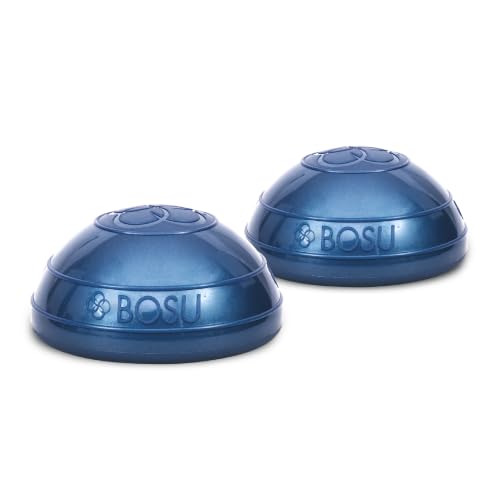
- Two compact pods support paired stability drills
- Targets balance, agility, core strength, and coordination
- Includes an owner’s manual; listed capacity is 150 pounds
Best For: Portable, space-saving balance and coordination exercises
Full-Size Half-Ball Challenge

- Textured half-ball with anti-slip base
- Includes two bands, pump, and extra ball
- Supports core, yoga, strength, and cardio work
Best For: Dedicated home workout spaces needing a large, versatile trainer
Compact Core Control
ProsourceFit Balance Disc Trainer

- Portable 14-inch inflatable balance disc
- Dual-textured surfaces, including massaging bumps
- Works for exercise or seated posture practice
Best For: Small spaces, travel, and versatile seated balance support
Professional-Grade Stability

- 26-inch half-dome for varied workouts
- Burst-resistant, non-slip, non-marking material
- Includes pump and guided workout materials
Best For: Versatile strength, conditioning, and rehabilitation training
Compact Core Builder
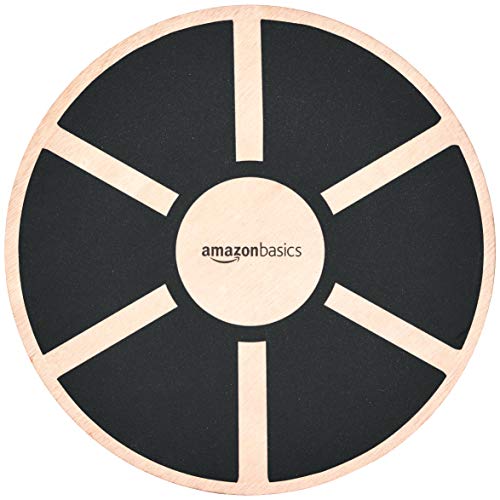
- Non-slip solid wood surface
- Supports up to 265 pounds
- Compact tool for balance and core drills
Best For: Focused standing balance, posture, and core exercises
Full-Body Dome Trainer

- Supports balance, strength, and stretching
- Useful for rehabilitation training
- Includes pump and accessories
Best For: Versatile home-gym and rehabilitation workouts
Accessory-Rich Stability Dome

- Non-slip base with six feet
- Includes resistance bands and pump
- Comes with a bonus 10-inch yoga ball
Best For: Versatile home workouts with balance and resistance training
Versatile Balance Platform – BOSU Balance Ball Exercise Trainer
For shoppers seeking a stability ball for balance training with added workout versatility, this 26-inch BOSU trainer combines an inflatable platform with a non-slip surface. It supports standing balance work, strength exercises, core training, flexibility movements, and rehabilitation-oriented routines.
Best For: Home users who want a multipurpose balance trainer for full-body workouts, core engagement, and guided exercise sessions.
Pros:
- Supports cardio, strength, flexibility, balance, and core exercises.
- Non-slip construction and a stated capacity of up to 350 pounds in the product highlights.
- Includes a guided workout program and inflation pump.
- Can be used for physical therapy, rehabilitation, and sensory integration exercises.
Cons:
- The product details list differing maximum-weight figures, including 300 and 350 pounds.
- Its 25-inch footprint requires dedicated floor space.
- The listed warranty is limited to 90 days.
This is a strong choice if you want a familiar BOSU-style platform rather than a traditional round exercise ball. Confirm the applicable weight limit before purchase and allow room for standing exercises.
Two-Sided Stability Trainer – Lifepro Horizon Half Balance Ball
The Lifepro Horizon is a practical stability ball for balance training when you want two difficulty options in one platform. Its 23.6-inch half ball can be used dome-up for conventional stability work or base-up for a more challenging balance surface.
Best For: Beginners through experienced home exercisers who want adjustable balance training, core work, stretching, squats, planks, and push-ups.
Pros:
- Reversible design offers two training modes.
- Textured, non-slip surface and a roomy 23.6-inch width support steady footing.
- Rated for up to 440 pounds with a PP/TPE base.
- Includes an air pump, Pilates ball, inflation straw, tape measure, and plugs.
Cons:
- At 6.8 kilograms, it is heavier than several simpler exercise-ball options.
- The half-ball format may not suit shoppers specifically seeking a full round ball.
- The supplied details include a 200-kilogram maximum recommendation alongside the 440-pound capacity claim.
Its reversible construction makes the Horizon especially adaptable for progressive balance practice. Review the capacity information and choose the orientation that matches your experience level.
Full-Size Exercise Ball – APEXUP Anti-Burst Yoga Ball
For a conventional stability ball for balance training, the APEXUP Yoga Ball offers a round, textured PVC surface in five size options. Its honeycomb construction is designed to deflate slowly if punctured, while the ball also supports core exercises, stretching, Pilates, and active sitting.
Best For: Shoppers who prefer a traditional exercise ball with multiple size choices for balance work, flexibility training, or desk-chair use.
Pros:
- Honeycomb PVC construction is designed for slow deflation rather than sudden collapse.
- Textured surface helps provide grip on hard floors.
- Five sizes from 45 to 85 centimeters accommodate different users.
- Includes a pump and two air plugs.
Cons:
- Users must select the correct size using the product’s guide.
- A full round ball can require more balance control than a half-ball trainer.
- The supplied details identify the listed model as 65 centimeters, so availability by size should be confirmed.
This is the most conventional option in the group and offers useful size flexibility. Check the fit guide carefully, especially if the ball will double as an active-sitting chair.
Compact Balance Pair – BOSU 6.5-Inch Balance Pods
The BOSU Balance Pods provide a compact alternative for stability ball for balance training setups. Sold as a two-pack, these 6.5-inch pods are designed to develop balance, agility, core stability, body awareness, coordination, muscular endurance, strength, and flexibility.
Best For: Users who want small, portable balance tools for coordination drills, core exercises, and targeted stability practice.
Pros:
- Compact 6.5-inch size is easy to store and position.
- Two pods can support paired or alternating balance exercises.
- Targets balance, agility, core strength, flexibility, and coordination.
- Made in the USA and includes an owner’s manual.
Cons:
- They are pods rather than a full-size stability ball or platform.
- The supplied maximum weight recommendation is 150 pounds.
- The listed age-range description is “Kid,” which may limit suitability for some adult users.
Choose these pods when portability and compact drills matter more than a large exercise surface. Because the supplied weight recommendation is lower than the other products here, verify that it suits the intended user.
Full-Size Half-Ball Challenge – ZELUS 25-Inch Balance Ball
If you want a versatile stability ball for balance training, the ZELUS Balance Ball adds controlled instability to core, yoga, strength, and cardio exercises. Its textured half-ball surface and broad nonslip base are designed to keep you more secure while you train.
Best For: Adults seeking a larger half-ball trainer with resistance bands for more varied home workouts.
Pros:
- 25-inch platform with a textured PVC ball and anti-slip TPR base.
- Includes two exercise bands, a foot pump, and an extra ball.
- Supports intense core, posture, strength, yoga, and cardio training.
- Rated for a maximum weight recommendation of 1,500 pounds.
Cons:
- Its 25-inch footprint requires more storage space than a compact balance disc.
- The larger design may be more equipment than beginners need for simple balance work.
The ZELUS is a strong pick when you want a substantial half-ball platform and added resistance-band exercises in one setup. Its size and accessory bundle make it better suited to a dedicated workout area than travel.
Compact Core Control – ProsourceFit Balance Disc Trainer
The ProsourceFit Core Balance Disc is a compact alternative to a full-size stability ball for balance training. Its inflatable, 14-inch surface can challenge core engagement during workouts while also serving as a portable seat cushion for posture and balance practice.
Best For: Adults who want an affordable, portable balance trainer that can also be used while seated.
Pros:
- Compact 14-inch diameter and 3-inch height make it easy to transport.
- Dual-textured sides provide a smoother or massaging surface.
- Hand pump allows firmness to be adjusted for different uses.
- Can support core exercises, balance work, posture practice, and seated use.
Cons:
- Its smaller surface offers less exercise range than a 25- or 26-inch half-ball.
- It has a 300-pound maximum weight recommendation, lower than the larger trainers here.
This disc is the most convenient option for limited spaces, travel, or users who want balance training without committing to a large dome. Choose a larger half-ball if you need a broader platform for standing exercises.
Professional-Grade Stability – BOSU Pro Balance Trainer
The BOSU Pro Balance Trainer is a durable half-dome choice for anyone comparing a stability ball for balance training. Its unstable surface can add balance demands to cardio, strength, flexibility, conditioning, rehabilitation, and physical-therapy movements.
Best For: Users who want a well-established half-ball trainer for versatile home workouts or guided rehabilitation exercises.
Pros:
- 26-inch dome supports cardio, strength, flexibility, endurance, and balance routines.
- Non-slip, non-marking, burst-resistant material is designed for durability.
- Includes a foot pump, workout guidance, training manual, and DVD.
- Supports up to 350 pounds and can be used for physical therapy movements.
Cons:
- Its 26-inch size needs dedicated floor and storage space.
- The 350-pound maximum support is lower than the ZELUS model’s stated recommendation.
- Only a one-year warranty is listed in the supplied details.
The BOSU stands out for its combination of guided workouts, durable construction, and broad exercise range. It is a practical choice when versatility and rehabilitation-oriented use matter more than portability or a low-profile design.
Compact Core Builder – Wood Wobble Balance Board
If you want a simple stability ball for balance training alternative, this wobble board provides a compact, focused way to practice standing balance, coordination, posture, and core exercises. Its non-slip top and solid wood construction suit home workouts, gyms, and rehabilitation spaces.
Best For: Adults seeking a compact balance board for core work, standing exercises, and targeted strengthening.
Pros:
- Supports balance, coordination, posture, and core-strength exercises
- Non-slip surface helps provide a secure grip
- Solid wood top supports up to 265 pounds
- Compact 15.75-inch square footprint is easy to store
Cons:
- Offers a balance-board workout rather than an inflatable ball experience
- Designed for use on dry, non-slip surfaces only
- Does not include resistance bands or a pump
This is a practical choice when you want straightforward balance training without the size or setup of a full stability ball. The limited footprint makes it especially suitable for focused drills and home workout areas.
Full-Body Dome Trainer – VEVOR Half Exercise Ball
The VEVOR half exercise ball is a versatile stability ball for balance training, strength work, stretching, and rehabilitation. Its half-dome format supports exercises ranging from stepping and lunges to planks and push-ups, while the included pump and accessories simplify setup.
Best For: Adults wanting a multifunctional half-ball trainer for home-gym workouts, stretching, and rehabilitation exercises.
Pros:
- Supports full-body strength training and multiple stretching poses
- Useful for rehabilitation and limb-control exercises
- Explosion-proof construction is designed to withstand pressure and impact
- Includes inflation tools and has a portable design
Cons:
- At about 22.8 inches wide, it needs more storage space than a balance board
- The supplied details list different capacity figures in the title and specifications
- Resistance bands are not specifically listed among the included components
Choose this model if variety matters more than minimal storage. It combines balance practice with strength and rehabilitation possibilities, making it a flexible addition to a home gym.
Accessory-Rich Stability Dome – Garvee Half Balance Ball
For buyers seeking a stability ball for balance training with added workout options, the Garvee half balance ball combines a 23-inch dome with resistance bands, a non-slip base, and a pump. It is designed for core, balance, flexibility, Pilates, yoga, and full-body exercises.
Best For: Adults who want a broad range of home-gym exercises with included resistance bands and a bonus yoga ball.
Pros:
- Non-slip base, six slip-resistant feet, and anti-skid texture support stability
- Includes two detachable resistance bands with foam handles
- Suitable for sit-ups, push-ups, lunges, Pilates, yoga, and balance work
- Includes a foot pump and bonus 10-inch yoga ball
Cons:
- Its 23-inch size requires dedicated workout and storage space
- Listed warranty is limited to 30 days
- Heavier than the compact wood balance board at 11.9 pounds
This is the most feature-packed option of the three for users who want to vary resistance and exercise styles. The non-slip base and included accessories make it convenient for a home full-body routine.
How We Picked the Best Stability Ball for Balance Training
We evaluated each option for construction, balance challenge, footprint, inflation and setup, surface grip, weight capacity, and versatility. We also considered whether the design is better suited to beginners, experienced users, strength training, rehabilitation-style movements, or compact home workouts.
Because “stability ball” can describe several different products, this roundup includes full exercise balls, half-dome trainers, balance discs, pods, and wobble boards. These tools create different types of instability, so the best choice depends on how you plan to train.
Quick Comparison
| Type | Best For | Stability Level | Space Needed |
|---|---|---|---|
| Full exercise ball | Seated exercises, core work, stretching | Moderate | High |
| Half balance ball | Strength, balance, and conditioning | Adjustable to challenging | Moderate |
| Balance disc | Seated balance and compact workouts | Moderate | Low |
| Balance pods | Footwork and coordination drills | Adjustable | Low |
| Wobble board | Ankle control and standing balance | Challenging | Low |
Key Buying Factors for a Stability Ball for Balance Training
Shape and Training Style
Half balls provide a broad platform with a curved, unstable surface and are often the most versatile option for squats, planks, push-ups, and standing drills. Full-size balls are better for seated work, mobility, and exercises that require a larger rolling surface. Discs and pods are easier to store but usually offer a narrower range of exercises.
Size and Available Space
Check the product’s diameter and your ceiling, floor, and storage space before buying. A 23- to 26-inch half ball can work well in a home gym, while a disc or pair of pods is more practical for apartments or travel. Full exercise balls need additional clearance because they can roll during use.
Weight Capacity and Construction
Choose a product with a generous stated capacity, especially for dynamic movements, resistance-band exercises, or weighted training. Anti-burst materials, reinforced seams, a nonslip base, and textured surfaces can improve confidence and control. Capacity ratings are not a substitute for inspecting the ball, base, valve, and surface regularly.
Inflation and Adjustability
Inflation affects difficulty: a firmer ball generally feels more responsive, while slightly reduced pressure can create a softer, less demanding surface. Look for an included pump and accessible valve, and follow the manufacturer’s inflation limits rather than filling the product by feel alone.
Who Should Buy Which Stability Ball for Balance Training?
- Beginners: Start with a half ball that has a nonslip base, or use a balance disc for gentler seated and kneeling exercises.
- Experienced users: Choose a responsive half trainer, wobble board, or balance pods for more demanding standing and unilateral drills.
- Core and strength trainees: A half ball offers the broadest exercise selection, especially for planks, presses, squats, and push-ups.
- Small-space users: A balance disc, pods, or wood wobble board stores more easily than a full exercise ball.
- Mobility and seated-work users: A full exercise ball can support stretching, posture practice, and seated balance exercises.
Whichever Stability Ball for Balance Training you choose, begin near a wall or sturdy support, clear the floor, and progress from stable two-foot movements to more challenging single-leg or dynamic exercises.