The best rebounders for circuit training can add low-impact cardio, balance work, agility drills, and sport-specific reactions to one workout. Because “rebounder” can mean anything from a mini trampoline to a soccer kickback board, choosing the right format matters.
We’ve gathered 10 options for home gyms, athletic training, and mixed conditioning circuits, with attention to bounce response, adjustability, stability, portability, and user capacity.
Best 10 Rebounders for Circuit Training Picks for 2026
Quiet Home Cardio Pick
Newan 40-Inch Silent Bungee Rebounder

- 30 bungee ropes offer elastic, joint-friendly suspension
- Six legs with anti-slip caps support stable indoor use
- 330-pound capacity for adult cardio circuits
Best For: Quiet home cardio and controlled circuit workouts
Soccer Skill Circuit Pick

- Two zones support ground passes and aerial-ball drills
- Side nets reduce ball chasing during solo practice
- Includes stakes, sandbags, and a carry bag
Best For: Solo soccer passing, control, and receiving circuits
High-Capacity Handlebar Pick
Foldable 42-Inch Fitness Rebounder

- Adjustable T-bar has three height settings
- 450-pound capacity suits demanding home workouts
- Folds to one-quarter size for compact storage
Best For: Supported, high-capacity circuit workouts in small spaces
Smart Soccer Drill Add-On

- Built-in drills cover passing, control, scanning, and stamina
- Live scoring works without a smartphone app
- Connects up to six devices for team scenarios
Best For: Structured reaction and agility drills with compatible rebound boards
Adjustable Multi-Sport Pick

- Five adjustable angles for varied drills
- Large 4x7-foot rebound surface option
- Works across multiple sports
Best For: Multi-sport backyard training
Quick-Switch Training Pick
Winthai Multi-Sport Rebounder Net
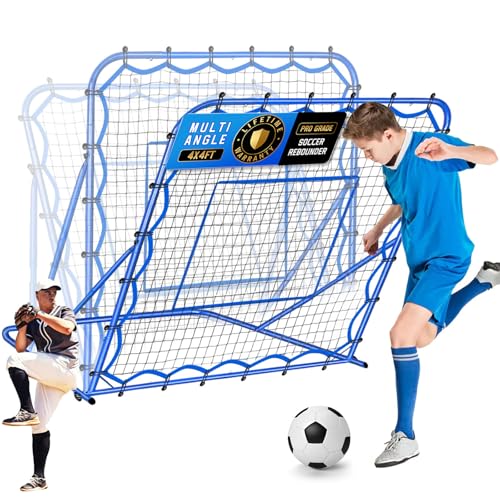
- Three useful training angles
- Bullseye target for accuracy work
- Folds and sets up without tools
Best For: Compact team and backyard circuits
Smart Soccer Circuit Pick

- Built-in drills and live scoring
- Reaction light works without an app
- Supports up to six connected units
Best For: Structured soccer reaction circuits
Portable Angle-Adjustable Pick

- 90° and 60° training angles
- Foldable 16-pound HDPE design
- Includes sandbag and ground nails
Best For: Portable passing and volley practice
Most Versatile Training Pick
4-Angle Soccer Rebounder Board

- Four angles from 60° to 90°
- Natural, game-realistic rebounds
- Lifetime warranty with locking legs
Best For: Varied indoor and outdoor soccer drills
Variable-Rebound Practice Pick
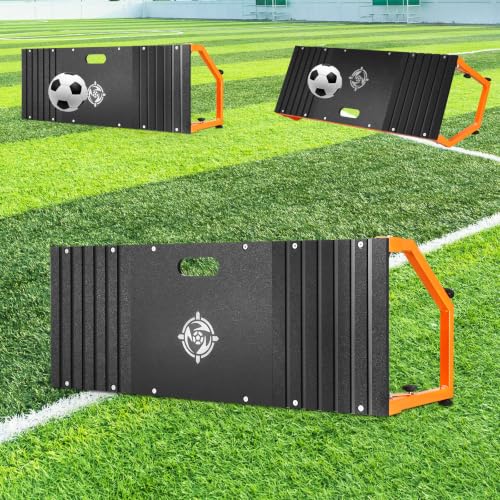
- Consistent center and erratic side rebounds
- Two angles for ground and aerial drills
- Includes sandbags and ground anchors
Best For: Precision and reaction-focused soccer practice
Quiet Home Cardio Pick – Newan 40-Inch Silent Bungee Rebounder
For shoppers comparing rebounders for circuit training, the Newan offers a joint-friendlier bungee suspension system, a compact 40-inch surface, and a 330-pound maximum weight recommendation. Its six-leg frame and rubber foot caps make it suited to controlled indoor cardio circuits.
Best For: Adults wanting a quiet, compact rebounder for home cardio and muscle-building workouts.
Pros:
- Thirty thickened bungee ropes provide elastic, lower-impact suspension.
- Six supported legs and anti-slip rubber caps improve stability and help protect floors.
- Supports up to 330 pounds and weighs 14.5 pounds for easier handling.
Cons:
- The 40-inch jumping surface may feel limited for wide or highly dynamic movements.
- Assembly requires physical effort, and two-person installation is recommended.
This is a practical choice when quiet operation and straightforward home storage matter more than a handlebar or larger platform. The included assembly tool is helpful, but setup should be planned before the first circuit session.
Soccer Skill Circuit Pick – 2-in-1 Soccer Rebounder Net
Although it is not a jumping trampoline, this 2-in-1 soccer rebounder is relevant to rebounders for circuit training when the circuit centers on passing, receiving, trapping, and headers. Its two practice zones and side safety nets support repetitive ball-work intervals with less chasing.
Best For: Soccer players building solo technical circuits in a backyard, park, or practice field.
Pros:
- Upper and lower rebound areas accommodate aerial work and precise ground passing.
- Three-ply polyester netting is rated for shots up to 95 mph.
- Six stakes, two sandbags, and side barriers help contain the ball across surfaces.
- Tool-free setup and an included carry bag support portable training.
Cons:
- It does not provide a jumping or cardio-rebound surface.
- Anchoring is still needed for stable use, especially on outdoor surfaces.
Choose this model if your circuit training goal is soccer technique rather than aerobic bouncing. The two-zone design can keep drills varied, while the carry bag makes it easier to move between training locations.
High-Capacity Handlebar Pick – Foldable 42-Inch Fitness Rebounder
For rebounders for circuit training that need extra support and storage flexibility, this 42-inch fitness rebounder combines a three-level adjustable T-bar with a 450-pound capacity. Its foldable design and quiet elastic-band rebound make it suitable for varied home workouts.
Best For: Adults who want a supported, high-capacity rebounder for small-space home gyms.
Pros:
- The adjustable T-bar offers three height settings for added control and exercise variation.
- Six anti-slip foam-padded legs are designed to reduce wobbling and tipping.
- Folds to one-quarter size and is advertised as 70% pre-assembled.
- 450-pound maximum capacity accommodates a broad range of users.
Cons:
- The handlebar may take up more space than a handle-free rebounder during use.
- At 42 inches, it still requires a dedicated clear workout area.
This is the strongest fit in the group for users who value a support bar, higher weight capacity, and compact storage. Its three handle heights also make it easier to adapt circuits to different movements and users.
Smart Soccer Drill Add-On – QUICKPLAY RXTR Reaction Light
The QUICKPLAY RXTR is an accessory rather than a standalone rebounder, but it can make rebounders for circuit training more structured by adding sensor-based scoring and guided reaction drills. It attaches to compatible rebound boards and works without a smartphone app.
Best For: Soccer players and coaches adding reaction, agility, scanning, and ball-control intervals to compatible rebound-board circuits.
Pros:
- Built-in drills target passing, technique, control, scanning, and stamina.
- Live scoring and a scrolling display provide immediate feedback without an app.
- Up to six devices can connect for expanded team-training scenarios.
- Rechargeable battery provides up to four hours of continuous training.
Cons:
- It is not a rebounder board or trampoline by itself.
- Compatibility is specified for various rebound boards, including select QUICKPLAY models.
- It requires charging before extended training sessions.
This add-on is most useful when measurable reaction work is the missing piece in a soccer circuit. Confirm that your rebound board is compatible before buying, then use the built-in drills and color markers to add structure without relying on a phone.
Adjustable Multi-Sport Pick – ZEALFEEL Lacrosse Rebounder
For athletes comparing rebounders for circuit training, the ZEALFEEL stands out for its large practice surface, five adjustable angles, and multi-sport design. It supports drills for lacrosse, volleyball, baseball, softball, tennis, and soccer, making it useful for varied backyard sessions.
Best For: Multi-sport athletes who want adjustable passing, catching, throwing, and shooting drills.
Pros:
- Five angles support ground-ball, aerial-shot, and quick-pass drills.
- The 4×7-foot version provides a large rebound area, while the 4×6-foot option suits tighter spaces.
- HDPE netting and a powder-coated steel frame are designed for repeated use.
- Includes ground stakes, bungee cords, a target strap, and sandbags with the 4×6-foot version.
Cons:
- The larger 4×7-foot format may require more practice space.
- It is primarily a manual rebounder without electronic feedback or scoring.
Choose this model when versatility and angle adjustment matter more than built-in technology. Its included target strap can add an accuracy challenge to circuit-style workouts.
Quick-Switch Training Pick – Winthai Multi-Sport Rebounder Net
The Winthai 4×4-foot rebounder is a practical choice for rebounders for circuit training when quick angle changes and compact storage are priorities. Its lever-based adjustment supports soccer, baseball, softball, volleyball, and lacrosse drills in a backyard, park, or stadium.
Best For: Players and teams who want compact, multi-sport drills with fast angle changes.
Pros:
- Switches between 60°, 90°, and 120° training positions for different passing and receiving drills.
- Built-in bullseye target helps emphasize shot placement and accuracy.
- Three sandbags help stabilize the net during intensive sessions.
- Folds for storage and sets up without tools in about 15 minutes.
Cons:
- The 4×4-foot rebound surface is smaller than the 4×7-foot option in the ZEALFEEL model.
- Its angle system is less extensive than a five-angle rebounder.
This is a sensible option for circuit stations that rotate between passing, pitching, serving, and reaction drills. The compact size and quick-switch lever make transitions straightforward.
Smart Soccer Circuit Pick – QuickPlay RXTR Pro Coach
For soccer-focused rebounders for circuit training, the QuickPlay RXTR Pro Coach combines an impact-resistant rebound board with a reaction light and built-in drills. It adds live scoring, color-based exercises, and guided tests without requiring a phone or app.
Best For: Soccer players seeking structured reaction, speed, agility, and cognitive-response training.
Pros:
- Includes six pre-programmed tests and 11 built-in drills with live score feedback.
- Runs without an app and offers up to four hours of battery life.
- The tank can hold 10–25 kg of water or up to 30 kg of sand for stability.
- Up to six units can connect for expanded group-training setups.
Cons:
- It is designed primarily for soccer rather than broad multi-sport use.
- The rebound board requires filling with water or sand for maximum stability.
- Electronic features introduce charging requirements.
This is the most technology-focused choice of the three. Select it when measurable reaction work and guided drills are more important than a simple, angle-adjustable net.
Portable Angle-Adjustable Pick – VEVOR Soccer Rebounder Board
For shoppers comparing rebounders for circuit training, the VEVOR Soccer Rebounder Board is a compact option for passing, shooting, and volley drills. Its two angles, foldable design, and HDPE construction make it practical for home, garage, or field use.
Best For: Kids, adults, and soccer players who want a portable rebound board for ground-pass and volley practice.
Pros:
- Two training angles: 90 degrees for ground passes and 60 degrees for volley passes.
- Durable HDPE board with a laser-engraved target designed to resist fading and scratches.
- Foldable legs, carry holes, and a 16-pound weight support compact storage and transport.
- Includes a sandbag and four ground nails for added stability.
Cons:
- Sand is not included for the supplied sandbag.
- Only two angle settings are available.
This VEVOR model is a straightforward choice when portability and simple angle-based drills matter most. It is especially convenient for users with limited storage space.
Most Versatile Training Pick – 4-Angle Soccer Rebounder Board
Among rebounders for circuit training, this soccer rebounder board stands out for its four angle settings and game-realistic return. It supports drills ranging from ground passing and first touch work to volleys, aerial reception, and quick reactions.
Best For: Players and teams seeking one durable board for varied, year-round indoor and outdoor training.
Pros:
- Four adjustable angles: 90, 80, 70, and 60 degrees.
- Reinforced HDPE construction is designed to resist warping under repeated impact.
- Powder-coated steel legs snap and lock for use on grass, turf, or carpet.
- Lifetime warranty and a hidden rear carry handle add convenience and reassurance.
Cons:
- Its 32-by-12-inch board is more specialized for soccer than general fitness circuits.
- The supplied details do not list additional anchoring accessories.
With the broadest angle range in this group, this board offers the most drill flexibility. Its lifetime warranty also makes it appealing for frequent training and heavier use.
Variable-Rebound Practice Pick – CAROD Soccer Rebounder Board
The CAROD Soccer Rebounder Board is a useful option for rebounders for circuit training when you want both predictable and unpredictable returns. Its flat center supports targeted practice, while grooved side panels create more erratic bounces for reaction and adaptability drills.
Best For: Serious soccer players who want to combine precision passing with unpredictable rebound practice.
Pros:
- Dual 90-degree and 60-degree settings support ground shooting and aerial passing.
- Grooved side panels create erratic bounces while the flat center provides consistent returns.
- HDPE rebound panel and ABS metal square-tube frame are built for repeated impacts.
- Includes two sandbags and two ground anchors for hard-surface and grass setup.
Cons:
- It offers two angles rather than the four provided by some competing boards.
- The warranty is one year.
This CAROD model is particularly compelling for players who want a more varied ball response without giving up a consistent central target. Its foldable stand and carrying handles also suit mobile practice.
How We Picked These Rebounders for Circuit Training
We evaluated the selected equipment by its training role rather than treating every rebounder as interchangeable. Fitness trampolines were considered for repeated jumping, aerobic intervals, balance, and low-impact conditioning. Soccer, baseball, lacrosse, and volleyball rebounders were assessed for return consistency, angle adjustment, usable target area, portability, and how easily they fit into drills.
We also considered practical details such as frame or board construction, folding design, setup requirements, safety features, weight limits, and whether the product is better suited to indoor, outdoor, solo, or coached workouts. Always verify dimensions and manufacturer specifications before purchase, particularly if several athletes will share the equipment.
Quick Comparison
- For cardio and bouncing: Choose a mini fitness trampoline with a stable frame, comfortable mat, and a capacity appropriate for the intended user.
- For ball-return circuits: Look for a rebounder net or board with a predictable return and enough surface area for repeated passing or receiving drills.
- For reaction training: Smart lights or responsive rebound boards can add decision-making and speed work to a circuit.
- For limited storage: Prioritize foldable frames, compact boards, and equipment that can be moved without assistance.
- For multi-angle practice: Adjustable nets and boards offer more drill variety than fixed-surface designs.
Key Buying Factors for Rebounders for Circuit Training
Choose the Right Rebound Style
A trampoline-style rebounder is designed for vertical movement and cardio. A net or angled board sends a ball back toward the athlete, making it better for passing, trapping, throwing, or hand-eye coordination. If your circuit combines both, confirm that you have sufficient floor space and safe separation between stations.
Check Stability and Construction
Repeated impacts can shift lightweight equipment. Look for wide bases, secure feet, rigid frames, reinforced joints, or a weighted setup area. For trampolines, inspect the leg design, mat suspension, padding, and maximum user weight. For outdoor nets and boards, weather exposure and anchoring are especially important.
Match Adjustability to Your Drills
Multiple angles allow athletes to progress from predictable returns to more demanding trajectories. Adjustable tension, target height, or reaction settings can also help accommodate different ages and skill levels. A simpler fixed design may be preferable when fast setup and consistent repetition are the priority.
Measure the Training Area
Account for the equipment’s footprint, the athlete’s movement zone, and the ball’s travel path. Indoor users should check ceiling height and flooring, while outdoor users should plan for wind, uneven ground, and secure storage.
Who Should Buy Which Rebounders for Circuit Training?
Home cardio users should focus on a fitness rebounder with a suitable capacity, stable base, and padding that supports frequent jumping. Soccer and lacrosse players will generally benefit more from an adjustable net or rebound board that returns the ball at useful angles. Coaches and performance trainers should consider durable, portable equipment that supports varied stations and quick transitions. Beginners or families may prefer a forgiving net, broad rebound surface, or simple setup, while advanced athletes can gain more from angle changes and smart reaction features.
Before buying, define the main movement in your circuit—jumping, passing, receiving, throwing, or reacting—then choose the rebounder built for that motion. The best option is the one that fits your available space, training frequency, skill level, and safety requirements.