Finding the best balance board for a senior means prioritizing controlled movement, reliable grip, and a difficulty level that supports progress without creating unnecessary risk.
This roundup compares 10 options, from cushioned balance pads and simple rocker boards to adjustable trainers for users who want more advanced stability work.
Best 10 Balance Boards for Seniors Picks for 2026
Simple Wood Pick
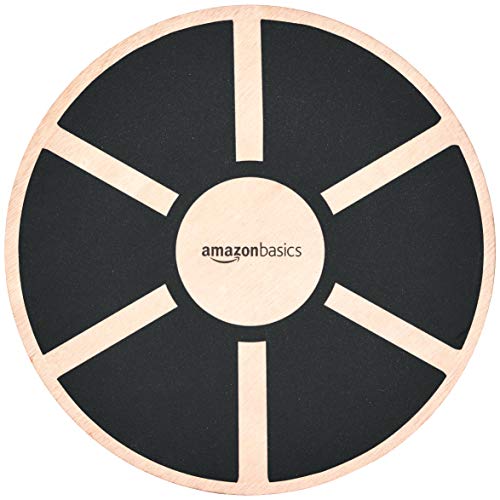
- Solid wood platform supports up to 265 pounds
- Non-slip surface for balance and core exercises
- Compact design with a one-year limited warranty
Best For: Basic home balance and coordination workouts
Versatile Mobility Pick
3-in-1 Slant and Balance Board
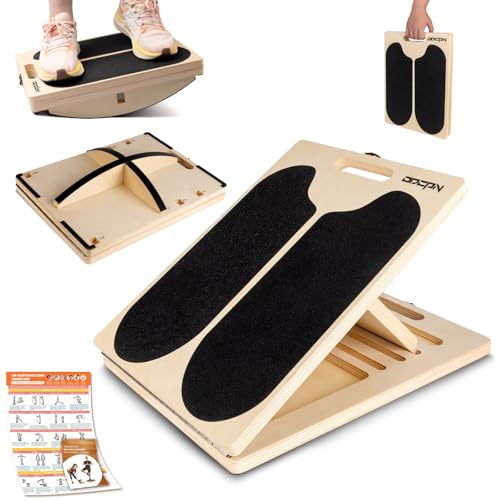
- Offers stretching, 180-degree, and 360-degree modes
- Six adjustable angles for calf stretching
- Folds flat and includes training guidance
Best For: Mobility, calf stretching, and progressive balance routines
Gentle Stability Pick
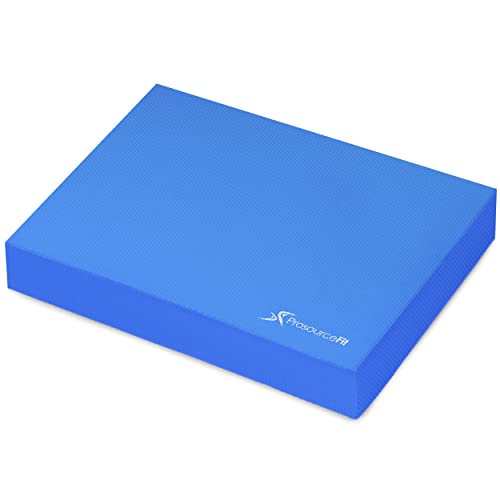
- Cushioned foam creates a controlled unstable surface
- Slip-resistant TPE is sweat-proof and easy to clean
- Lightweight and useful as a knee pad or seat cushion
Best For: Beginners and older adults wanting cushioned stability practice
Rocker-to-Wobble Pick
StrongTek Wooden Balance Board
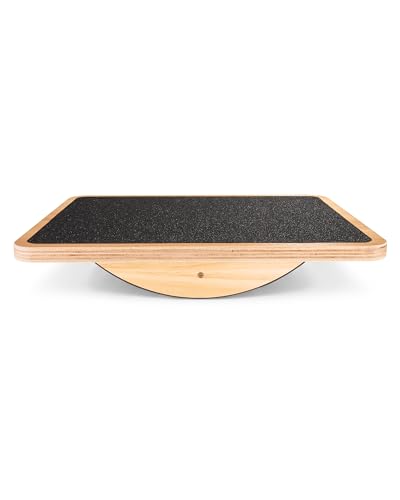
- Supports rocker or 360-degree wobble training
- Textured surface helps provide a secure grip
- Portable design supports up to 350 pounds
Best For: Progressive wooden balance and low-impact conditioning
Adjustable Challenge Pick
Sportneer 7-Mode Balance Board

- Seven adjustable training modes
- Non-slip EVA surface
- 450-pound weight capacity
Best For: Progressive home balance training
Controlled Progression Pick
StrongTek Wooden Balance Board

- 360-degree directional wobble
- Cross base for added control
- Textured non-slip top
Best For: Progressing beyond basic rocker exercises
Stable Surface Pick
NALANDA 16.34-Inch Wobble Board
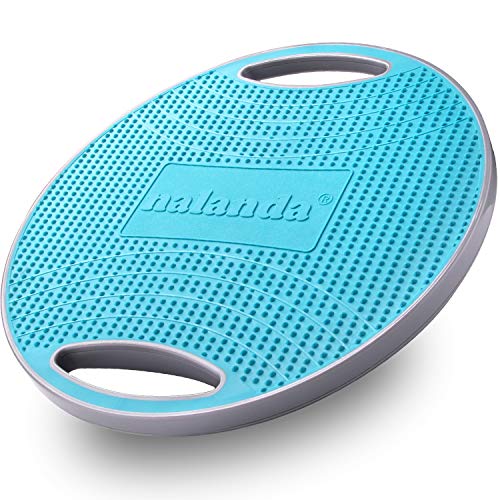
- Large 16.34-inch platform
- Easy-clean non-skid TPE surface
- 660-pound weight capacity
Best For: Large-platform balance and varied home exercises
Stable Start Pick
Reinforced Wooden Wobble Board

- 350-pound capacity with reinforced underside
- Anti-slip and floor-protection pads
- Arrives fully assembled
Best For: Seniors and beginners needing a stable board for home balance practice
Everyday Comfort Choice
Anti-Slip Stand-Desk Balance Board

- 350-pound capacity with reinforced base
- Full-surface anti-slip grip
- Suitable for home, gym, and office use
Best For: Seniors wanting balance practice plus standing-desk and posture support
Progressive Training Pick
Professional Wooden Balance Board

- Supports beginners and advanced exercises
- 350-pound capacity with anti-slip surface
- Compact and portable design
Best For: Seniors seeking a board that supports gradual progression and recovery exercises
Simple Wood Pick – Amazon Basics Wobble Board
For shoppers comparing balance boards for seniors, this Amazon Basics model offers a straightforward wooden platform for standing balance work, core exercises, and coordination practice. Its textured, non-slip surface is intended for use on a dry, non-slip floor.
Best For: Adults who want a basic wobble board for home workouts, posture practice, or general balance training.
Pros:
- Supports exercises for balance, coordination, posture, and core strength
- Solid wood top supports up to 265 pounds
- Non-slip surface and compact 15.75-inch square design
- Backed by a one-year limited warranty
Cons:
- Requires a dry, non-slip surface and should not be used on wet or smooth flooring
- Provides a single wobble-board setup without adjustable difficulty
This is a practical entry-level choice when simplicity matters. Seniors should use it on suitable flooring and select exercises that match their stability and comfort level.
Versatile Mobility Pick – 3-in-1 Slant and Balance Board
This 3-in-1 model stands out among balance boards for seniors by combining calf stretching with 180-degree directional balance and 360-degree rotation. Six slant angles and interchangeable side panels let users adjust the setup for stretching, mobility, or balance work.
Best For: Adults seeking one board for calf stretching, foot and ankle mobility, recovery exercises, and progressively varied balance training.
Pros:
- Combines slant-board stretching with 180-degree and 360-degree balance modes
- Six adjustable angles range from 20 to 45 degrees
- Non-slip EVA base and PVC sandpaper surface support stable footing
- Folds flat for storage and includes a training poster and instructions
Cons:
- More components and setup steps than a basic balance board
- The supplied details list a 460-pound capacity in the features but a 300-pound maximum in the product specifications
- Rotating balance modes may be more challenging for beginners
Its adjustable design makes it useful for varied mobility routines, but the multiple modes call for gradual progression. Review the included guidance and begin with the gentlest configuration.
Gentle Stability Pick – ProsourceFit Balance Pad
For balance boards for seniors shoppers who prefer cushioning over a rigid wooden platform, the ProsourceFit Balance Pad creates an unstable surface for stability and core exercises. Its lightweight foam construction also works as a knee pad, seat cushion, or foot pad.
Best For: Beginners and older adults who want a cushioned, portable surface for balance practice, yoga, physical therapy, or everyday support.
Pros:
- Cushioned surface can help beginners develop body awareness and stability
- Slip-resistant, sweat-proof TPE material is easy to clean
- Lightweight 12-ounce design is easy to carry
- Can also be used for kneeling, sitting, standing-desk support, or yoga
Cons:
- Foam creates instability but does not provide the rocking motion of a board
- Its 2.25-inch height may offer less challenge for advanced balance training
This is the most approachable option in the group for cushioned stability work. Its multipurpose design can make it easier to incorporate short balance sessions into daily routines.
Rocker-to-Wobble Pick – StrongTek Wooden Balance Board
The StrongTek Wooden Balance Board is a compact option for balance boards for seniors, with a textured surface and a rocker-style design that can also support advanced 360-degree wobble training. It is marketed for low-impact conditioning, rehabilitation, and standing-desk use.
Best For: Adults who want a portable wooden board with a rocker setup for basic practice and the option to progress toward more demanding balance work.
Pros:
- Supports basic rocking or advanced 360-degree wobble exercises
- Textured surface provides an easy-grip feel for bare feet
- Supports up to 350 pounds and measures 17.5 by 13.5 inches
- Compact enough for home, gym, office, or travel use
Cons:
- The 360-degree mode may be too demanding for some beginners
- At 4.7 pounds, it is heavier than the supplied foam balance pad
- Wood construction is less cushioned than a foam stability pad
This board offers a useful progression from gentle rocking to more advanced wobbling. For senior users, starting with supported rocker exercises can help keep the experience manageable while building familiarity.
Adjustable Challenge Pick – Sportneer 7-Mode Balance Board
For shoppers comparing balance boards for seniors, the Sportneer offers adjustable challenge levels rather than a single fixed movement. Its removable stoppers, roller, and ball allow users to begin with a more controlled setup and progress gradually as balance and core strength improve.
Best For: Adults who want a progressive home balance trainer with multiple exercise modes.
Pros:
- Seven modes support progression from beginner to more advanced training.
- Four magnetic stoppers adjust without tools.
- Textured non-slip EVA surface helps provide secure footing.
- Birch-wood construction supports up to 450 pounds.
Cons:
- The roller and ball modes may be more challenging for beginners.
- At about 30 inches long, it requires a suitable open workout area.
This is a versatile option for seniors who want room to progress, but beginners should start with the simplest configuration and use appropriate support nearby. The non-slip surface and adjustable design add practicality for home workouts.
Controlled Progression Pick – StrongTek Wooden Balance Board
Among balance boards for seniors, the StrongTek advanced model provides a middle ground between a simple rocker and a round-base wobble board. Its cross-style base offers 360-degree directional movement while maintaining a broader floor contact area for more controlled practice.
Best For: Adults ready to progress beyond front-to-back rocking while retaining a comparatively approachable design.
Pros:
- 360-degree movement trains stability, coordination, and ankle control.
- Cross base provides a larger contact area than many round-base wobble boards.
- Textured top surface helps keep feet secure.
- Wooden platform supports up to 350 pounds.
Cons:
- The advanced version may be too demanding for someone new to balance training.
- It offers less maximum load capacity than some larger models in this roundup.
The StrongTek is a sensible step-up choice for users who have already practiced basic rocking. Seniors should begin with controlled movements and stable nearby support, since the 360-degree action adds complexity.
Stable Surface Pick – NALANDA 16.34-Inch Wobble Board
For seniors comparing balance boards for seniors, the NALANDA stands out for its large 16.34-inch platform, dual handles, and easy-clean TPE surface. The 360-degree design supports varied movements, while the handles can also be useful for exercises such as supported push-ups.
Best For: Adults seeking a large, washable wobble board with a high stated weight capacity.
Pros:
- Large platform and 24.5-degree section angle provide an active balance challenge.
- Non-skid TPE bump surface is designed for direct skin contact and easy cleaning.
- Dual handles add versatility for upper-body exercises.
- Supports up to 660 pounds and includes a 12-month warranty.
Cons:
- The 360-degree rotation may feel demanding for users new to wobble boards.
- The plastic construction may appeal less to shoppers seeking a wooden board.
The NALANDA combines a broad surface with a washable, textured finish and substantial stated weight capacity. Its movement remains active, so seniors should use it conservatively at first and consider a stable support point during practice.
Stable Start Pick – Reinforced Wooden Wobble Board
For shoppers comparing balance boards for seniors, this reinforced wooden wobble board offers a practical starting point. Its anti-slip surface, floor-protection pads, and ready-to-use design support controlled balance, posture, and core exercises at home or under a standing desk.
Best For: Seniors and beginners seeking a stable, low-fuss board for balance practice, physical therapy, or gentle core work.
Pros:
- Supports up to 350 pounds and uses double reinforcement bands for added stability.
- Anti-slip pads help improve grip, while edge and bottom pads reduce floor wear and noise.
- Arrives assembled for immediate use.
- Can support balance training, posture improvement, physical therapy, and standing-desk movement.
Cons:
- The board is a fixed wooden platform rather than an adjustable trainer.
- At about 1.95 kg, it may be less convenient to carry than lighter options.
Overall, this is a sensible choice when stability, indoor-floor protection, and convenience matter more than advanced training features.
Everyday Comfort Choice – Anti-Slip Stand-Desk Balance Board
This wooden balance board is a versatile option for seniors who want to combine balance practice with everyday standing-desk use. The anti-slip surface, reinforced base, and compact 16-by-13-inch footprint make it suited to home, office, or gym routines.
Best For: Older adults and beginners looking for one board for balance development, posture support, physical therapy, and reducing foot fatigue while standing.
Pros:
- Supports up to 350 pounds with a double-reinforced bottom.
- Full-surface anti-slip pads provide grip during workouts.
- Bottom and edge pads help protect floors and reduce exercise noise.
- Designed for multi-scene use, including home, gym, and office settings.
Cons:
- It does not include adjustable difficulty settings.
- The product notes do not specify that it arrives assembled.
Choose this model if you value versatility and standing comfort alongside basic balance and coordination training.
Progressive Training Pick – Professional Wooden Balance Board
Among balance boards for seniors, this professional wooden model stands out for supporting both introductory practice and more challenging exercises. Its anti-slip surface, 350-pound capacity, and compact design suit physical therapy, recovery work, and gradual progression at home, in the gym, or at the office.
Best For: Seniors who want a compact board that can begin with basic balance work and later support exercises such as squats, planks, and push-ups.
Pros:
- Suitable for beginners, older adults, and people working on balance issues.
- Supports advanced exercises as well as physical therapy and injury recovery.
- Anti-slip surface and protection pads support safer use and help prevent floor damage.
- Compact and portable for storage or transport between locations.
Cons:
- Its support for advanced exercises may be more capability than some seniors need.
- The product dimensions are listed as 13.5 by 3 by 17 inches, which may require checking available floor space.
This is the strongest fit for users who want room to progress beyond basic standing balance while retaining portability and floor protection.
How We Picked the Best Balance Boards for Seniors
We focused on features that matter most for older adults: stability, surface traction, usable weight capacity, construction quality, and versatility. We also considered whether a board supports gentle rehabilitation exercises, standing practice, core training, or more challenging balance work. Products with adjustable modes can be useful, but only when the user can safely control the added instability.
Because balance training should be gradual, we favored designs that can be used near a sturdy support surface, such as a countertop, rail, or wall. A product’s listed weight capacity is also important, but it does not replace careful supervision or appropriate medical guidance.
Quick Comparison
| Type | Best For | Stability | What to Know |
|---|---|---|---|
| Balance pad | Gentle training and rehabilitation | High | Soft, forgiving, and often suitable for seated or supported exercises |
| Rocker board | Beginners and mobility work | Moderate to high | Tilts in a limited direction for more predictable movement |
| Wobble board | General balance and core training | Moderate | Allows movement in multiple directions and requires more control |
| Adjustable trainer | Progressive workouts | Varies | Useful for progression, but advanced settings may be demanding |
Key Buying Factors for Balance Boards for Seniors
Stability and Difficulty
Start with a balance pad or rocker board if the user is new to balance training, recovering from an injury, or concerned about stepping onto an unstable surface. Full 360-degree wobble boards and roller-based trainers are better suited to experienced users who can maintain control.
Grip and Platform Size
Look for a textured, non-slip surface and enough room for the user’s feet. A larger platform can feel more reassuring, while pronounced bumps or aggressive textures may be uncomfortable for sensitive feet. The board should sit firmly on the intended floor without sliding.
Weight Capacity and Construction
Check the manufacturer’s maximum load and leave a comfortable margin rather than choosing a board at its limit. Wood platforms can feel solid, while foam pads offer cushioning and lower-impact practice. Inspect edges, seams, and moving parts regularly.
Where and How It Will Be Used
Consider whether the board is for physical therapy, home exercise, a standing desk, or occasional mobility work. A compact pad is easy to store, while a larger wooden trainer may provide a more stable-feeling platform but require more floor space.
Who Should Buy Which Balance Boards for Seniors?
- For beginners or cautious users: Choose a cushioned balance pad or limited-motion rocker board and practice beside a stable support.
- For physical therapy and gentle stability work: Prioritize non-slip surfaces, cushioning, and predictable movement over advanced modes.
- For regular exercisers: A wooden wobble board can provide more challenging multidirectional training once basic control is established.
- For experienced users seeking progression: An adjustable or multi-mode trainer may offer more variety, but use its easiest setting first.
- For standing-desk users: Select a broad, grippy platform that allows small weight shifts and does not slide on the floor.
Older adults with dizziness, neuropathy, recent surgery, or a history of falls should consult a healthcare professional before using a balance board. Begin with short sessions, wear supportive footwear when appropriate, and never treat a balance board as a substitute for supervised rehabilitation.