A balance board can add controlled instability to workouts that target the feet, ankles, calves, hips, and core—areas that matter for efficient running and better balance.
We selected 10 options ranging from simple wobble boards to rehab-focused systems, so you can match the board’s movement, capacity, and features to your training goals.
Best 10 Balance Board for Running Strength Picks for 2026
Reliable Core Trainer
Amazon Basics Wood Wobble Board
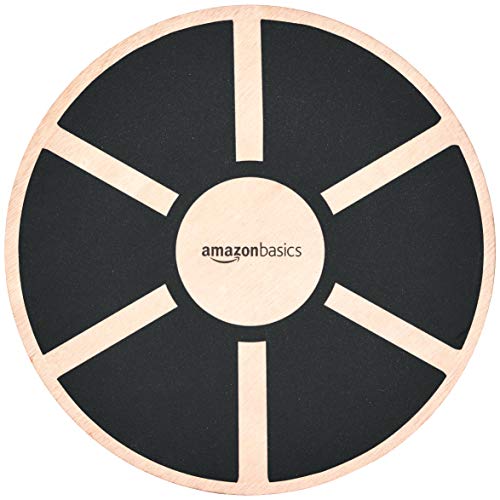
- Supports up to 265 pounds
- Non-slip surface for balance drills
- Useful for core, posture, and coordination work
Best For: Simple home, gym, or rehabilitation balance training
Most Versatile Option
3-in-1 Slant and Balance Board
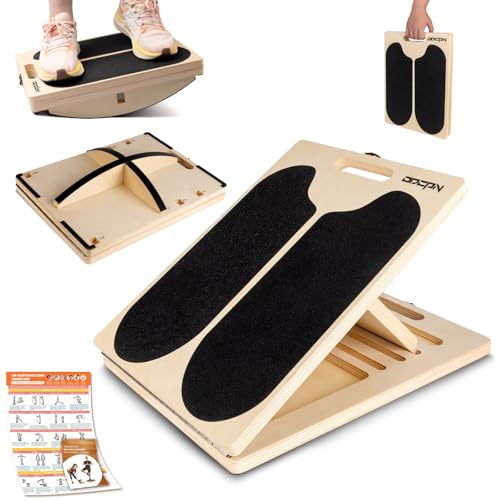
- Combines calf stretching and balance modes
- Six adjustable slant angles
- Magnetic panels support quick mode changes
Best For: Running mobility, recovery, and progressive balance work
Desk-Friendly Stability Pick
Wooden Wobble Board with Ankle Support

- Reinforced plywood construction
- Anti-slip pads help grip indoor floors
- Ready assembled for desk or workout use
Best For: Beginners, rehabilitation, and standing-desk balance practice
Best for Sports Agility

- Three adjustable stopper positions
- Supports up to 300 pounds
- Builds balance, agility, and core control
Best For: Sport-specific and progressive balance training
Best Overall
Advanced 360° Wood Balance Board

- 360° design for dynamic balance work
- Textured surface and sturdy wood construction
- Supports squats, planks, yoga, and conditioning
Best For: Versatile full-body balance and running-strength routines
Best Budget-Friendly Trainer
Wooden Anti-Slip Balance Board

- Simple platform for balance and core training
- Anti-slip surface and floor-protective base pads
- Portable, compact, and requires no assembly
Best For: Beginners and everyday home or office conditioning
Best for Foot and Ankle Stability
SIDEKICK AxisBoard Foot & Ankle Trainer

- Targets foot and ankle stabilizer muscles
- 900+ peg configurations for progression
- Includes guided Sidekick app programs
Best For: Athletes and runners focused on ankle stability and mobility
Best All-Around Wooden Trainer

- 350-pound weight capacity
- Anti-slip wood design with floor pads
- Works for balance, core, and rehab exercises
Best For: Versatile home workouts and physical therapy
Best for Ankle Stability

- Focused one-foot balance training
- Foldable with carry bag
- Non-slip pads and guided exercises
Best For: Running-related ankle and lower-body stability work
Best for Dynamic Movement

- 360-degree rotation with 15-degree tilt
- Textured plastic surface for grip
- Handles support portable use
Best For: Multidirectional workouts and standing-desk movement
Reliable Core Trainer – Amazon Basics Wood Wobble Board
If you want a straightforward balance board for running strength, this wood wobble trainer provides a stable platform for balance drills, planks, push-ups, and core-focused exercise. Its non-slip top and 265-pound capacity make it suitable for home workouts, gyms, and rehabilitation settings.
Best For: Adults and athletes seeking a simple board for core strength, posture, coordination, and balance exercises.
Pros:
- Supports up to 265 pounds.
- Non-slip surface helps provide a secure grip.
- Works for standing balance, planks, push-ups, and targeted strengthening.
- Compact wood design is suitable for home or gym use.
Cons:
- Use is limited to dry, non-slip surfaces.
- It does not offer adjustable angles or multiple balance modes.
This is a practical choice when you want an uncomplicated wobble board for foundational running-support exercises, especially core and lower-body stability work.
Most Versatile Option – 3-in-1 Slant and Balance Board
For a balance board for running strength that also supports mobility and recovery, this 3-in-1 model combines calf stretching with 180-degree directional balance and 360-degree rotation. Its adjustable slant angles let you vary stretching intensity while the balance modes target coordination and core control.
Best For: Runners and active users who want one tool for calf mobility, ankle recovery, balance, and core training.
Pros:
- Combines slant-board stretching with 180- and 360-degree balance modes.
- Offers six adjustable angles from 20 to 45 degrees.
- Wood construction is rated for up to 460 pounds in the product description.
- Detachable magnetic panels allow quick mode changes and compact storage.
Cons:
- Its multiple parts may require more setup than a basic wobble board.
- The listing contains conflicting capacity information, stating both 460 and 300 pounds.
This is the most adaptable option in the group, particularly if your running routine includes both pre- or post-workout calf stretching and progressive balance training.
Desk-Friendly Stability Pick – Wooden Wobble Board with Ankle Support
This wooden wobble board is a practical balance board for running strength when you want to add stability and posture work to a home or office routine. Reinforced plywood construction, anti-slip pads, and a ready-to-use design support balance, coordination, core training, and physical therapy exercises.
Best For: Beginners, desk users, and adults seeking a ready-assembled board for balance, posture, rehabilitation, and core work.
Pros:
- Plywood structure is described as supporting up to 350 pounds.
- Double reinforcement bands add stability and strength.
- Anti-slip and anti-scratch pads help grip floors while reducing wear and noise.
- Arrives assembled and can be used under a standing desk.
Cons:
- The notes do not specify adjustable difficulty or multiple balance settings.
- Its listed dimensions may take more floor space than a compact trainer.
Choose this model if convenience matters: it arrives assembled and can support short balance sessions alongside desk work, rehabilitation, or regular core training.
Best for Sports Agility – 3-in-1 Wooden Balance Trainer
For runners who also train across board sports or field activities, this 3-in-1 balance trainer provides a more dynamic balance board for running strength. Removable stoppers create three difficulty options, while the roller setup develops balance, coordination, agility, and control through the legs, thighs, waist, and core.
Best For: Active users who want progressive balance practice for running, surfing, snowboarding, skiing, skateboarding, and other sports.
Pros:
- Removable stoppers provide 11-, 16-, and 22-inch training distances or an advanced open setup.
- 15-ply pressed wood board supports up to 300 pounds.
- Emery surface and thick TPE-covered roller are designed to help prevent slipping and provide smooth use.
- Targets balance, agility, coordination, and lower-body and core control.
Cons:
- The roller format may be more challenging for beginners than a stationary wobble board.
- It requires more open space and active setup than compact standing boards.
This is a strong fit for sport-oriented users who want adjustable progression and a more active balance challenge rather than a simple stationary platform.
Best Overall – Advanced 360° Wood Balance Board
For shoppers seeking a balance board for running strength, this sturdy wooden model offers broad, 360° movement for balance, coordination, and stabilizer-muscle work. Its textured surface, portable handle openings, and 350-pound weight recommendation make it practical for home, gym, or travel training.
Best For: Runners and fitness users who want versatile balance, core, and lower-body stability training.
Pros:
- 360° rotation supports dynamic balance and coordination exercises.
- Wood construction and textured anti-slip surface provide a stable training platform.
- Works with squats, planks, push-ups, yoga, and other conditioning exercises.
- Arrives assembled and includes carry openings for portability.
Cons:
- Its larger platform may require more storage space than compact foot-focused trainers.
- The broad range of movement may be challenging for beginners initially.
This is the most versatile pick of the three for full-body balance practice. It suits running-strength routines that combine ankle control, core stability, and functional movements, though users should progress gradually.
Best Budget-Friendly Trainer – Wooden Anti-Slip Balance Board
This wooden balance board is a straightforward option for building balance, core control, and posture as part of a balance board for running strength routine. Its anti-slip surface, non-slip base pads, and no-assembly design make it easy to use at home, the office, or a standing desk.
Best For: Beginners, seniors, and everyday users who want simple stability and conditioning exercises.
Pros:
- Supports balance, core training, posture work, squats, planks, and push-ups.
- Anti-slip features help provide stable use while protecting floors.
- 350-pound maximum weight recommendation accommodates a wide range of users.
- Compact, portable, and ready to use without assembly.
Cons:
- The notes do not mention adjustable settings or guided exercise programs.
- It may offer fewer specialized progressions than a dedicated foot-and-ankle trainer.
Choose this model if you want an uncomplicated platform for gradual balance and strength practice. It is especially suitable for limited spaces and users who prefer familiar bodyweight exercises over specialized rehabilitation programming.
Best for Foot and Ankle Stability – SIDEKICK AxisBoard Foot & Ankle Trainer
The SIDEKICK AxisBoard takes a more targeted approach to a balance board for running strength, focusing on the foot and ankle stabilizers that support balance and lower-leg control. Its split-board design, adjustable peg configurations, and guided Sidekick app programs make it suited to structured training and rehabilitation.
Best For: Runners, athletes, and users rebuilding foot and ankle stability or mobility.
Pros:
- Split-board design targets underused foot and ankle stabilizing muscles.
- More than 900 peg configurations support adjustable progressions.
- Sidekick app includes guided 10-day programs and exercise videos.
- Portable, anti-slip, and backed by a lifetime warranty.
Cons:
- Its specialized foot-and-ankle focus is less suited to broad full-body balance exercises.
- Users seeking a simple rocker board may not need the app or adjustable peg system.
This is the strongest choice when running-strength goals center on ankle stability, dorsiflexion, and lower-leg conditioning. The structured programs can also make it easier to follow a consistent progression than with a basic balance board.
Best All-Around Wooden Trainer – Professional Wobble Board
If you want a versatile balance board for running strength, this wooden wobble board offers a broad platform for balance practice, core work, and conditioning drills. Its anti-slip surface, floor-protection pads, and 350-pound capacity make it suitable for home gyms, offices, or rehabilitation routines.
Best For: Adults seeking a versatile board for core training, balance development, physical therapy, or advanced exercises such as squats, planks, and push-ups.
Pros:
- Supports up to 350 pounds.
- Wood construction with an anti-slip surface.
- Suitable for balance training, rehabilitation, and core exercises.
- Compact and portable for home, gym, or office use.
Cons:
- The rocker-style design may offer less multidirectional movement than a 360-degree wobble board.
- Its compact standing area may require extra care from beginners.
Choose this model if you want one board that can support beginner balance practice while still accommodating more demanding strength and stability exercises.
Best for Ankle Stability – StrongTek Single-Leg Board
For runners prioritizing foot and ankle control, this single-leg balance board provides a focused balance board for running strength routine. Its controlled rocking motion targets stabilizer muscles, while the foldable design and carry bag make it practical for training at home, in the office, or at the gym.
Best For: Runners, athletes, and beginners who want focused single-leg ankle mobility, foot strength, coordination, and lower-body stability work.
Pros:
- Designed specifically for one-foot balance practice.
- Textured non-slip foot pads and a floor-gripping base support controlled movement.
- Folds compactly and includes a drawstring carry bag.
- Exercise guide supports beginner and advanced routines.
Cons:
- The single-leg format is less suitable for two-foot balance drills.
- Its 300-pound capacity is lower than the larger wooden wobble board in this roundup.
This is the most focused option for runners who want to emphasize ankle mobility, proprioception, and single-leg stability rather than full-body wobble-board exercises.
Best for Dynamic Movement – Yes4All Wobble Board
This plastic wobble board is a practical choice if your balance board for running strength routine includes dynamic, multidirectional movement. Its 360-degree rotation, 15-degree tilt, textured surface, and handles support balance drills, core exercises, and active standing at a desk.
Best For: Adults who want a portable board for multidirectional balance work, home-gym conditioning, core exercises, or movement during standing-desk sessions.
Pros:
- 360-degree rotation and 15-degree tilt enable varied movement drills.
- Textured surface helps improve foot grip.
- Supports up to 300 pounds.
- Lightweight 15.75-inch design includes handles for portability.
Cons:
- Plastic construction may feel less natural than a wooden board.
- The dynamic design can be challenging for users who are new to balance training.
Select this model when you value a wide range of movement patterns and want to combine balance work with planks, squats, mountain climbers, or standing-desk activity.
How We Picked the Best Balance Board for Running Strength
We focused on the features that most affect running-related training: movement range, surface grip, weight capacity, construction, portability, and ease of progression. The lineup includes wooden and plastic designs, single-plane mobility boards, 3-in-1 models, and systems intended for physical therapy or structured exercise.
Because product specifications can vary by seller and revision, verify the listed dimensions, maximum user weight, included accessories, and warranty before ordering. A higher capacity is useful for stability and durability, but it does not automatically mean a board is better for every runner.
Quick Comparison
| Best For | Look For | Typical Advantage |
|---|---|---|
| Beginners | Wide platform and moderate tilt | Easier learning curve |
| Ankle mobility | Slant or single-leg design | More targeted range-of-motion work |
| Core and balance training | 360-degree wobble movement | More dynamic stabilization |
| Rehabilitation | Strong grip and controlled movement | Safer, gradual progression |
| Standing desks | Compact shape and stable surface | Convenient low-intensity movement |
Key Buying Factors for a Balance Board for Running Strength
Movement and Difficulty
Full 360-degree boards challenge lateral and rotational control, while rocker-style boards provide a more predictable side-to-side or front-to-back motion. Beginners and runners returning from injury may benefit from a controlled rocker or slant board before moving to a highly unstable trainer.
Grip and Platform Size
Choose a textured, non-slip surface with enough room for your footwear or bare feet. A wider platform can make early sessions more manageable; a compact platform usually demands more precise foot and ankle control.
Construction and Capacity
Wooden boards often provide a firm, durable feel, while plastic models may be lighter and easier to carry. Check the stated weight limit and inspect the pivot, roller, handles, and edges. The board should remain stable on a hard, level floor without unexpected sliding.
Progression and Safety
Start near a wall, countertop, or sturdy support and use short sessions. Begin with two-foot balance, then add controlled weight shifts, single-leg holds, calf raises, and gentle reaches. Stop if you feel sharp pain, numbness, or unusual joint instability.
Who Should Buy Which Balance Board for Running Strength?
Choose a wide, moderate-motion board if you are new to balance training or want a general home workout tool. Select a slant or single-leg mobility board if ankle range of motion and calf flexibility are your priorities. A 360-degree wobble board suits experienced users seeking stronger core and foot-control demands.
For rehabilitation, prioritize predictable movement, high-friction contact points, and compatibility with guidance from a physical therapist. If you plan to use the board at a standing desk, favor a compact, stable model designed for frequent low-intensity use rather than the most challenging trainer. Runners who travel or train outdoors should also weigh portability, surface durability, and how easily the board can be stored.