Training by heart rate can make indoor cycling more purposeful, whether you are following structured intervals, managing effort, or simply tracking fitness progress. The right sensor should pair reliably with your bike trainer, cycling app, watch, or head unit without adding unnecessary setup.
This roundup compares 10 heart rate monitor options, including ANT+ and Bluetooth chest straps plus trainer display devices with built-in heart rate functions. Use the guide below to choose the best fit for your equipment, training style, and budget.
Best 10 Heart Rate Monitor for Bike Trainer Picks for 2026
Best Value Dual-Protocol Pick
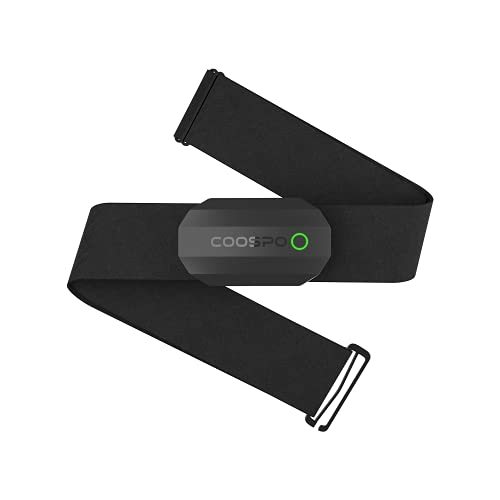
- ANT+ and Bluetooth connectivity
- Up to 300 hours of battery life
- Works with Zwift, Strava, Peloton, and more
Best For: Indoor cyclists wanting broad device and app compatibility
Best Garmin Ecosystem Pick

- Tracks heart rate and HRV
- Up to one year of battery life
- Machine-washable strap with 3 ATM rating
Best For: Garmin users training with compatible cycling computers and apps
Best Long-Battery Pick

- Up to 800 hours of battery life
- ANT+ and Bluetooth support
- Works with Zwift, TrainerRoad, Rouvy, and Fulgaz
Best For: Multi-platform indoor training with minimal battery maintenance
Best Built-In Display Pick

- Shows heart rate and key workout metrics
- Large LCD with automatic scanning
- Wired handlebar-mounted design
Best For: Compatible exercise bikes or ellipticals needing an integrated display
Reliable Dual-Mode Pick
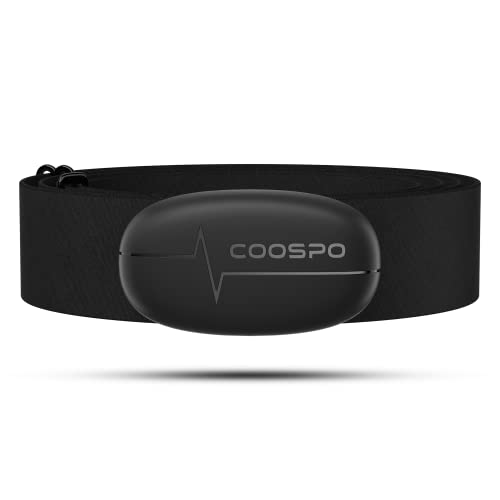
- Claimed ±1 BPM real-time data
- Bluetooth and ANT+ connectivity
- Up to 300 hours of battery life
Best For: Cyclists using multiple apps, watches, or bike computers
Best for Everyday Use

- Tracks heart rate and core workout metrics
- Includes sensor and connection cables
- Wired LCD handlebar-mount design
Best For: Stationary bikes or ellipticals needing a replacement display
Long-Life Precision Choice

- ECG algorithm supports precise tracking
- Bluetooth and ANT+ connectivity
- Up to 500 hours of battery life
Best For: Structured training and HRV-focused indoor cycling
Budget Connectivity Pick
POWR LABS Bluetooth ANT+ Chest Strap
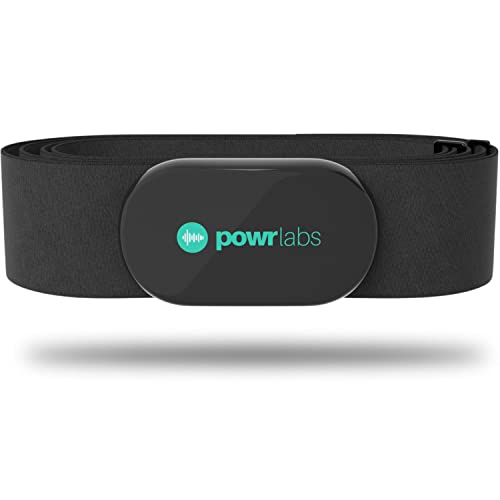
- ANT+ and Bluetooth connectivity
- 400-plus-hour claimed battery life
- Comfortable, sweat-resistant strap
Best For: Riders needing broad device compatibility for regular trainer workouts
Long-Life Training Option
Magene H64 ANT+/Bluetooth Chest Strap

- ANT+ and Bluetooth dual transmission
- 1,000-hour claimed battery life
- IP67 dustproof and waterproof design
Best For: App-focused indoor cyclists using Zwift, TrainerRoad, or similar platforms
Premium Accuracy Choice
Polar H10 Waterproof HR Sensor

- Highly precise heart rate measurement
- ANT+, Bluetooth, and 5 kHz connectivity
- Waterproof strap with internal memory
Best For: Structured trainer workouts where accuracy and connection flexibility matter
Best Value Dual-Protocol Pick – COOSPO H808S Chest Strap
If you need a heart rate monitor for bike trainer workouts, the COOSPO H808S offers ANT+ and Bluetooth connectivity for pairing with bike computers, smartphones, fitness equipment, and apps. Its chest-strap design, IP67 water resistance, and replaceable CR2032 battery make it a practical training companion.
Best For: Indoor cyclists who want broad app and device compatibility at a practical price.
Pros:
- Supports both ANT+ and Bluetooth connections.
- Compatible with platforms and devices including Zwift, Strava, Peloton, Wahoo Fitness, and bike computers.
- Offers up to 300 hours of battery life with a replaceable CR2032 battery.
- IP67 waterproof construction and LED/beep status reminders.
Cons:
- The electrode zones should be moistened before use.
- The strap is recommended for replacement after six months or 300 washes.
- Connection should be made through the fitness app rather than the phone’s Bluetooth settings.
The H808S is a versatile choice for trainer setups that use different apps or devices. Its dual transmission modes are especially useful when you want flexibility between ANT+ cycling equipment and Bluetooth fitness apps.
Best Garmin Ecosystem Pick – Garmin HRM 200
The Garmin HRM 200 is a heart rate monitor for bike trainer sessions that sends real-time heart rate and heart rate variability data to compatible Garmin devices, cycling computers, fitness equipment, and apps. It combines a replaceable battery, machine-washable strap, and 3 ATM water rating for regular training use.
Best For: Garmin users who want heart rate and HRV data integrated with compatible cycling equipment and apps.
Pros:
- Transmits real-time heart rate and heart rate variability data.
- Compatible with Garmin smartwatches, cycling computers, fitness equipment, apps, and smartphones.
- Provides up to one year of battery life with a user-replaceable battery.
- Includes a machine-washable strap and 3 ATM water rating.
Cons:
- Compatibility is described as being with compatible devices and apps, so users outside those ecosystems should verify support.
- The listed version is the M–XL size.
For a Garmin-centered indoor cycling setup, the HRM 200 focuses on long-term convenience and data integration. Its extended battery life and washable strap make it well suited to frequent training.
Best Long-Battery Pick – GEOID HS500 Chest Strap
For a heart rate monitor for bike trainer use, the GEOID HS500 stands out with ANT+ and Bluetooth support plus up to 800 hours of battery life. It can connect to bike computers, smartphones, treadmills, and indoor training apps such as Zwift, TrainerRoad, Rouvy, Fulgaz, and Wahoo Fitness.
Best For: Indoor cyclists who prioritize long battery life and wide training-platform compatibility.
Pros:
- Supports both ANT+ and Bluetooth connections.
- Compatible with multiple cycling computers and trainer apps, including Zwift, TrainerRoad, Rouvy, and Fulgaz.
- Offers up to 800 hours of battery life with a replaceable CR2032 battery.
- Includes IP67 water resistance, automatic wake-up, and an LED connection reminder.
Cons:
- Swimming is not recommended.
- Bluetooth pairing should be completed through the app rather than directly through phone settings.
- The sensor requires proper wearing for the automatic wake-up and LED confirmation features.
The HS500 is a strong fit for riders who do not want to frequently replace batteries. Its long runtime and support for popular indoor cycling platforms make it particularly convenient for a multi-app trainer setup.
Best Built-In Display Pick – Exercise Bike LCD Monitor
This exercise bike computer is a heart rate monitor for bike trainer equipment with a built-in LCD display. In addition to heart rate measurement, it shows speed, time, calories, and distance, giving you a simple on-bike view of core workout metrics without relying on a separate wearable.
Best For: Home-gym users who need a replacement or add-on display for a compatible exercise bike or elliptical.
Pros:
- Displays heart rate, speed, time, calories burned, and distance.
- Uses a large LCD screen intended for easy viewing during exercise.
- Includes an automatic scanning function that cycles through workout values.
- Uses wired connectivity with handlebar mounting and button controls.
Cons:
- Compatibility depends on checking the monitor’s size specifications against your equipment.
- The supplied details identify the sensor as a speed sensor, so heart-rate sensing compatibility should be verified for your specific bike.
- It is a wired display rather than a standalone ANT+ or Bluetooth chest strap.
This monitor is best viewed as an equipment display rather than a general-purpose wearable heart-rate sensor. It can make a compatible indoor bike or elliptical easier to monitor, but checking fit and wiring requirements before purchase is important.
Reliable Dual-Mode Pick – COOSPO H6 Chest Strap
For riders seeking a dependable heart rate monitor for bike trainer workouts, the COOSPO H6 offers real-time readings through both Bluetooth and ANT+. It works with cycling computers, sports watches, gym equipment, and popular training apps, making it a flexible choice for indoor sessions.
Best For: Cyclists who want broad device and app compatibility with a replaceable-battery chest strap.
Pros:
- Provides claimed ±1 BPM real-time heart rate data.
- Supports both Bluetooth and ANT+ connections.
- Works with apps and equipment including Zwift, Strava, Peloton, Garmin, and Concept2.
- Offers IP67 protection and up to 300 hours of battery life.
Cons:
- The electrode areas should be moistened before use for stable transmission.
- It is not intended for swimming or soaking.
- The sensor should be separated from the strap after workouts.
The H6 is a practical all-around option for a bike trainer setup, especially when you use multiple apps or devices. Its replaceable CR2032 battery and dual wireless modes add convenience, while the chest-strap design supports consistent training data.
Best for Everyday Use – Exercise Bike Monitor
This replacement-style exercise monitor is suited to stationary bike or elliptical trainer users who want workout metrics displayed in one place. Along with heart rate, its LCD tracks time, speed, calories, mileage, and distance through a wired handlebar-mounted setup.
Best For: Home-gym users who need a dedicated replacement display for a compatible stationary bike or elliptical trainer.
Pros:
- Displays heart rate, time, speed, calories, mileage, and total distance.
- Includes the monitor, heart rate sensor, and sensor cables.
- Uses an automatic scan mode to cycle through workout data.
- Its compact 5.4-inch LCD has a handlebar-mount design.
Cons:
- Connectivity is wired rather than Bluetooth or ANT+.
- Compatibility may depend on the stationary bike or elliptical trainer’s setup.
- The supplied notes do not specify wireless app or cycling-computer support.
Unlike a standalone chest strap, this product combines heart-rate sensing with a dedicated exercise-machine display. It makes the most sense when you want an on-machine readout and are replacing or upgrading a compatible wired monitor.
Long-Life Precision Choice – CYCPLUS H2Pro Chest Strap
The CYCPLUS H2Pro is a strong heart rate monitor for bike trainer workouts when precise readings and long battery life matter. Its ECG-based algorithm is designed to reduce interference from movement, breathing, muscle tension, and sweat, while Bluetooth and ANT+ support smooth connections to cycling computers, watches, and fitness apps.
Best For: Structured indoor cyclists who prioritize detailed heart-rate tracking, HRV data, and infrequent battery changes.
Pros:
- Uses ECG monitoring algorithms to capture heartbeat changes and support HRV tracking.
- Connects via Bluetooth or ANT+ to compatible apps and devices.
- Offers up to 500 hours of operation from a CR2032 battery.
- Features a lightweight, breathable, adjustable strap and IPX7 protection.
Cons:
- It is a chest strap, so users must wear a separate sensor rather than read data from a display.
- Its advanced HRV features may be more than casual riders need.
- The supplied notes do not specify the exact battery replacement process.
H2Pro stands out for riders who want a chest strap focused on signal quality and training analysis. The combination of ECG-based tracking, dual wireless connectivity, and a claimed 500-hour battery makes it well suited to frequent trainer sessions.
Budget Connectivity Pick – POWR LABS Bluetooth ANT+ Chest Strap
If you need a heart rate monitor for bike trainer workouts, the POWR LABS chest strap offers both ANT+ and Bluetooth connectivity for cycling computers, smartwatches, Peloton, and compatible fitness apps. Its long claimed battery life and sweat-resistant design make it practical for frequent training.
Best For: Riders who want broad device compatibility, extended battery life, and a comfortable strap for regular indoor or outdoor sessions.
Pros:
- Dual ANT+ and Bluetooth connectivity supports many cycling and fitness devices.
- Claimed 400-plus-hour battery life with a replaceable battery included.
- Soft, adjustable strap is designed for comfort during long workouts.
- IPX67 water- and sweat-resistant construction suits demanding training.
Cons:
- The monitor must be worn before pairing.
- Compatibility depends on the receiving app or device supporting ANT+ or Bluetooth.
Choose this model when convenience and cross-platform connectivity matter more than advanced onboard features. Its straightforward chest-strap design is well suited to trainer sessions and everyday cardio tracking.
Long-Life Training Option – Magene H64 ANT+/Bluetooth Chest Strap
For a heart rate monitor for bike trainer use, the Magene H64 supports simultaneous ANT+ and Bluetooth transmission, allowing a workout to be recorded by a compatible device and app. Its optimized sensor and 1,000-hour claimed battery life suit consistent indoor training.
Best For: Cyclists who want to connect a trainer setup, bike computer, and fitness apps through ANT+ or Bluetooth.
Pros:
- Supports ANT+ and Bluetooth with stable dual transmission.
- Works with listed platforms including Zwift, TrainerRoad, Rouvy, Wahoo Fitness, and Kinomap.
- Claimed 1,000-hour battery life helps reduce battery changes.
- IP67 dustproof and waterproof design adds protection during exercise.
Cons:
- Phone users must search for the sensor inside the app rather than system Bluetooth settings.
- The electrode area should be moistened and positioned correctly for detection.
- The battery is pre-installed but requires removal of its insulating sheet before first use.
The H64 is a practical choice for app-based trainer workouts, especially if you want the same sensor to feed multiple compatible systems. Setup details matter, but the dual-protocol support and long claimed runtime are useful advantages.
Premium Accuracy Choice – Polar H10 Waterproof HR Sensor
The Polar H10 is a strong heart rate monitor for bike trainer sessions when measurement accuracy and flexible connectivity are priorities. It supports ANT+, Bluetooth, and 5 kHz connections, with simultaneous Bluetooth and ANT+ use for compatible equipment and apps.
Best For: Riders who prioritize a widely recognized sensor, multiple connection options, and a comfortable chest strap.
Pros:
- Designed for highly precise heart rate measurement.
- Supports Bluetooth, ANT+, and 5 kHz connectivity.
- Can use Bluetooth and ANT+ simultaneously, plus two Bluetooth connections simultaneously.
- Fully waterproof and includes internal memory for multiple hours.
Cons:
- Battery life is listed at 400 hours, less than some competing models in this roundup.
- Requires a CR2025 battery; other battery sizes may cause malfunction or damage.
- Some advanced connection features depend on compatible equipment.
The H10 makes sense for riders who want a well-established sensor with broad connectivity and a refined strap design. It is a particularly suitable pick for structured training where dependable heart rate data is important.
How We Picked the Best Heart Rate Monitor for Bike Trainer Use
We focused on compatibility, connection stability, comfort, battery life, water resistance, and practical value. Chest-strap monitors generally provide more responsive readings during intervals than wrist-based devices, while ANT+ and Bluetooth support makes it easier to connect with cycling computers, smart trainers, phones, watches, and apps. We also considered whether each product suits casual indoor riding or more demanding, data-focused training.
Quick Comparison
Most of the chest straps in this roundup support both ANT+ and Bluetooth, giving you flexibility across devices. Garmin HRM 200 and Polar H10 are strong choices for established training ecosystems. COOSPO, GEOID, CYCPLUS, POWR LABS, and Magene offer feature-rich alternatives with long stated battery life. The exercise bike monitor options are better for riders who want a dedicated on-bike display rather than app connectivity.
Key Buying Factors for a Heart Rate Monitor for Bike Trainer
Connection Compatibility
Check whether your trainer, cycling computer, smartwatch, or training app uses ANT+, Bluetooth, or both. Dual-protocol support is usually the safest choice, especially if you switch between a phone and a head unit.
Chest Strap Fit and Accuracy
A secure, adjustable textile strap should stay in place while you stand or sprint. Look for a comfortable electrode area and a replaceable strap when possible. Moisten the contact points before riding to improve initial signal pickup.
Battery Life and Charging
Long battery life reduces maintenance for frequent riders. Coin-cell models can be convenient for extended use, while rechargeable designs may be preferable if you want to avoid replacing batteries. Confirm whether the battery is user-replaceable.
Water Resistance and Maintenance
Sweat resistance is essential for indoor training. IP67-rated sensors are well suited to sweaty sessions, but the strap should still be rinsed and dried according to the manufacturer’s instructions.
Who Should Buy Which Heart Rate Monitor for Bike Trainer?
Choose the Polar H10 or Garmin HRM 200 if you prioritize a recognizable training ecosystem and dependable everyday connectivity. Select a COOSPO, GEOID, CYCPLUS, POWR LABS, or Magene strap if you want ANT+/Bluetooth flexibility and strong battery claims at a potentially lower cost. A dedicated exercise bike monitor makes more sense for riders who do not want to use a phone, watch, or cycling computer. Before buying, verify app compatibility, strap sizing, and whether your trainer can receive the sensor’s signal directly.