The best resistance bands for rehab make it easier to add controlled resistance without relying on heavy weights or complicated equipment. They can support mobility drills, assisted movement, physical therapy exercises, and gradual strength progression at home.
This roundup compares 10 band sets across different resistance levels, shapes, materials, and use cases so you can choose equipment that fits your recovery plan and comfort needs.
Best 10 Resistance Bands for Rehab Picks for 2026
Best Non-Latex Pick
THERABAND Light Resistance Set

- Three color-coded light resistance levels
- Non-latex material for sensitive users
- Portable flat bands for rehab and stretching
Best For: Beginners and gentle rehabilitation routines
Best Guided Loop Set

- Five progressive resistance levels
- Includes an illustrated instruction guide
- Loop design and carry bag support portable workouts
Best For: Rehab users wanting guided, progressive loop exercises
Best TPE Therapy Set
Five-Level Physical Therapy Bands
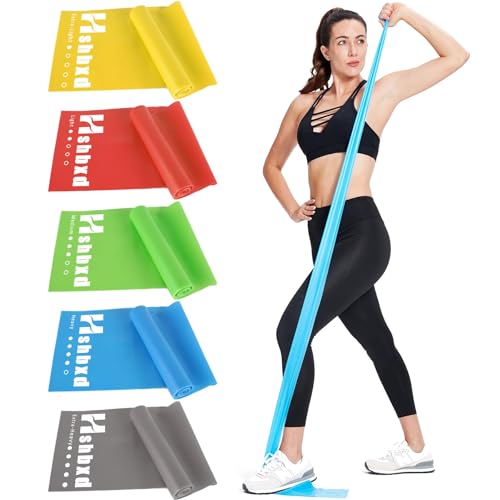
- Five graduated resistance levels
- Latex-, powder-, and fragrance-free TPE
- Wide straps for rehab, yoga, and Pilates
Best For: Users seeking versatile latex-free flat therapy bands
Best Heavy-Duty Option

- Five levels from 5 to 125 pounds
- Useful for rehab and assisted strength training
- Includes storage bag, manual, and one-year warranty
Best For: Experienced users needing wide resistance coverage
Versatile Starter Set
5-Level Rehab Resistance Bands

- Five tensions from extra light to extra heavy
- Supports physical therapy, stretching, and strength work
- Includes a carry bag for storage and travel
Best For: Beginners and users progressing through varied rehab exercises
Progressive Strength Kit

- Five long bands span 5–125 pounds
- Useful for assisted pull-ups and physical therapy movements
- Includes a bag and workout guide
Best For: Progressive rehab and strength routines needing long bands
Latex-Free Comfort Pick

- Latex-free TPE construction
- Five-foot by six-inch bands for flexible positioning
- Includes three color-coded resistance levels
Best For: Latex-sensitive users doing stretching and rehabilitation
Best Overall

- Five resistance levels from 3 to 20 pounds
- Latex-free, odorless TPE construction
- 59-inch open-ended bands for rehab and mobility work
Best For: Gradual rehabilitation and strength progression
Best for Progression

- Five labeled levels from 5 to 30 pounds
- Combine bands for up to 80 pounds
- Six-month warranty and compact latex-free design
Best For: Progressive rehab routines and portable therapy exercise
Best Three-Level Set

- Three resistance levels from 7.3 to 21.3 pounds
- Latex-free, smooth, non-sticky TPE material
- Designed for therapy, recovery, stretching, and strength work
Best For: Simple physical therapy and recovery routines
Best Non-Latex Pick – THERABAND Light Resistance Set
For shoppers seeking resistance bands for rehab, this THERABAND set offers three clearly color-coded, light-resistance levels for controlled movement and gradual progression. The flat, 5-foot bands are suitable for stretching, physical therapy, Pilates, and low-impact strength work.
Best For: Beginners, gentle rehabilitation routines, and users who need non-latex bands.
Pros:
- Non-latex construction is suitable for sensitive skin and latex-free environments.
- Three color-coded resistance levels help track gradual progress.
- Flat bands support stretching, mobility work, and upper- or lower-body exercises.
- Lightweight and easy to wipe clean.
Cons:
- Only three resistance levels are included.
- The set is designed for light tension rather than advanced strength training.
This is a practical rehab-focused option when comfort, portability, and easy resistance identification matter more than maximum load.
Best Guided Loop Set – Fit Simplify Five-Level Bands
Fit Simplify Resistance Loop Exercise Bands with Instruction Guide and Carry Bag, Set of 5
Check Price On AmazonThis Fit Simplify set is a versatile choice among resistance bands for rehab, combining five looped resistance levels with an instruction guide. The compact bands can support stretching, physical therapy, and progressive lower- or upper-body exercises at home or while traveling.
Best For: Users who want loop bands, multiple resistance options, and exercise guidance.
Pros:
- Five color-coded levels accommodate beginner through advanced training.
- Loop design works well for legs, hips, shoulders, arms, and back exercises.
- Instruction booklet includes illustrated exercises for multiple body areas.
- Carry bag makes the set convenient to transport.
Cons:
- Made from latex, so it may not suit users with latex sensitivity.
- Loop bands offer less length flexibility than flat therapy bands.
Choose this set if you want a structured, portable loop-band kit that can move from gentle rehabilitation to more demanding strength work.
Best TPE Therapy Set – Five-Level Physical Therapy Bands
These TPE bands provide five long, wide resistance straps for physical therapy, rehab, yoga, Pilates, and stretching. The latex-free and powder-free material makes them worth considering for shoppers comparing resistance bands for rehab and looking for several graduated tension levels.
Best For: Users who want wide flat straps, latex-free material, and five resistance levels for mobility or therapy exercises.
Pros:
- TPE construction is latex-free, powder-free, and fragrance-free.
- Five colors and resistance levels support gradual progression.
- Long, wide straps can be used for stretching, Pilates, yoga, and physical therapy.
- Compact design is suitable for home, studio, gym, or travel use.
Cons:
- The supplied details use varying resistance figures, so exact tension may require verification.
- These are flat straps rather than ready-made loops.
This set offers broad exercise versatility and a comfortable material profile, especially for users who prefer flat therapy straps and want more than three resistance levels.
Best Heavy-Duty Option – Pull Up and Rehab Band Set
This natural-latex set spans five resistance levels from 5 to 125 pounds, making it the most strength-oriented option here. While suitable for stretching and physical therapy, these long pull-up bands are better for users who want rehabilitation flexibility alongside muscle training and assisted bodyweight exercises.
Best For: Experienced users who need broad resistance coverage for rehab, stretching, and strength training.
Pros:
- Five levels cover light assistance through very high resistance.
- Supports stretching, physical therapy, pull-up assistance, squats, presses, and other full-body exercises.
- Multiple bands can be combined to increase resistance.
- Includes a storage bag, instruction manual, and one-year warranty.
Cons:
- Natural latex is unsuitable for users with latex sensitivity.
- These 82-inch pull-up bands may be more substantial than needed for gentle, targeted rehab work.
- The set weighs about 1.01 kg, making it less lightweight than the smaller kits.
This is a strong choice when a rehab band set must also accommodate demanding strength work, but users seeking delicate therapy resistance may prefer a lighter flat-band design.
Versatile Starter Set – 5-Level Rehab Resistance Bands
For shoppers seeking resistance bands for rehab, this five-piece set offers light through extra-heavy tension in a compact format. The natural latex bands are designed for stretching, physical therapy, Pilates, yoga, and general strength work, with a carry bag for storage or travel.
Best For: Beginners, seniors, and users who want multiple resistance levels for rehabilitation, mobility work, and full-body training.
Pros:
- Five resistance levels support gradual progression from extra light to extra heavy.
- Suitable for physical therapy, stretching, Pilates, yoga, and strength exercises.
- Targets the arms, legs, hips, shoulders, back, knees, and ankles.
- Includes a carry bag and non-rolling design for convenient storage and transport.
Cons:
- Made from natural latex, so it may not suit users with latex allergies.
- The set’s flat and mini-loop format may be less suitable for pull-up assistance.
This is a practical all-around choice when rehab routines may change over time. Its five tension levels make it easier to begin gently and increase resistance as strength improves.
Progressive Strength Kit – Pull-Up Assist Rehab Bands
These resistance bands for rehab are long pull-up-style bands with five labeled tension ranges from 5–15 to 50–125 pounds. Their wide range can support physical therapy movements, rows, raises, pulls, and broader strength training, while the included bag keeps the set portable.
Best For: Users who need long bands for assisted movements, progressive resistance training, or clinic, home, and travel workouts.
Pros:
- Five bands cover a broad stated resistance range of 5–125 pounds.
- Long 81.9-inch bands work for rows, pulls, raises, and assisted pull-ups.
- Made from double-layered natural latex with an anti-slip design.
- Includes a storage bag and workout guide.
Cons:
- Natural latex may not be appropriate for people with latex allergies.
- The set weighs about 1 kg, making it less lightweight than simpler rehab-band kits.
- The heavier bands may be more resistance than some early-stage rehabilitation routines require.
This set is a strong fit when rehabilitation overlaps with strength rebuilding or assisted bodyweight work. Its resistance range allows users to select lighter bands for controlled exercises and progress toward heavier training.
Latex-Free Comfort Pick – Long Rehab Stretch Bands
For resistance bands for rehab without natural latex, this three-band set uses thermoplastic elastomer and provides light, medium, and extra-heavy options. Each five-foot by six-inch band is suited to physical therapy, yoga, Pilates, stretching, and at-home or gym training.
Best For: People seeking latex-free bands for rehabilitation, stretching, and adaptable exercises at home, in a clinic, or while traveling.
Pros:
- Latex-free TPE construction can suit users who avoid latex.
- Five-foot-long, six-inch-wide bands provide room for wrapping, tying, or doubling.
- Color-coded light, medium, and extra-heavy levels simplify progression.
- Includes an illustrated guide with 12 exercises and a 12-month warranty.
Cons:
- Only three resistance levels are included, fewer than some five-band sets.
- The bands require tying or wrapping for certain loop-style exercises.
- No carry bag is listed among the included components.
This is the most targeted option for latex-sensitive users who want wide, long bands for controlled rehabilitation movements. The simple three-level setup keeps selection straightforward while still allowing progression.
Best Overall – Five-Level TPE Rehab Bands
For shoppers comparing resistance bands for rehab, this five-band TPE set offers a broad progression from extra-light to extra-heavy resistance. The latex-free, 59-inch-by-6-inch bands are designed for physical therapy, mobility work, Pilates, yoga, and general strengthening.
Best For: Users who want five clearly differentiated resistance levels for rehabilitation and gradual strength progression.
Pros:
- Five resistance levels ranging from 3 to 20 pounds.
- Latex-free, odorless TPE with a smooth, skin-friendly surface.
- Long, open-ended design works for stretching, mobility, Pilates, and strengthening.
Cons:
- Only a one-month warranty is listed.
- Open-ended bands do not include handles or straps.
This is a flexible choice for rehab routines that may require frequent changes in resistance. Its five-level range is especially useful when progressing from gentle mobility exercises toward more demanding strengthening work.
Best for Progression – Renoj Pilates Flexbands
These Renoj bands stand out among resistance bands for rehab because the five levels are marked at 5, 10, 15, 20, and 30 pounds. The latex-free TPE set supports stretching, Pilates, physical therapy, and low-impact strengthening, while multiple bands can be combined for up to 80 pounds of total resistance.
Best For: Rehab users who want clearly marked resistance steps and the option to combine bands as their strength improves.
Pros:
- Five labeled resistance levels from 5 to 30 pounds.
- Multiple bands can be combined for up to 80 pounds of resistance.
- Lightweight, compact, latex-free, and suitable for home or travel use.
- Six-month warranty provides longer stated coverage than the other listed options.
Cons:
- Higher combined resistance may be more than some early-stage rehab routines require.
- No handles, straps, or other accessories are included.
Renoj offers the most explicit progression path in this group, from light stretching to more challenging muscle work. Its portability and smooth stretch make it practical for home therapy sessions or routines away from home.
Best Three-Level Set – Professional Therapy Bands
For a simpler approach to resistance bands for rehab, this three-band TPE set covers light, medium, and heavy resistance. The 59-inch-by-5.9-inch latex-free bands are intended for physical therapy, recovery, stretching, yoga, Pilates, and strength training across major muscle groups.
Best For: Buyers who prefer a straightforward three-level setup for therapy, recovery, and general conditioning.
Pros:
- Three resistance ranges from 7.3 to 21.3 pounds.
- Latex-free, odorless TPE with a smooth, non-sticky surface.
- Suitable for exercises involving the legs, hips, arms, abdomen, and cervical spine.
- Includes a training guide according to the product notes.
Cons:
- Fewer resistance levels than the five-band sets.
- Only a seven-day warranty is listed.
- Resistance ranges overlap slightly between levels.
This set is a practical pick when simplicity matters more than fine-grained resistance changes. It provides three usable levels for recovery and conditioning, though users seeking smaller progression steps may prefer a five-band set.
How We Picked the Best Resistance Bands for Rehab
We focused on the features that matter most during recovery: manageable resistance, useful progression, comfortable handling, portability, and suitability for controlled upper- and lower-body exercises. The selection includes flat therapy bands, loop bands, long stretch bands, and pull-up-style bands because each format supports different movements.
We also considered whether a set offers multiple resistance levels, clear exercise guidance, storage or travel accessories, and latex-free alternatives. Always follow your clinician’s instructions, particularly after surgery, an acute injury, or when pain, swelling, numbness, or instability is present.
Quick Comparison
- Best for traditional therapy exercises: Flat elastic bands are easy to wrap, hold, tie, or anchor for controlled movements.
- Best for hip and leg work: Mini loop bands stay around the thighs or ankles for lateral steps, glute activation, and stability drills.
- Best for full-body versatility: Long bands accommodate rows, presses, stretching, and assisted movements.
- Best for latex sensitivity: Latex-free sets can provide a more comfortable alternative, though material and stretch should still be verified.
- Best for progression: Sets with several resistance levels make it easier to increase challenge gradually.
Key Buying Factors for Resistance Bands for Rehab
Resistance and Progression
Choose a level that allows smooth, pain-free repetitions with good control. A multi-level set is usually more useful than a single heavy band because rehabilitation often requires small increases in resistance.
Band Style
Flat bands work well for physical therapy routines and can be adjusted to change tension. Loop bands are convenient for hip, knee, and lower-body exercises. Long bands offer the broadest range of movement but may require more space or a secure anchor.
Material and Comfort
Latex generally provides elastic stretch and a familiar feel, while latex-free materials may suit users with allergies or sensitivities. Look for smooth edges, consistent thickness, and a surface that does not pinch or roll excessively.
Safety and Handling
Inspect bands for cracks, thinning, tears, or permanent deformation before each session. Avoid using a damaged band, overstretching it beyond the manufacturer’s guidance, or anchoring it to an unstable object. Keep movements slow and stop if an exercise causes sharp or worsening pain.
Who Should Buy Which Resistance Bands for Rehab?
Choose a flat therapy band if you are following a clinician-provided routine involving shoulder, arm, back, or gentle leg exercises. Choose mini loops if your priority is hip and glute activation, knee tracking, or lower-body stability. Choose long bands if you want one set for rehabilitation, stretching, strength training, and assisted mobility work.
If portability matters, select a compact set with a carry bag and exercise guide. If allergies are a concern, prioritize a clearly labeled latex-free option. For beginners or anyone returning after an injury, start with the lightest suitable resistance and progress only when your form and symptoms remain stable.