The best medicine balls for core workouts make it easier to add resistance, rotation, instability, and explosive movement to your training. The right choice depends on your strength level, available space, exercise style, and whether you need a reboundable or dead-weight design.
We compared 10 options across weight ranges, materials, grip, durability, and intended use so you can choose a ball that fits everything from Pilates and physical therapy to weighted core exercises and conditioning circuits.
Best 10 Medicine Balls for Core Picks for 2026
Best Budget Pick
Amazon Basics 6-Pound Medicine Ball

- 6-pound rubber construction
- Textured grip with labeled weight
- Works for core and full-body moves
Best For: Beginners wanting a versatile medicine ball for home workouts
Best Weight Range
RitFit Adjustable-Choice Medicine Ball

- Available from 2 to 20 pounds
- Textured rubber, non-slip surface
- Supports core, balance, and power work
Best For: Progressive training across different fitness levels
Best for Slams
ProsourceFit 20-Pound Deadweight Ball

- Sand-filled design minimizes bounce
- Tread texture supports a secure grip
- Built for slams and intense conditioning
Best For: Experienced users performing heavy slam-ball workouts
Best Mini Option

- Small inflatable 9-inch design
- Non-slip PVC surface
- Includes two balls and inflation accessories
Best For: Low-impact Pilates, stability, and rehabilitation exercises
All-Around Rubber Choice
ProsourceFit Weighted Medicine Ball

- 8-pound rubber ball for full-body workouts
- Textured surface supports a stable grip
- Available from 4 to 12 pounds
Best For: Core, partner, throwing, and progressive strength workouts
Compact Pilates Option
ProsourceFit Weighted Toning Ball
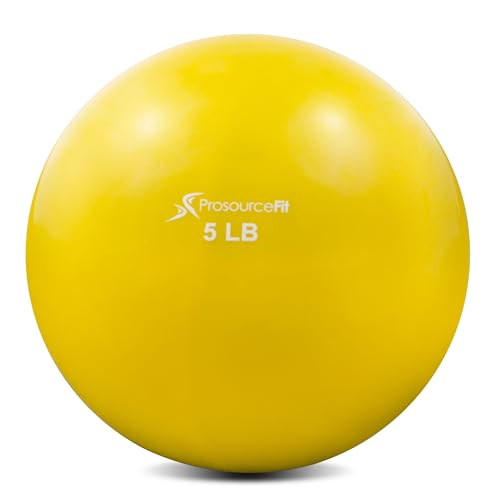
- 5-pound sand-filled ball for controlled movement
- Compact design suits travel and home workouts
- Useful for Pilates, yoga, and physical therapy
Best For: Low-impact core, toning, and stability exercises
Best Grip Slam Ball

- Textured PVC shell supports a secure grip
- Non-bouncing design helps control floor drills
- Works for core and full-body strength exercises
Best For: Home, CrossFit-style, and high-intensity strength workouts
Best Functional Fitness Pick

- Adds resistance to core and balance drills
- Fits circuit, conditioning, and home-gym workouts
- Supports dynamic full-body training
Best For: Functional fitness and full-body conditioning routines
Best Lightweight Pair

- Includes two lightweight 1-pound balls
- Palm-friendly design suits controlled movements
- Useful for toning, balance, yoga, and rehab
Best For: Low-impact core work and portable toning sessions
Best Budget Pick – Amazon Basics 6-Pound Medicine Ball
If you want medicine balls for core workouts without committing to a very heavy load, this 6-pound Amazon Basics model is a practical starting point. Its firm rubber construction, lightly textured surface, and ability to bounce off hard surfaces support familiar moves such as weighted twists, sit-ups, squats, and ball tosses.
Best For: Beginners and home exercisers seeking a versatile, moderately weighted ball for core, balance, and full-body training.
Pros:
- 6-pound weight suits a broad range of core and full-body exercises
- Textured rubber surface helps provide a secure grip
- Weight is labeled on both sides for easy identification
- Can bounce off hard surfaces for toss-based exercises
Cons:
- Only one 6-pound weight is included
- Rubber construction may not suit users who specifically want a non-bouncing slam ball
With its manageable weight and straightforward rubber design, this is a solid all-purpose option for medicine ball core routines, especially if you want one ball for twists, sit-ups, squats, and balance work.
Best Weight Range – RitFit Adjustable-Choice Medicine Ball
The RitFit stands out among medicine balls for core training because it is available in ten weight options, from 2 to 20 pounds. This makes it easier to start at a manageable level and progress as your strength improves, while the basketball-like rubber texture supports exercises such as squats, presses, lunges, push-ups, and chest tosses.
Best For: Users who want multiple weight choices for progressive core, balance, coordination, and full-body training.
Pros:
- Ten listed weight options accommodate beginners through seasoned athletes
- Textured, non-slip rubber surface supports a comfortable grip
- Designed for strength, coordination, balance, and explosive movements
- Includes a stated one-year warranty
Cons:
- The supplied listing specifies one selected ball, not a complete weight set
- Heavier options may be challenging for beginners
RitFit is a flexible choice if progression matters. Selecting a lighter model first and moving upward over time can help keep medicine ball core training appropriately challenging without requiring a new brand or design.
Best for Slams – ProsourceFit 20-Pound Deadweight Ball
For high-intensity medicine balls for core workouts, this 20-pound ProsourceFit slam ball is built for impact-focused training. Its sand-filled deadweight design minimizes bouncing and rolling, while the molded PVC/rubber shell and tire-tread texture are intended to improve durability and grip during slams, throws, presses, squats, and core exercises.
Best For: Experienced users seeking a heavy, non-bouncing ball for slam training, conditioning, and demanding core work.
Pros:
- Sand-filled construction minimizes bouncing and rolling
- Tire-tread surface provides traction during intense workouts
- Waterproof PVC rubber shell helps limit sweat buildup
- Available in weights from 5 to 50 pounds, including the listed 20-pound model
Cons:
- 20 pounds can be demanding for beginners
- Deadweight design is not intended for bouncing exercises
- The manufacturer recommends starting with 10 to 15 pounds for new slam-ball users
This is a specialized pick rather than a general-purpose bouncing medicine ball. Its heavier deadweight format is best suited to controlled slams and stability-focused conditioning, with lighter versions available for those still learning the movement.
Best Mini Option – kisnbld 9-Inch Pilates Ball
Unlike weighted medicine balls for core training, this 9-inch kisnbld Pilates ball is a small inflatable option for low-impact core, stability, flexibility, and rehabilitation exercises. Its non-slip PVC surface, quick inflation system, and compact size make it suitable for Pilates, yoga, barre, physical therapy, and home or office workouts.
Best For: Low-impact core activation, posture and stability work, stretching, and physical therapy exercises.
Pros:
- Compact 9-inch format suits Pilates and targeted stability exercises
- Non-slip coated PVC surface supports a secure grip
- Inflates and deflates quickly with the included straws and plugs
- Package includes two small balls plus inflation accessories
Cons:
- It is not a weighted medicine ball for loaded strength work
- Manufacturer advises keeping it away from woodwork, wooden furniture, and painted walls
Choose this ball when your priority is controlled, low-impact core engagement rather than resistance training. It complements Pilates and rehabilitation routines well, but users seeking weighted twists or powerful throws should consider a traditional medicine ball instead.
Durable Leather Pick – Champion Sports Leather Medicine Ball
If you want medicine balls for core work that can also handle strength and conditioning drills, this 9-pound Champion Sports ball is a versatile option. Its synthetic-leather exterior and reinforced stitching are designed for a controlled grip during floor exercises, lifts, throws, and slams.
Best For: Adults seeking a durable, 9-pound medicine ball for core training, cross-training, Pilates, yoga, aerobics, and general strength work.
Pros:
- Supple synthetic-leather surface is designed for a steady grip, including during sweaty workouts.
- Reinforced stitching supports repeated throwing, slamming, and lifting.
- Suitable for beginners and experienced users across several exercise styles.
- Available in multiple weights, colors, and sizes for varied training demands.
Cons:
- The listed model is a relatively heavy 9-pound ball, which may not suit beginners or light routines.
- Its faux-leather exterior may require more care than a rubber ball.
This Champion Sports model stands out when durability and grip matter more than compact portability. It is a practical choice for users ready to work with a heavier medicine ball across several training formats.
All-Around Rubber Choice – ProsourceFit Weighted Medicine Ball
For medicine balls for core training that can also support full-body workouts, the ProsourceFit Weighted Medicine Ball combines a textured rubber surface with an 8-pound weight. It is built for bouncing, throwing, and exercises that challenge strength, stamina, coordination, and balance.
Best For: Adults who want an 8-pound medicine ball for core exercises, partner drills, squats, overhead presses, and progressive strength training.
Pros:
- Textured rubber construction is designed for bouncing and throwing against hard surfaces.
- Stable-grip surface supports controlled handling during dynamic movements.
- Useful for core work, partner workouts, balance training, and full-body exercises.
- Available in weights from 4 to 12 pounds for gradual progression.
Cons:
- The listed version weighs 8 pounds, so it may be too demanding for light rehabilitation or beginner routines.
- Its 8.5-inch diameter may feel less compact than a small toning ball.
The rubber construction makes this a flexible pick for people who want one ball for both core-focused movements and more active throwing or bouncing exercises. The weight range also makes it easier to build a progressive training setup.
Compact Pilates Option – ProsourceFit Weighted Toning Ball
If your medicine balls for core routine emphasizes controlled movement rather than powerful throws, this 5-pound ProsourceFit toning ball is a compact alternative. Its sand-filled design promotes constant muscle engagement while reducing stress on the wrists, arms, and joints.
Best For: Pilates, yoga, physical therapy, and controlled core or strength exercises where a portable, joint-friendly weighted ball is useful.
Pros:
- Sand filling and uneven weight distribution encourage controlled movement and small-muscle activation.
- Designed to reduce stress on wrists, arms, and joints compared with traditional dumbbells.
- Compact size makes it convenient for travel, home workouts, and storage.
- Available in six weights from 2 to 8 pounds.
Cons:
- It is intended for toning and controlled exercises rather than bouncing, throwing, or slamming.
- The manufacturer advises storing it in a dry environment and not on wood floors or surfaces.
- The listed 5-pound model may offer less load than a heavier medicine ball.
This toning ball is best viewed as a portable stability and muscle-engagement tool. Its compact, sand-filled design suits low-impact core sessions and Pilates-style training, especially when joint comfort is a priority.
Best Grip Slam Ball – 10 lb Dynamic Medicine Ball
For shoppers comparing medicine balls for core workouts, this 10-pound slam ball offers a sturdy, non-bouncing design and a textured PVC shell intended to improve grip during sweaty, high-intensity sessions. Its weight and shape also support exercises such as sit-ups, squats, push-ups, and overhead lunges.
Best For: Adults who want a grippy 10-pound ball for core work, strength training, and varied home or CrossFit-style workouts.
Pros:
- Grooved, textured PVC shell helps provide traction during sweaty workouts.
- Sturdy sphere is designed to prevent bouncing or rolling.
- Supports multidirectional training, including sit-ups, squats, push-ups, and lunges.
- Suitable for beginners and experienced users.
Cons:
- The listed model is a fixed 10-pound weight.
- Its 7.8-inch diameter may feel substantial for users with smaller hands.
This is a practical pick when secure handling and predictable floor contact matter more than adjustable resistance. The included one-year warranty is an added benefit for regular training use.
Best Functional Fitness Pick – Spalding 10 lb Slam Ball
Among medicine balls for core training, this Spalding 10-pound slam ball is geared toward functional fitness, conditioning, and dynamic workouts. It adds resistance to core exercises, balance drills, circuit training, and full-body movements in a home gym or athletic setting.
Best For: Adults seeking a versatile 10-pound slam ball for core engagement, conditioning, power workouts, and functional training.
Pros:
- Designed for strength and conditioning routines.
- Weighted format adds resistance to core and balance exercises.
- Suitable for home gyms, circuit training, cross-training, and athletic conditioning.
- Can engage the core, arms, shoulders, legs, and other major muscle groups.
Cons:
- Only the 10-pound size is specified in the supplied details.
- The 9.06-inch diameter may require extra space and handling comfort.
This model makes sense for buyers who want one weighted ball to expand a varied conditioning routine. Its broad exercise focus is useful when core work is part of a larger full-body program.
Best Lightweight Pair – LoGest Weighted Toning Balls
If you prefer lighter medicine balls for core exercises, this LoGest pair is designed for controlled toning, balance, coordination, yoga, rehabilitation, and general fitness. The supplied configuration includes two 1-pound sand-filled PVC balls, while the range is available in weights from 1 to 6 pounds.
Best For: Beginners, low-impact training, rehabilitation exercises, and users who want two lightweight balls for portable toning and core work.
Pros:
- Pair format supports two-handed or balanced movement drills.
- Sand-filled PVC construction is designed for durable workout use.
- Ergonomic round shape is intended to fit comfortably in the palm.
- Portable for use at home, at the gym, at work, or while traveling.
Cons:
- The listed configuration is a 1-pound pair, providing less resistance than slam balls.
- These lightweight toning balls are not presented as slam balls.
This pair is a better match for controlled core movements and toning than explosive power work. The color-coded weight range also gives shoppers a path to select a different resistance level, subject to the available configuration.
How We Picked the Best Medicine Balls for Core Workouts
We focused on the features that matter most during core training: usable weight options, secure handling, durable construction, and versatility across exercises such as Russian twists, sit-up presses, bear-hug carries, wood chops, and overhead movements. The selection includes traditional medicine balls, slam balls, Pilates balls, toning-ball pairs, and balance-focused designs to cover different training goals.
We also considered whether each style suits controlled strength work, low-impact movement, explosive conditioning, or rehabilitation. A ball that works well for slams may not be appropriate for partner passes or wall throws, so intended use is an important part of the comparison.
Quick Comparison
| Best For | Recommended Style | Why Choose It |
|---|---|---|
| General core strength | Standard weighted medicine ball | Versatile for twists, presses, carries, and full-body exercises |
| Explosive conditioning | Dead-weight slam ball | Designed for repeated throws and floor slams |
| Pilates or rehabilitation | Light Pilates or toning ball | Supports controlled, low-impact resistance and positioning |
| Balance and coordination | Balance-training medicine ball | Adds instability and coordination demands |
| Progressive training | Multiple-weight set or range | Lets you increase resistance as strength improves |
Key Buying Factors for Medicine Balls for Core Training
Weight
Choose a load that allows controlled form through your full range of motion. Beginners often do best with a lighter ball, especially for rotational exercises. Heavier balls are useful for slow presses, carries, and bracing work, but they can encourage compensatory movement if they are too challenging.
Construction and Surface
Look for a textured or grippy exterior if your workouts involve sweat, fast transitions, or overhead movements. Leather and synthetic covers can feel comfortable for controlled drills, while reinforced rubber or thick shells are generally better suited to high-impact conditioning. Confirm whether the ball is designed for slamming before throwing it against the floor or wall.
Size and Bounce
A larger ball can be easier to catch and hold, while a compact ball may be better for close-to-body core exercises. Some medicine balls rebound; dead-weight slam balls do not. Match the bounce characteristics to your workout space and exercise plan.
Storage and Durability
Check the ball’s diameter, weight, and surface-cleaning requirements before buying. If you train at home, prioritize a size that can be stored safely and a shell that will not damage floors during normal use.
Who Should Buy Which Medicine Balls for Core?
Choose a standard weighted medicine ball for the broadest range of core and full-body exercises. Select a slam ball if your priority is conditioning, power, and repeated floor throws. Pilates balls and lighter toning balls are better for beginners, mobility work, physical therapy, and low-impact routines. If you want to build balance and coordination, choose a balance-training model. Finally, anyone sharing equipment or progressing over time should consider a product available in several weights rather than committing to a single load.