Limited floor space does not have to limit your exercise routine. The best arm bikes for small spaces provide low-impact upper-body movement from a chair, desk, or sofa while fitting easily into compact homes and offices.
We selected 10 mini pedal exercisers and arm cycles with practical features such as adjustable resistance, stable bases, digital monitors, foldable designs, and arm-and-leg versatility.
Best 10 Arm Bikes for Small Spaces Picks for 2026
Best All-Around Pick

- 2-in-1 arm and leg pedaling
- Quiet, portable design
- LCD workout tracking
Best For: Low-impact seated exercise at home or work
Most Stable Desk-Mount Pick

- Secure tabletop clamp
- Adjustable resistance
- Ergonomic sweat-resistant handles
Best For: Desk-based arm therapy and shoulder exercise
Best Foldable Option

- Folds for convenient storage
- Arm and leg exercise
- LCD display and adjustable resistance
Best For: Small homes and offices needing flexible storage
Best for Rehab Portability

- Lightweight and compact
- No assembly required
- Quiet adjustable-resistance motion
Best For: Gentle home rehabilitation on smooth surfaces
Best for Easy Setup
RYGEO Mini Arm and Leg Pedal Exerciser

- Folds for compact storage
- Adjustable low resistance
- Arrives fully assembled
Best For: Seniors and gentle seated exercise
Best With Workout Tracking

- Built-in LCD monitor
- Lightweight, compact design
- Adjustable resistance
Best For: Users wanting basic exercise data in a small footprint
Best Full-Body Seated Trainer
Senior Arm and Leg Pedal Exerciser

- Supports upper- and lower-limb movement
- LCD workout tracking
- Stable four-foot design
Best For: Seniors and gentle seated recovery exercise
Compact Dual-Use Pick
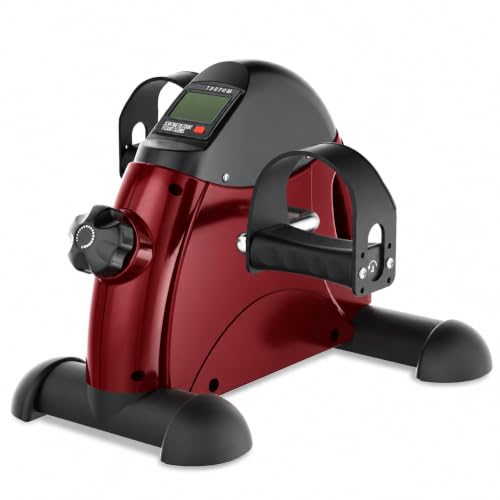
- Arm and leg workout options
- Quiet, stepless resistance
- Compact with digital tracking
Best For: Low-impact exercise at a desk or in a small room
Rehabilitation Support Pick
Adjustable Seated Pedal Exerciser

- Adjustable seated frame
- Arm, leg, band, and massage functions
- Stable design with LCD monitor
Best For: Seniors or rehab-oriented seated workouts
Best Simple Pick

- Folds for compact storage
- Only 5 pounds and mostly assembled
- Quiet pedaling with adjustable resistance
Best For: Small homes, offices, and easy senior-friendly storage
Best All-Around Pick – Sunny Smart Mini Cycle
For shoppers comparing arm bikes for small spaces, the Sunny Smart Mini Cycle stands out as a portable 2-in-1 option for seated arm or leg exercise. Its compact footprint, carry handle, quiet belt drive, and onboard tracking make it practical for home or desk use.
Best For: Low-impact arm and leg workouts for office workers, adults, and seniors.
Pros:
- Supports both arm and leg pedaling.
- Compact, lightweight design with a convenient carry handle.
- Quiet operation with stepless resistance adjustment.
- LCD monitor tracks speed, time, distance, and calories.
Cons:
- Only one listed resistance level, with adjustment handled by a stepless knob.
- Requires two AAA batteries for the display.
This is a versatile choice when you want one small machine for upper- and lower-body movement. Its 11.7-pound build is still easy to relocate, though its features are focused on light, seated exercise rather than intensive training.
Most Stable Desk-Mount Pick – Clamp-Base Arm Bike
This clamp-mounted exerciser is a focused option for shoppers seeking arm bikes for small spaces. Instead of relying on a suction cup, it secures to tabletops 0.4 to 1.95 inches thick, helping keep the unit steady during arm and shoulder exercise.
Best For: Desk-based arm rehabilitation and controlled shoulder workouts.
Pros:
- Desktop clamp is designed to resist sliding during use.
- Adjustable resistance supports gentle rehabilitation or more challenging exercise.
- Silicone clamp padding helps protect the tabletop.
- Ergonomic, sweat-resistant handles provide a comfortable grip.
Cons:
- Requires a compatible tabletop and installation before use.
- Designed for arm exercise rather than leg pedaling.
The fixed clamp design makes this a strong choice when stability matters more than portability. Confirm your desk thickness before buying, and consider it primarily for structured arm or therapy sessions.
Best Foldable Option – Compact Arm and Leg Pedaler
If storage is your main concern, this foldable pedal exerciser is a practical contender among arm bikes for small spaces. It is designed to fold under a desk, beside a sofa, or in a bedroom, while adjustable pedals and resistance support both arm and leg movement.
Best For: Home and office users who need easy storage and flexible seated exercise.
Pros:
- Foldable design suits limited storage areas.
- Supports both arm and leg workouts.
- Adjustable pedal straps accommodate different foot sizes and hand use.
- LCD display shows time, count, speed RPM, and estimated calories.
Cons:
- Its 19.7-inch depth may require more floor space during use.
- Manual operation provides no powered assistance.
This model offers useful flexibility for people who alternate between hand and foot pedaling. Its foldability is the key advantage, especially when the exerciser must be stored after each session.
Best for Rehab Portability – Suction-Base Arm Cycle
This compact arm cycle is tailored to rehabilitation and gentle upper-body movement, making it a focused choice among arm bikes for small spaces. Its suction base is intended for smooth surfaces, and the lightweight, no-assembly design is easy to move between rooms.
Best For: Stroke recovery, post-surgery shoulder rehabilitation, arthritis-friendly movement, and compact home use.
Pros:
- Compact 17-by-5.6-inch footprint and 4.35-pound weight.
- Arrives ready to use without assembly.
- Adjustable resistance supports gentle mobilization through moderate strengthening.
- Quiet, smooth rotation with ergonomic non-slip handles.
Cons:
- Suction base is intended for smooth surfaces such as glass, marble, or polished wood.
- Stability may be less suitable on textured or uneven tabletops.
Choose this model when portability and rehabilitation-focused movement are priorities. The suction base can provide a secure setup on compatible surfaces, but surface suitability is essential before use.
Best for Easy Setup – RYGEO Mini Arm and Leg Pedal Exerciser
For shoppers comparing arm bikes for small spaces, the RYGEO mini pedal exerciser stands out for its foldable, under-desk design. It arrives fully assembled, uses manual resistance adjustment, and supports gentle arm or leg cycling at home or in an office.
Best For: Seniors, sedentary office users, and people seeking low-intensity seated arm and leg exercise.
Pros:
- Folds quickly for compact storage and is small enough for many desks.
- Adjustable resistance knob supports light exercise and warmups.
- Foot straps and thicker steel construction help provide a secure, stable feel.
- Arrives fully assembled and requires no power source.
Cons:
- Its low-intensity design may not suit users seeking vigorous resistance training.
- The listed dimensions are 18 by 15 by 14 inches, so users should measure their storage area first.
The RYGEO is a practical pick when easy setup, portability, and foldaway storage matter most. Its gentle resistance makes it especially suitable for seated recovery-oriented movement rather than demanding workouts.
Best With Workout Tracking – MOMODA Under-Desk Arm Bike
Pedal Exerciser Under Desk Exercise Bike for Leg and Arm Cycling and Recovery Exercise
Check Price On AmazonIf you want arm bikes for small spaces with basic progress tracking, the MOMODA pedal exerciser combines an under-desk form factor with an LCD monitor. Its adjustable resistance and lightweight build make it convenient for low-impact cycling at home or in an office.
Best For: Users who want a compact arm-and-leg exerciser with time, count, distance, and calorie readouts.
Pros:
- Supports low-impact arm and leg cycling.
- LCD monitor displays time, count, distance, and calories burned.
- Lightweight at about 10 pounds and designed for easy storage.
- Resistance adjusts with a control knob.
Cons:
- Assembly is required, with four installation steps.
- The unit requires one AAA battery for the display.
- Its maximum recommended user weight is 80 kg.
The MOMODA is a straightforward choice for small-space users who value simple workout metrics. It offers useful tracking without adding a large console, though buyers should account for assembly and the stated weight recommendation.
Best Full-Body Seated Trainer – Senior Arm and Leg Pedal Exerciser
Among arm bikes for small spaces, this seated pedal exerciser is geared toward gentle full-body movement rather than conventional cycling. It supports arm and leg exercises, includes an LCD display, and uses four corner feet for stable ground contact during home workouts.
Best For: Seniors and users recovering from injuries or surgery who want seated, low-impact upper- and lower-limb movement.
Pros:
- Supports arm, leg, hand, and knee exercise while seated.
- LCD display tracks time, distance, swing counts, and calories.
- Thickened steel tubing and four corner feet are designed for stability.
- Supports a listed maximum weight recommendation of 264 pounds.
Cons:
- At 15.4 pounds, it is heavier than some mini pedal exercisers.
- The product has a six-month warranty.
- Its broader movement options may be more specialized than needed for simple pedaling.
This model is a strong fit for shoppers prioritizing seated rehabilitation-style movement and stability. Its tracking display and full-body exercise focus add versatility, while its heavier construction may make frequent relocation less convenient.
Compact Dual-Use Pick – Portable Arm & Leg Mini Bike
If you need arm bikes for small spaces, this compact pedal exerciser is designed to move easily between a desk, sofa, or storage area. Its lightweight build, carry handle, quiet belt drive, and manual resistance knob make it practical for light workouts without taking over a room.
Best For: Office workers, adults, and seniors seeking low-impact arm or leg exercise in limited space.
Pros:
- Supports both upper-body arm workouts and lower-body pedaling.
- Compact 11.6-by-15.7-by-11.6-inch design with a built-in carry handle.
- Quiet operation and stepless resistance adjustment allow flexible workout intensity.
- Digital display tracks speed, time, distance, and calories.
Cons:
- Manual operation provides no powered assistance or preset programs.
- Its low-impact format may be less suitable for users seeking intense cardio training.
- No warranty is listed in the supplied details.
This is a versatile choice when portability and quiet use matter most. The arm-and-leg design adds flexibility, while the basic monitor helps you keep track of regular activity.
Rehabilitation Support Pick – Adjustable Seated Pedal Exerciser
Among arm bikes for small spaces, this seated pedal exerciser stands out for its adjustable frame and broader exercise setup. It is intended for use from a chair or sofa and combines arm, leg, resistance-band, and massage functions, though its taller frame requires more dedicated floor space than a mini pedal unit.
Best For: Seniors and rehabilitation-focused users who want adjustable seated upper- and lower-limb exercise.
Pros:
- Offers upper-limb, lower-limb, resistance-band, and massage functions.
- Adjustable height, length, pedal straps, and upper- and lower-body resistance.
- LCD monitor displays time, distance, calories, count, and total counts.
- Metal frame supports up to 265 pounds and uses four suction cups for stability.
Cons:
- It is designed only for seated use.
- At 34.5 inches high and 14 pounds, it is less compact and portable than mini pedal exercisers.
- The supplied details list two resistance levels, which may limit fine intensity adjustment.
This model favors adjustability and stability over maximum portability. It can be a practical option for seated routines, but measure your available area carefully before choosing it for a small-space setup.
Best Simple Pick – TABEKE Mini Arm & Leg Bike
For shoppers comparing arm bikes for small spaces, the TABEKE under-desk bike offers an especially storage-friendly design. It weighs 5 pounds, folds for transport, arrives mostly assembled, and includes adjustable resistance for gentle rehabilitation or more demanding muscle-toning sessions.
Best For: Seniors and home or office users who prioritize folding storage, low weight, and simple operation.
Pros:
- Folds to 14.2 by 12.6 by 4.7 inches and weighs only 5 pounds.
- Fully assembled design requires unfolding and attaching the resistance knob without tools.
- Non-slip feet, anti-slip strips, and grippy pedals help improve stability.
- LCD display tracks time, count, RPM, and calories, while the tension knob adjusts resistance.
Cons:
- The supplied notes do not provide a maximum user weight.
- The plastic construction may feel less substantial than a metal-framed option.
- Its compact dimensions may offer less overall frame adjustability for different users.
This is the strongest fit for cramped storage areas, especially when a lightweight, foldable machine is more important than a full-size frame. Its simple setup and quiet pedaling also suit casual use while reading or watching TV.
How We Picked the Best Arm Bikes for Small Spaces
We focused on compact pedal exercisers and arm cycles that can be used while seated and stored without taking over a room. Our selection emphasizes footprint, portability, resistance control, stability, display usefulness, and ease of setup. We also considered whether each design supports arm-only exercise, leg cycling, or both, since versatility matters when one machine needs to serve multiple routines.
For rehabilitation or gentle daily movement, adjustability and smooth operation are more important than maximum intensity. For general fitness, a secure base, usable resistance range, and comfortable positioning can make the difference between an occasional purchase and equipment used consistently.
Quick Comparison
| Feature | What to look for | Why it matters |
|---|---|---|
| Design | Mini cycle, arm cycle, or clamp-mounted model | Determines placement and stability |
| Resistance | Adjustable or stepless control | Allows easier rehab sessions and harder workouts |
| Portability | Foldable, lightweight, or fully assembled | Makes storage and setup simpler |
| Monitoring | LCD display for time, cycles, or calories | Helps track basic activity goals |
| Versatility | Arm-and-leg operation | Supports more types of seated exercise |
Key Buying Factors for Arm Bikes for Small Spaces
Footprint and Storage
Measure the space between your chair, desk, and nearby furniture before buying. A compact footprint is useful, but you also need enough clearance for natural arm movement and pedal rotation. Foldable frames are especially helpful when the machine must be stored in a closet or under furniture.
Stability and Placement
Look for a wide base, non-slip feet, floor straps, or a clamp design suited to your setup. An arm bike placed on a desk should not slide during use, while a floor model should stay planted when pedaled with the legs. Smooth flooring may require extra grip or a workout mat.
Resistance and Comfort
Adjustable resistance lets beginners start gently and gradually increase effort. Check that the pedals or handles are comfortable and that the unit can be positioned without forcing your shoulders, wrists, hips, or knees into an awkward angle.
Noise, Display, and Assembly
For office or shared-room use, prioritize quiet operation. A basic LCD monitor can be useful for time and repetition tracking, but it is not a substitute for a dedicated fitness tracker. Fully assembled models save time, while foldable units may require more initial adjustment.
Who Should Buy Which Arm Bikes for Small Spaces?
For desk users: Choose a quiet, compact model with a stable base and easy resistance adjustment. For rehabilitation: Favor smooth resistance, simple controls, secure footing, and a comfortable range of motion; consult a clinician when recovering from an injury or procedure. For seniors: Look for lightweight handling, clear controls, strong stability, and low-resistance settings. For whole-body seated exercise: An arm-and-leg model offers more flexibility than an arm-only cycle. For very tight storage: A foldable or fully assembled mini bike is usually the most convenient choice.