Choosing a balance board for walking stability is less about finding the most challenging design and more about matching the board to your confidence, training goals, and available space. A stable platform can support balance practice, ankle conditioning, posture work, and gradual progression at home.
This roundup compares 10 options across rocker, wobble, disc, and single-leg designs, including models suited to beginners, physical therapy exercises, standing desks, and more advanced balance training.
Best 10 Balance Board for Walking Stability Picks for 2026
Best All-Around Pick
Amazon Basics Wood Wobble Board
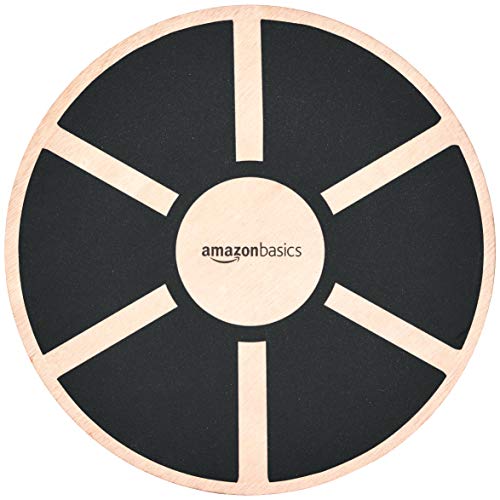
- Non-slip solid wood platform
- Supports up to 265 pounds
- Useful for balance and core exercises
Best For: Home workouts, rehab, and general balance training
Best Budget Portable Option

- Lightweight 1.25-pound design
- Raised-circle textured surface
- Suitable for home, office, gym, or rehab use
Best For: Portable, cost-conscious balance training
Best Inflatable Trainer
ProsourceFit Core Balance Disc

- Adjustable firmness with hand pump
- Dual-textured non-slip surfaces
- Supports up to 300 pounds
Best For: Core work, posture practice, and portable training
Best Advanced Stability Challenge
StrongTek Wooden Balance Board

- 360-degree directional wobble
- Controlled cross-base design
- Supports up to 350 pounds
Best For: Progressive stability, ankle, and core training
Targeted Ankle Training
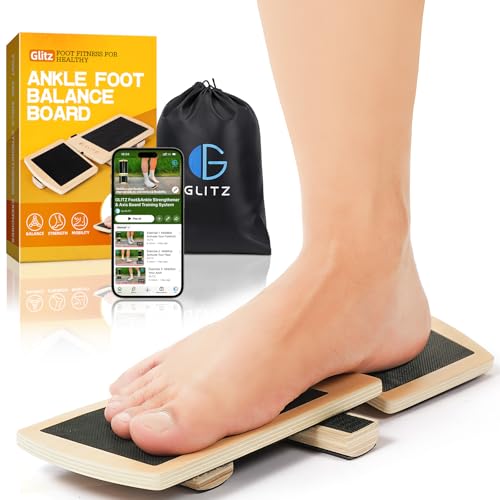
- Adjustable bars target arches, ankles, and calves
- Anti-slip birch plywood platform
- Lightweight design with video guidance
Best For: Focused ankle and foot conditioning
Versatile Stability Training
Professional Wooden Wobble Board

- Supports balance, coordination, and core training
- Useful for therapy and bodyweight exercises
- Anti-slip, compact, and rated for 350 pounds
Best For: Beginners and adults wanting multipurpose stability training
Portable Foot Support

- Combines arch training, massage, and balance work
- Includes guided exercise instructions
- Compact natural cork design for easy storage
Best For: Portable foot and ankle conditioning
Best with Extra Features

- 360-degree rotation and 15-degree tilt
- Textured surface for added foot grip
- Portable design supports up to 300 pounds
Best For: Versatile home, office, and standing-desk balance practice
Best for Focused Ankle Work
StrongTek Single-Leg Balance Board

- Designed for one-foot balance practice
- Non-slip foot pads and floor-gripping base
- Folds for storage and includes a carry bag
Best For: Targeted ankle mobility and single-leg stability training
Best High-Capacity Wood Option
Advanced 360-Degree Balance Board

- Large wooden platform for varied drills
- 360-degree rotation with up to 25-degree tilt
- Anti-slip surface and built-in carrying holes
Best For: Stability, rehabilitation-style, and sports conditioning exercises
Best All-Around Pick – Amazon Basics Wood Wobble Board
If you want a straightforward balance board for walking stability practice, the Amazon Basics Wood Wobble Board offers a solid platform, a non-slip surface, and support for a range of standing and strengthening exercises. Its 15.75-inch square wood top supports up to 265 pounds.
Best For: Home workouts, balance practice, core training, and rehab-center or gym use.
Pros:
- Non-slip top helps provide a secure grip.
- Supports up to 265 pounds.
- Works for standing poses, planks, push-ups, and targeted muscle workouts.
- Backed by an Amazon Basics 1-year limited warranty.
Cons:
- Use is limited to non-slip, dry surfaces.
- The fixed wood design does not offer adjustable firmness.
This is a practical choice if you prefer a traditional wobble board with enough surface area for varied exercises. Its stable wood construction makes it a versatile starting point for balance and core routines.
Best Budget Portable Option – CanDo Economy Balance Board
The CanDo Economy Balance Board is a lightweight option for anyone seeking a portable balance board for walking stability exercises. Its textured surface with raised circles is designed to resist slipping, while the compact plastic construction is easy to take between home, gym, office, or rehab settings.
Best For: Budget-conscious users, rehabilitation centers, standing desks, and balance training on the go.
Pros:
- Lightweight at 1.25 pounds.
- Textured surface with raised circles helps resist slipping.
- Designed to support ankle and calf work, range of motion, balance, and coordination.
- Compact 14-by-14-inch format is portable.
Cons:
- The supplied notes do not list a maximum user weight.
- Its economy plastic design may offer less substantial feel than a wooden board.
This board makes sense when portability and affordability matter most. It provides a simple way to add balance and lower-body exercises to different environments without carrying a heavy trainer.
Best Inflatable Trainer – ProsourceFit Core Balance Disc
For a softer, adjustable approach to balance training, the ProsourceFit Core Balance Disc can serve as a balance board for walking stability routines, seated posture work, and core exercises. The included hand pump lets you adjust firmness, while the dual-textured surfaces provide different tactile options.
Best For: Core workouts, posture-focused seating, portable training, and users who want adjustable inflation.
Pros:
- Included hand pump allows firmness adjustment.
- Dual-textured surfaces offer a non-slip grip.
- Can be used for exercise or as a seat cushion.
- Supports up to 300 pounds and includes a limited lifetime warranty.
Cons:
- An inflatable PVC disc may feel less like a rigid balance board.
- Inflation and firmness need to be managed for the preferred workout feel.
This disc is a flexible alternative to a fixed wobble board. Its portability and adjustable firmness make it useful for people who want to combine balance practice with posture or seated work.
Best Advanced Stability Challenge – StrongTek Wooden Balance Board
The StrongTek Wooden Balance Board is a compelling balance board for walking stability practice when you want more movement than a basic rocker provides. Its advanced version uses a cross base for controlled 360-degree directional wobble, helping users work on coordination, ankle control, stability, and core engagement.
Best For: Experienced users, progressive balance training, ankle rehabilitation, physical therapy, and core stability work.
Pros:
- Advanced model provides 360-degree directional wobble.
- Cross base offers a larger floor contact area for control.
- Non-slip surface and solid wooden construction support daily practice.
- Supports up to 350 pounds.
Cons:
- The advanced wobble may be more demanding than a basic rocker.
- Its 17.5-by-13.5-inch size is less square than some balance boards.
- The board weighs about 2.23 kilograms, making it less lightweight than the CanDo model.
This model bridges the gap between a basic rocker and a round-base wobble board. The cross-base design offers a progression-friendly challenge for users ready to train stability in multiple directions.
Targeted Ankle Training – Adjustable Foot Strengthener
For shoppers seeking a balance board for walking stability, this compact ankle trainer focuses on controlled foot, arch, and calf movements rather than full-body rocking. Its adjustable Velcro balance bars let you change positioning for targeted exercises, while the anti-slip surface supports a secure workout.
Best For: Adults working on ankle strength, foot mobility, posture, or physical-therapy-style exercises after discomfort or injury.
Pros:
- Adjustable balance bars support targeted arch, ankle, and calf training.
- Anti-slip pads and sturdy birch plywood construction provide a secure platform.
- Compact, lightweight design is convenient for home, work, therapy sessions, or travel.
- Includes a video guide to help users practice proper form.
Cons:
- Its small, targeted design may be less suitable for broad core workouts than a full-size wobble board.
- The product is intended for adults and has a small footprint, which may require more controlled use.
This is a focused choice when walking stability begins with stronger, better-controlled feet and ankles. It is especially practical for users who want adjustable exercises and portability, though those seeking advanced whole-body balance drills may prefer a larger board.
Versatile Stability Training – Professional Wooden Wobble Board
This professional wobble board is a versatile balance board for walking stability, core conditioning, and rehabilitation exercises. Its wooden platform, anti-slip surface, and 350-pound weight recommendation make it a practical option for controlled standing exercises at home, the office, or the gym.
Best For: Adults, beginners, older users, and people incorporating balance, coordination, physical therapy, or standing-desk exercises into their routines.
Pros:
- Supports balance, motor coordination, weight distribution, and core-strength work.
- Can be used for standing drills, squats, planks, push-ups, and rehabilitation exercises.
- Anti-slip surface helps provide traction during training.
- Compact design is easy to transport and store, with pads intended to help protect floors.
Cons:
- The 350-pound maximum weight recommendation may not suit every user.
- Its wobble-board format requires controlled progression, particularly for beginners or users with balance concerns.
Choose this model if you want one board to cover stability practice and broader bodyweight exercises. It offers more versatility than a foot-specific trainer, while its compact format keeps it convenient for shared home or office spaces.
Portable Foot Support – Sportneer Cork Balance Kit
For a portable approach to a balance board for walking stability, the Sportneer cork kit uses compact foot and arch trainers to activate deep foot muscles. It combines balance practice, foot massage, and guided exercises in a floor-safe format that fits easily into home, office, or therapy routines.
Best For: Adults seeking compact arch training, foot-pain relief exercises, ankle conditioning, or convenient balance work during daily breaks.
Pros:
- Targets arches and ankle muscles while also providing foot massage.
- Includes step-by-step instructions for guided practice.
- Natural cork is non-toxic, odor-free, sweat-absorbent, and designed to be floor-safe.
- Palm-sized components are easy to carry and store.
Cons:
- This is a compact foot-training kit rather than a conventional full-size standing balance board.
- Its small components may offer less support for users seeking broad-platform balance drills.
This kit stands out for portability and targeted foot care. It is a good fit when you want to work on arches, ankle control, and comfort without storing bulky rehabilitation equipment, but it is less suited to full-body wobble-board workouts.
Best with Extra Features – Yes4All Wobble Balance Board
If you want a versatile balance board for walking stability practice, the Yes4All Wobble Balance Board offers a broad platform, textured grip, and 360-degree movement. Its compact design also works well for standing-desk movement and general home workouts.
Best For: Adults seeking a portable, full-foot balance trainer for everyday stability drills, core exercises, or standing-desk use.
Pros:
- 360-degree rotation with a 15-degree tilt supports varied balance movements.
- Textured surface helps improve foot grip during exercises.
- Heavy-duty plastic supports up to 300 pounds.
- Handles and a 15.7-inch size make it easy to carry and store.
Cons:
- The single platform may provide a more demanding challenge for beginners.
- It is designed for adults rather than children.
Choose this model if you want one board that can support balance practice, core training, and dynamic standing. The multiple movement directions make it a flexible choice for a home gym or office.
Best for Focused Ankle Work – StrongTek Single-Leg Balance Board
For targeted balance board for walking stability training, the StrongTek Ankle Mobility Board focuses on one-foot practice and controlled rocking. Its non-slip foot pads, floor-gripping base, and compact folding design make it practical for gradual ankle and foot work.
Best For: Adults who want focused single-leg balance, ankle mobility, and lower-body stability practice at home, work, or the gym.
Pros:
- Single-leg design creates a focused challenge for stabilizer muscles.
- Textured foot pads and a floor-gripping base support controlled movement.
- Folds compactly and includes a drawstring carry bag.
- Exercise guide and chair-supported progression suit different experience levels.
Cons:
- The narrow 11.5-by-4.3-inch platform is less suitable for two-foot exercises.
- Its focused format may feel challenging for users new to single-leg training.
This is a strong choice when ankle control and one-foot stability matter more than broad workout versatility. Start with chair support if needed, then progress toward independent practice.
Best High-Capacity Wood Option – Advanced 360-Degree Balance Board
The Advanced Wood Balance Board is a broad option for balance board for walking stability routines, physical therapy exercises, and fitness training. Its wood construction, cushioned anti-slip surface, carrying holes, and 360-degree rotation support a range of controlled drills.
Best For: Adults wanting a sturdy wooden balance trainer for stability work, rehabilitation-style exercises, core training, or outdoor sports practice.
Pros:
- Large 17.5-by-13.4-inch platform provides room for varied exercises.
- 360-degree rotation and up to a 25-degree tilt support dynamic training.
- Wood construction includes a moisture-resistant and wear-resistant surface.
- Anti-slip silicone padding and carrying holes add practicality.
Cons:
- The wooden platform is larger and less compact than a small single-leg trainer.
- The supplied details list different maximum-weight figures, so shoppers should verify the current product specification.
- The broad movement range may be demanding for beginners.
Consider this model if you prefer a larger wooden platform and want one board for balance, core, rehabilitation-style, and sports-related exercises. Its size and movement range favor users who want room to progress.
How We Picked the Best Balance Board for Walking Stability
We focused on the features that matter most when a balance board is used for walking stability: platform control, surface traction, movement range, weight capacity, portability, and ease of progression. The selection includes simple rocker boards for controlled practice, 360-degree wobble boards for multidirectional training, inflatable balance discs for adjustable instability, and focused ankle-mobility designs.
We also considered whether each style is practical for home exercise, rehabilitation routines, standing-desk use, or general fitness. Product specifications and intended use should be checked carefully, particularly if you are recovering from an injury or need a board for physical therapy.
Quick Comparison
| Board style | Best suited to | Stability feel |
|---|---|---|
| Rocker board | Beginners and controlled ankle work | Predictable front-to-back movement |
| Wobble board | Core training and multidirectional balance | More demanding and less predictable |
| Balance disc | Adjustable instability and seated or standing exercises | Soft, responsive, and customizable |
| Single-leg trainer | Ankle mobility and targeted rehabilitation | Focused and technique-dependent |
Key Buying Factors for a Balance Board for Walking Stability
Platform and Movement Range
A broad platform and limited rocker movement generally provide a more confidence-building starting point. Circular wobble boards challenge balance in every direction, which can be useful for progression but may feel unstable for beginners.
Grip and Floor Protection
Look for a textured or non-slip standing surface and a base that stays controlled on the intended floor. Use the board on a clear, level surface, and consider a mat if the manufacturer recommends one.
Weight Capacity and Dimensions
Verify the stated load limit and platform size before buying. A larger surface can make foot placement easier, while a compact board is simpler to store and transport.
Adjustability and Progression
Inflatable discs let you change firmness, while some boards offer rocker or wobble modes. Adjustable designs can remain useful as your balance improves, but a simple fixed board may be easier to use consistently.
Safety and Intended Use
Use a wall, countertop, or sturdy support nearby when learning. Balance boards are not a substitute for professional rehabilitation advice; anyone with pain, dizziness, or a recent injury should follow guidance from a qualified clinician.
Who Should Buy Which Balance Board for Walking Stability?
Beginners: Choose a wide rocker-style board with predictable movement and a strong grip. Rehabilitation users: Consider a controlled rocker or single-leg mobility board, but confirm suitability with your clinician. Fitness users: A 360-degree wobble board offers more demanding core and lower-body training. Standing-desk users: Look for a compact, stable design that allows subtle movement without requiring constant correction. Travelers or space-conscious buyers: A balance disc or lightweight board is easier to store and carry.
The best Balance Board for Walking Stability is the one that lets you practice safely and consistently. Start with manageable movement, prioritize traction and control, and progress only when you can maintain good posture without relying heavily on support.