Choosing among cable crossover machines for heavy lifting means balancing load capacity, pulley adjustability, frame stability, and available floor space. The right setup should support controlled training without limiting exercise selection or making your gym difficult to use.
This roundup compares 10 options, including functional trainers, power cages, Smith-machine systems, and wall-mounted stations, so you can match the equipment to your strength goals, room, and budget.
Best 10 Cable Crossover Machines for Heavy Lifting Picks for 2026
Heavy-Lifting Functional Trainer

- Dual independent 160-lb weight stacks
- High and low pulley exercise options
- Sturdy frame with 10-year frame warranty
Best For: Versatile home or commercial cable training
All-in-One Strength Station

- 1,200-lb-rated power cage
- Includes bench, barbell, and 230 lb of plates
- Combines cable and compound exercises
Best For: Complete home gym setups
Commercial-Grade Cable Trainer

- 11-gauge commercial-rated tubing
- Dual independent 160-lb weight stacks
- Limited lifetime frame and weld warranty
Best For: Serious home and light-commercial gyms
Maximum-Capacity Power Cage

- 2,000-lb advertised cage capacity
- Dual pulley system rated up to 1,000 lb
- Includes Smith machine and extensive attachments
Best For: Versatile, high-capacity home strength training
Best Space-Saving Pick
GMWD Wall-Mounted Cable Crossover

- 2:1 and 1:1 cable ratios
- 26 height and 13 angle settings
- Foldable wall-mounted design
Best For: Home lifters needing adjustable training in a compact footprint
Best Full-Frame Heavy-Lifting System
DONOW Smith Machine Cable Crossover

- Two 352-pound weight stacks
- Integrated Smith machine and power rack
- Independent dual cable system
Best For: Serious lifters building a complete home strength station
Best High-Capacity Wall-Mount Option
Mikolo Dual-Pulley Cable Station
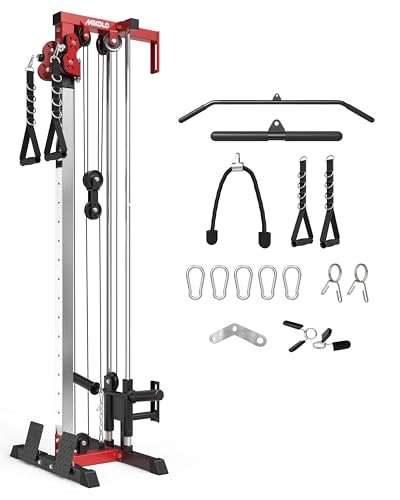
- 400-pound stated maximum load
- 19 adjustable pulley positions
- Plate-loaded, compact wall-friendly design
Best For: Space-conscious home gyms wanting high-capacity cable training
Heavy-Lift Home Gym

- Integrated Smith machine, power cage, and cable crossover
- 1,850-pound stated capacity with linear-bearing Smith system
- Includes landmine, dip handles, spotter arms, and storage
Best For: Home gyms prioritizing heavy lifting and all-in-one versatility
Commercial-Style Training
Functional Trainer Cable Machine

- Dual 180-pound weight stacks with a 2:1 resistance ratio
- 17 adjustable cable positions for varied exercises
- 11-gauge steel frame with aluminum pulleys
Best For: Users wanting built-in stacks and commercial-style cable training
Plate-Loaded Versatility

- 17 adjustable pulley positions for full-body training
- Plate-loaded resistance up to 200 pounds
- Accepts standard and Olympic plates with included sleeves
Best For: Home or garage gyms with existing weight plates
Heavy-Lifting Functional Trainer – Body-Solid Powerline PFT100
The Body-Solid Powerline PFT100 is a practical choice among cable crossover machines for heavy lifting, combining dual independent weight stacks with a sturdy, extra-wide frame. Its high and low pulley positions support a broad range of full-body movements, while the 160-pound stacks provide dedicated resistance for isolateral training.
Best For: Home or commercial-gym users who want a dedicated functional trainer for varied cable exercises and controlled unilateral work.
Pros:
- Dual independent 160-pound weight stacks support isolateral movements.
- Offers high and low pulley exercises for upper- and lower-body training.
- Heavy-duty steel construction, powder-coated finish, and a 10-year frame warranty.
- Supports exercises ranging from cable crossovers and shoulder presses to rows and glute kickbacks.
Cons:
- The 1/2:1 weight ratio delivers less effective resistance than the loaded stack amount.
- Its 62.6-inch width and 476-pound listed weight require substantial floor space.
With broad exercise coverage and independent stacks, the PFT100 is well suited to structured cable training. Verify your available space and resistance needs before choosing it for especially heavy work.
All-in-One Strength Station – RitFit PPC-P3 Power Cage
The RitFit PPC-P3 stands out among cable crossover machines for heavy lifting by combining a power cage, cable crossover, bench, Olympic barbell, and bumper plates in one package. Its 1,200-pound-rated cage and broad exercise selection make it a complete starting point for home strength training.
Best For: Home lifters who want a single package for cable work, barbell training, squats, presses, rows, and deadlifts.
Pros:
- Combines a power cage, squat rack, cable crossover system, bench, barbell, and 230 pounds of bumper plates.
- Power cage is rated for 1,200 pounds, with a bench capacity listed at 1,300 pounds.
- Supports cable flys, lat pulldowns, rows, pull-ups, squats, bench presses, and deadlifts.
- Includes a 36-month warranty on the main steel frame and 12 months on accessories.
Cons:
- The bundled equipment may be more than buyers seeking only a cable crossover need.
- Assembly is required, even though the package includes an illustrated manual and installation video.
This is a strong value-oriented option for building a complete home gym around heavy compound lifts. Its included plates and bar reduce setup decisions, but the all-in-one package also demands dedicated space.
Commercial-Grade Cable Trainer – Body-Solid GDCC250B
The Body-Solid GDCC250B is built for buyers comparing cable crossover machines for heavy lifting in a home or light-commercial setting. Its 11-gauge, 2-by-4-inch oval tubing, dual 160-pound stacks, and commercial rating provide a substantial foundation for repeated cable workouts.
Best For: Serious home users and light-commercial facilities prioritizing a robust dedicated cable crossover with long-term frame coverage.
Pros:
- Commercial-rated frame uses 11-gauge, 2-by-4-inch oval tubing.
- Dual independent 160-pound stacks support isolateral training.
- Enables a wide range of high and low pulley exercises.
- Includes a limited lifetime warranty on frames, welds, weight plates, and guide rods.
Cons:
- The machine measures 73 inches wide and weighs 514 pounds, so it needs significant installation space.
- The listed 1/2:1 ratio means the effective resistance is lower than the total stack weight.
- Its maximum listed weight recommendation is 160 pounds.
The GDCC250B emphasizes durable construction and warranty coverage rather than compactness. It is a compelling dedicated trainer when you have room for a wide, heavy machine and want commercial-oriented build details.
Maximum-Capacity Power Cage – pooboo P43 Smith Machine
The pooboo P43 is a versatile alternative among cable crossover machines for heavy lifting, pairing a Smith machine and power cage with a dual-pulley cable system. The frame is advertised with a 2,000-pound capacity, while the pulley system supports up to 1,000 pounds and includes numerous attachments for full-body training.
Best For: Home lifters who want one rack for Smith-machine work, free-weight movements, cable exercises, and multiple attachment-based workouts.
Pros:
- Advertised 2,000-pound power-cage capacity and 1,000-pound pulley-system capacity.
- Combines a Smith bar, squat rack, dual pulley crossover, landmine, dip stations, and lat-pulldown functions.
- Includes a large accessory package with handles, bars, safety arms, storage pins, and band pegs.
- Bearing pulleys and PU wire rope are designed for smooth, quiet operation.
Cons:
- The multifunction design and many attachments may require more setup space than a dedicated crossover.
- The listing indicates the rack ships in two packages, so delivery may be split.
- Buyers should confirm whether the specific model includes all upgraded P43-Pro accessories.
The P43 is suited to lifters who value maximum versatility and high stated capacity over a minimalist cable station. Its extensive attachment list supports varied programming, but careful space and model-package planning is important.
Best Space-Saving Pick – GMWD Wall-Mounted Cable Crossover
For shoppers comparing cable crossover machines for heavy lifting, the GMWD G7 Pro stands out as a compact wall-mounted option with adjustable arms, multiple cable ratios, and a stated 350-pound maximum weight recommendation. Its foldable design is especially practical for home gyms where floor space matters.
Best For: Home lifters who want broad exercise variety and a fold-away cable station.
Pros:
- Supports both 2:1 and 1:1 cable ratios for different training demands.
- Offers 26 height adjustment holes and 13 arm-angle settings.
- Includes a lat bar, cable bar, triceps rope, D-handles, leg holder, and mounting hardware.
- Folds flat against the wall when not in use.
Cons:
- Wall mounting is required, so installation depends on a suitable wood or concrete surface.
- Its 350-pound maximum weight recommendation is lower than some larger full-frame systems.
The GMWD is a strong fit when adjustability and space efficiency are priorities. It provides useful resistance flexibility for heavy home training, but buyers should confirm their wall can support a 165-pound machine and the demands of regular workouts.
Best Full-Frame Heavy-Lifting System – DONOW Smith Machine Cable Crossover
Among cable crossover machines for heavy lifting, the DONOW system is the most comprehensive choice in this group. It combines a Smith machine, power rack, pull-up station, and dual cable crossover with two 352-pound weight stacks, creating a substantial home-gym setup for strength-focused training.
Best For: Serious home lifters who want one large station for Smith-machine, rack, pull-up, and cable exercises.
Pros:
- Combines a Smith machine, power rack, dual cable crossover, and multi-grip pull-up station.
- Includes two heavy-duty selectorized weight stacks totaling 352 pounds.
- Uses a 2:1 cable ratio and independent cables for versatile movements.
- Features a 2-by-2-inch steel frame, linear-bearing Smith bar, and enclosed weight stacks.
Cons:
- Its 54.7-by-78.58-by-88-inch footprint requires considerable room.
- Delivery and assembly may be more involved because the system arrives in eight boxes.
- The 2:1 ratio provides less load at the handles than a 1:1 setup.
The DONOW is the clear choice for buyers prioritizing an integrated, commercial-style strength station over a small footprint. Its dual stacks and rack components suit demanding routines, provided the room and installation plan can accommodate its size.
Best High-Capacity Wall-Mount Option – Mikolo Dual-Pulley Cable Station
The Mikolo cable station is a practical contender for cable crossover machines for heavy lifting, combining a wall-friendly footprint with a stated 400-pound maximum load capacity. Its dual adjustable pulleys, rotating brackets, and included attachments support both bilateral and unilateral training.
Best For: Home, garage, or office-gym users who want high stated load capacity without a large freestanding frame.
Pros:
- Supports up to a stated 400-pound maximum load capacity.
- Provides 19 height positions for flexible pulley setup and unilateral work.
- Uses a 14-gauge steel frame, H-shaped base, and aircraft-quality coated cables.
- Includes a lat bar, cable bar, triceps rope, footboard, and sleeves for 1- or 2-inch plates.
Cons:
- Its 400-pound maximum load refers to the machine specification, not necessarily the resistance felt at the handles.
- Wall or corner installation still requires careful placement and adequate clearance.
- The supplied notes list an eight-month component replacement service alongside a two-year warranty, so buyers should verify coverage details.
The Mikolo balances load capacity, adjustability, and compact installation well. It is a sensible option for heavy cable work when you prefer plate-loaded resistance and need to preserve floor space.
Heavy-Lift Home Gym – RitFit M1 Pro Smith Machine
For shoppers comparing cable crossover machines for heavy lifting, the RitFit M1 Pro combines a Smith machine, power cage, and dual 360-degree cable system in one home-gym station. Its 1,850-pound stated capacity, linear-bearing Smith system, and multiple attachments make it suited to varied strength training.
Best For: Lifters who want an integrated Smith machine and cable crossover setup with extensive attachments and storage.
Pros:
- Combines a Smith machine, power cage, and cable crossover system.
- Heavy-duty 2-by-2-inch steel uprights and a stated 1,850-pound capacity.
- Includes landmine, dip handles, J-hooks, spotter arms, band pegs, and exercise handles.
- Six weight-plate holders and additional hooks help organize accessories.
Cons:
- Its 360-pound machine weight and 63-by-47.8-by-85.2-inch footprint require substantial space.
- The listed maximum weight recommendation is 1,500 pounds, below the stated tension capacity.
The M1 Pro is a strong choice when heavy lifting versatility matters more than a compact footprint. Its integrated design reduces the need for separate stations, while the included attachments broaden exercise options.
Commercial-Style Training – Functional Trainer Cable Machine
Among cable crossover machines for heavy lifting, this functional trainer emphasizes smooth, adjustable cable work in a relatively compact 65-by-35-by-84.9-inch format. Dual 180-pound weight stacks, 17 cable positions, and 11-gauge steel support a broad range of full-body exercises.
Best For: Users seeking a commercial-style functional trainer with built-in weight stacks and precise cable-position adjustments.
Pros:
- Dual 180-pound weight stacks provide convenient built-in resistance.
- Offers 17 adjustable cable positions and height-adjustable handles.
- 11-gauge steel construction and aluminum pulleys are designed for frequent use and smooth cable travel.
- Includes D-handles, additional grip options, and an exercise diagram.
Cons:
- The 2:1 resistance ratio means the 10-pound stack increments feel like approximately 5 pounds at the handle.
- At 855 pounds, the unit is difficult to reposition once installed.
- It requires a taller, wider installation area than many basic home cable stations.
This trainer suits progressive workouts where quick adjustments and built-in stacks are more important than portability. Its dual-stack layout supports independent or simultaneous cable exercises without requiring separate weight plates.
Plate-Loaded Versatility – Valor Fitness Cable Crossover
For cable crossover machines for heavy lifting on a plate-loaded budget, the Valor Fitness BD-61 provides 17 pulley positions and supports up to 200 pounds of resistance. It combines crossover work with pull-ups, lat pulldowns, rows, and other exercises in a 56-by-50-by-81-inch station.
Best For: Home and garage-gym users who already own standard or Olympic plates and want a versatile, plate-loaded cable station.
Pros:
- 17 adjustable pulley positions accommodate upper-body, lower-body, and functional exercises.
- Supports up to 200 pounds and accepts standard 1-inch or Olympic 2-inch plates with adapter sleeves.
- Includes pull-up bar, lat pulldown attachment, curl/row bar, handles, and plate-storage pegs.
- Dual guide bars are designed to help stabilize cable movement.
Cons:
- Resistance plates are loaded separately rather than supplied as built-in weight stacks.
- Its stated 200-pound capacity is lower than the capacity of some heavy-duty commercial trainers.
- Floor mounting hardware is included, so installation planning is important.
The BD-61 is a practical option for lifters who prefer loading their own plates and want multiple exercise stations in one frame. It offers useful adjustability without the added weight and cost of a built-in stack system.
How We Picked the Best Cable Crossover Machines for Heavy Lifting
We focused on the features that matter most when cables are used for demanding strength work: stated weight capacity, frame construction, pulley design, adjustment range, attachment compatibility, and overall training versatility. We also considered whether each machine is better suited to a home gym, a dedicated strength space, or light commercial use.
Because product specifications vary across configurations, verify the included plates, weight stacks, mounting hardware, dimensions, and warranty before ordering. A high advertised capacity does not automatically mean every pulley position or attachment is rated for the same load.
Quick Comparison
- Best for a complete strength station: Power-cage and Smith-machine systems that combine cables with racks, pull-up bars, and barbell training.
- Best for independent cable work: Dual-stack functional trainers with adjustable pulleys on both sides.
- Best for small rooms: Wall-mounted cable stations, provided the wall structure can safely support installation.
- Best for expandable setups: Machines with compatible handles, benches, landmine accessories, and other add-ons.
Key Buying Factors for Cable Crossover Machines for Heavy Lifting
Load Capacity and Resistance
Check both the total machine capacity and the resistance available at each handle. Weight stacks are convenient and quick to adjust, while plate-loaded systems can offer more flexibility but require storage and careful loading. Pay attention to the pulley ratio: a 2:1 ratio generally produces smoother movement but delivers less resistance at the handle than a 1:1 setup.
Frame Stability and Installation
Heavy cable work can create substantial pulling forces. Look for a wide, rigid frame, secure feet, quality hardware, and a clearly stated anchoring requirement. Wall-mounted models should be attached to suitable structural material, not just drywall. A power cage may provide more stability and exercise options, but it also needs significantly more space.
Adjustability and Range of Motion
More pulley positions make it easier to train the chest, back, shoulders, arms, and lower body from useful angles. Confirm that the adjustment track is easy to operate and that the cables move smoothly at both high and low positions. Dual independent arms or stacks are particularly useful for unilateral exercises.
Space, Maintenance, and Accessories
Measure ceiling height, wall clearance, and the full operating area, including handle travel. Inspect cable routing, pulley bearings, upholstery, and attachment points periodically. If a bench, weight plates, or specialty handles are not included, budget for them separately.
Who Should Buy Which Cable Crossover Machines for Heavy Lifting?
Choose a functional trainer if cable exercises are your priority and you want independent, adjustable resistance on both sides. Choose a power cage or Smith-machine crossover if you want one centerpiece for squats, pressing, pull-ups, and cable work. Choose a wall-mounted station when floor space is limited and you have a structurally suitable mounting surface. Choose a commercial-style unit if multiple users will train regularly and durability, capacity, and fast adjustments matter more than compactness.