A cable crossover machine can add hundreds of exercise options to a home gym, from chest flies and rows to face pulls, presses, and core work. The right setup depends on more than pulley count: available space, resistance type, adjustability, and included accessories all affect how useful it will be.
We selected 10 cable systems and all-in-one trainers that suit different training goals and budgets. Use the guide below to compare the main features and choose a machine that fits your room, routine, and plans for progression.
Best 10 Cable Crossover Machines for Strength Training Picks for 2026
Best Heavy-Duty Pick
Body-Solid Powerline Cable Crossover

- Dual independent 160-lb weight stacks
- High- and low-pulley exercise versatility
- 10-year frame warranty
Best For: Dedicated home or commercial gyms seeking a sturdy full-body trainer
Best All-in-One Rack
pooboo P43 Power Cage Smith Machine

- Combines rack, Smith machine, and cable system
- More than 20 listed attachments
- Supports up to 2,000 lb rack capacity
Best For: Home gyms needing one system for cable and barbell training
Best for Cable Adjustability
REP Fitness Arcadia Functional Trainer
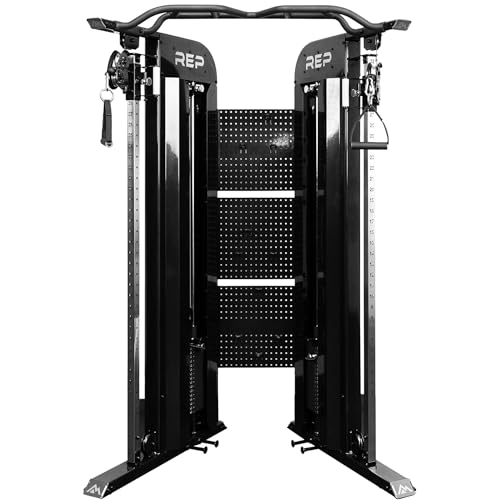
- 32 adjustable cable positions
- Dual 170-lb stacks, upgradeable to 220 lb
- Built-in storage and band pegs
Best For: Lifters wanting precise cable positioning and micro-adjustments
Best Space-Saving Option
Mikolo Wall Mount Cable Station
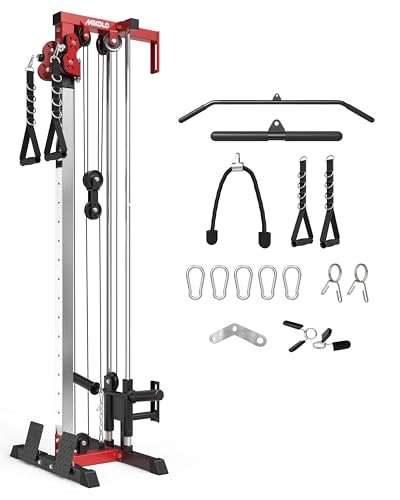
- Compact wall-mounted footprint
- 19 adjustable pulley positions
- Includes three cable attachments
Best For: Small home, garage, or office gyms with limited floor space
Best Overall

- All-in-one rack, Smith machine, and cable system
- 1:1 and 2:1 pulley ratios
- 2,500-pound stated capacity
Best For: Dedicated home gyms needing broad exercise coverage
Best for Everyday Use
GOIMU WM1 Wall Mount Cable Station

- Compact wall-mounted design
- 17 pulley height positions
- Includes multiple cable attachments
Best For: Small gyms with compatible masonry or concrete walls
Best Functional Trainer
Commercial Functional Trainer Cable Machine

- Dual 180-pound weight stacks
- 17 adjustable cable positions
- 11-gauge steel and aluminum pulleys
Best For: Dedicated cable training with built-in resistance
Best with Extra Features
GMWD Wall-Mounted Cable Crossover

- 100+ exercise options in one compact station
- 26 height holes and 13 arm-angle settings
- Foldable design with 2:1 and 1:1 cable ratios
Best For: Space-conscious home gyms seeking versatile cable training
Best Functional Trainer Value

- High and low pulley system with 15 adjustment levels
- Triangular frame uses about 12.1 square feet
- Includes pull-up, pulldown, and rowing attachments
Best For: Small home gyms wanting broad freestanding functionality
Best All-in-One Strength Station

- Combines Smith machine, rack, crossover, and pull-up station
- Independent 1:1 pulleys with 20 adjustment positions
- Includes extensive attachments for full-body training
Best For: Lifters wanting one comprehensive home-gym strength station
Best Heavy-Duty Pick – Body-Solid Powerline Cable Crossover
For lifters comparing cable crossover machines for strength training, the Body-Solid Powerline emphasizes sturdy construction, independent resistance, and broad exercise variety. Its dual 160-pound stacks and high- and low-pulley setup support full-body training in a substantial home or commercial-gym footprint.
Best For: Lifters who want a durable functional trainer with independent dual weight stacks and extensive exercise options.
Pros:
- Dual independent 160-pound weight stacks support isolateral movements.
- Offers high and low pulley exercises, including crossovers, rows, presses, and kickbacks.
- Heavy-duty alloy-steel frame with a 10-year frame warranty.
- Wide exercise range for full-body strength and endurance workouts.
Cons:
- Large 42.3-by-62.6-by-83-inch footprint may require dedicated space.
- At 476 pounds, it is difficult to reposition after assembly.
- The 1/2:1 weight ratio provides less effective resistance than a 1:1 system.
This is a strong choice when stability, workout variety, and long-term frame coverage matter more than compact dimensions. Confirm your available floor space before buying.
Best All-in-One Rack – pooboo P43 Power Cage Smith Machine
The pooboo P43 combines cable crossover work with a power cage, Smith machine, and multiple strength-training stations. For shoppers seeking cable crossover machines for strength training, it stands out as a broad home-gym system with numerous attachments and a claimed 2,000-pound rack capacity.
Best For: Home-gym users who want one rack for cable work, barbell training, landmine exercises, dips, rows, and pull-ups.
Pros:
- Combines dual-pulley cable crossover functionality with a multifunctional power cage.
- Includes more than 20 attachments and storage components.
- Supports exercises such as cable flys, pulldowns, rows, squats, deadlifts, and presses.
- Bearing pulleys and PU wire rope are designed for smooth, quiet operation.
Cons:
- Its 417-pound weight and large rack design require substantial installation space.
- The supplied listing identifies the model as P43, while some extra accessories are described for the P43-Pro.
- It ships in two packages, which may complicate delivery and assembly.
Choose this system if maximum exercise coverage is more important than having a dedicated standalone crossover. Carefully verify which accessories are included with the specific model you order.
Best for Cable Adjustability – REP Fitness Arcadia Functional Trainer
The REP Fitness Arcadia is a dedicated functional trainer built around 32 cable positions and dual adjustable pulleys. Among cable crossover machines for strength training, it offers precise setup changes, micro-loading options, and a relatively compact 80.8-inch height for home or garage gyms.
Best For: Lifters who prioritize adjustable cable angles, natural movement paths, and incremental resistance changes.
Pros:
- Provides 32 cable positions for varied exercise angles and ranges of motion.
- Dual stacks reach 170 pounds each, with optional upgrades to 220 pounds.
- 5-pound add-on weights allow finer resistance adjustments.
- Built-in storage and integrated band pegs add setup flexibility.
Cons:
- Attachment package upgrades may be needed for more specialized exercises.
- Only two steel D-handles are listed as included.
- Its 2:1 ratio means the selected stack weight is not delivered as direct handle resistance.
The Arcadia is a practical middle ground for users who want a dedicated, highly adjustable cable trainer without the broader bulk of a power-rack system. Consider the optional stack and attachment upgrades when planning your budget.
Best Space-Saving Option – Mikolo Wall Mount Cable Station
The Mikolo Wall Mount Cable Station is designed for compact home, garage, or office gyms. Its wall-mounted format, dual adjustable pulleys, and included lat bar, cable bar, and triceps rope make it a useful option for cable crossover machines for strength training when floor space is limited.
Best For: Compact training areas that need adjustable cable exercises without a full freestanding machine.
Pros:
- Space-saving wall-mounted design measures about 26.9 by 25.6 by 82 inches.
- Dual pulleys provide 19 height positions for unilateral or bilateral exercises.
- Includes a lat bar, cable bar, and triceps rope.
- Supports up to 400 pounds and uses a powder-coated steel frame.
Cons:
- Wall installation is required, limiting placement flexibility.
- Its 400-pound maximum load is lower than some larger systems.
- The supplied information lists an 8-month component replacement service alongside a 2-year warranty description, so coverage details should be confirmed.
This station makes the most sense when preserving floor space is a top priority. Before purchasing, ensure the wall and mounting setup can safely support the machine and your intended training loads.
Best Overall – Major Fitness Drone MAX V
The Major Fitness Drone MAX V is a substantial all-in-one option for shoppers comparing cable crossover machines for strength training. It combines a power rack, Smith machine, dual lat pulldowns, low row station, pull-up bar, and cable crossover system, making it suitable for full-body training in a dedicated home-gym space.
Best For: Lifters who want a comprehensive rack-and-cable setup with high stated weight capacity.
Pros:
- Combines multiple strength-training stations in one unit.
- Dual-ratio pulley system supports 1:1 and 2:1 resistance settings.
- Heavy-duty 14-gauge steel construction with a stated 2,500-pound capacity.
- Offers 18 adjustable J-cup positions and 18 pulley positions.
Cons:
- Its 597.4-pound weight and large overall design require significant space and assembly.
- The included warranty is listed as one year, despite lifetime after-sales support.
This is the most complete choice of the three if you want cable crossover functionality alongside a power rack and Smith machine. Its size, weight, and multi-station design make it better suited to a permanent home gym than a compact workout area.
Best for Everyday Use – GOIMU WM1 Wall Mount Cable Station
The GOIMU WM1 is a practical choice for shoppers seeking cable crossover machines for strength training in a limited footprint. Its wall-mounted design combines high and low cable work with lat pulldowns, seated rows, curls, and other cable exercises while using about 3.12 square feet of space.
Best For: Apartment, garage, and compact home gyms with a suitable concrete or masonry wall.
Pros:
- Wall-mounted construction helps conserve floor space and reduce wobble.
- Dual independent pulleys provide 17 adjustable height positions.
- Supports 1:1 and 2:1 pulley ratios for heavier or higher-volume work.
- Includes a lat bar, cable bar, triceps rope, and D-ring handles.
Cons:
- Installation is intended for concrete or masonry walls, which may limit placement options.
- The 300-pound maximum weight recommendation is lower than the other listed machines.
- It does not include a power rack or Smith machine.
The WM1 makes the strongest case when floor space is the main constraint. Verify your wall construction and mounting requirements before buying, especially if you plan to train with heavier loads.
Best Functional Trainer – Commercial Functional Trainer Cable Machine
This commercial functional trainer is a focused option among cable crossover machines for strength training, offering dual weight stacks, adjustable cable positions, and a broad range of attachments. Its 65-by-35-by-84.9-inch footprint is compact relative to its functionality, though the 855-pound machine still needs a dedicated training area.
Best For: Users who want a dedicated functional trainer with built-in weight stacks and precise cable adjustments.
Pros:
- Includes dual 180-pound weight stacks and 17 adjustable cable positions.
- 11-gauge steel construction and aluminum pulleys are designed for frequent use.
- Laser-etched markings and pre-lubricated uprights simplify cable adjustments.
- Comes with D-handles, additional grip options, and an exercise diagram.
Cons:
- At 855 pounds, it is difficult to move once assembled.
- The 2:1 resistance ratio means the 180-pound stacks provide a lighter effective load.
- It has less rack functionality than an all-in-one power-cage system.
This trainer is a balanced pick for users who prioritize smooth, adjustable cable work over barbell stations. Its built-in stacks and accessories reduce the need for separate weight plates and expand exercise variety.
Best with Extra Features – GMWD Wall-Mounted Cable Crossover
For shoppers comparing cable crossover machines for strength training, the GMWD G7 Pro stands out as a compact wall-mounted option with broad adjustability. Its foldable frame, dual swivel arms, and selectable 2:1 or 1:1 cable ratios support more than 100 exercises while helping conserve floor space.
Best For: Home gyms that need versatile cable training in a compact, wall-mounted setup.
Pros:
- Supports more than 100 exercises, including flyes, presses, pulldowns, curls, and woodchoppers.
- Offers 26 height adjustment holes, 13 arm-angle settings, and 180-degree arm movement.
- Foldable design measures approximately 39 by 28.6 by 77 inches and includes mounting hardware for wood or concrete.
- Includes useful attachments such as a lat bar, cable bar, triceps rope, D-handles, and leg holder.
Cons:
- Wall mounting is required, so installation depends on a suitable wall and careful anchoring.
- At 165 pounds, the unit may require assistance during installation.
The GMWD is a practical choice when adjustability and footprint matter more than having a freestanding rack. Its 350-pound maximum weight recommendation and dual cable ratios give it room to support varied home strength routines.
Best Functional Trainer Value – CC01 Cable Crossover Machine
The CC01 is a freestanding functional trainer for shoppers seeking cable crossover machines for strength training with high and low pulley functionality. Its triangular frame creates a wide training area while keeping the overall footprint to about 12.1 square feet.
Best For: Small home gyms that want cable work, pulldowns, rows, and pull-ups in one freestanding machine.
Pros:
- Supports exercises such as seated rows, lat pulldowns, pull-ups, chest flyes, triceps pushdowns, and leg kick work.
- Provides 15 height adjustment levels for varied pulley movements.
- Uses 50-by-50mm commercial steel tubing with a powder-coated finish and a 146-pound main frame.
- Includes a pulldown bar, rowing bar, pull-up handles, triceps rope, and accessory storage hook.
Cons:
- Assembly is substantial; the instructions recommend two to three people and about 1.5 hours.
- The listed dimensions are approximately 64.17 by 53.94 by 81.89 inches, so ceiling and floor clearance should be checked.
With its smooth PU-coated steel cables, high and low pulleys, and integrated pull-up station, the CC01 offers a broad exercise range without requiring several separate machines. Its triangular design is particularly useful where stability and efficient floor use are priorities.
Best All-in-One Strength Station – Smith Machine Cable Crossover
For a complete strength setup, this Smith machine combines a cable crossover, power cage, pull-up station, and guided Smith bar in one unit. It is a strong candidate among cable crossover machines for strength training when you also want squat, press, dip, landmine, and barbell-training capabilities.
Best For: Lifters building a comprehensive home gym around one multifunctional rack.
Pros:
- Combines a Smith machine, power cage, dual pulley crossover, pull-up station, and multiple strength-training attachments.
- Smith bar uses linear bearings, with nine height positions and built-in safety stops.
- Independent 1:1 pulleys offer 20 adjustable positions for unilateral and bilateral cable movements.
- Includes extensive accessories such as dip bars, landmine, lat bar, T-bar row handle, safety arms, J-hooks, and band pegs.
Cons:
- At approximately 57 by 65.7 by 87.4 inches and 283.7 pounds, it requires substantial space and setup effort.
- The machine ships in three packages that may arrive on different days.
- Its 18.3-square-foot footprint is compact for its capabilities but larger than a standalone wall-mounted cable station.
This machine is best viewed as a complete training hub rather than a cable-only unit. The guided Smith bar, independent pulleys, and extensive attachment package make it suitable for varied full-body programming, provided the room can accommodate its height and footprint.
How We Picked These Cable Crossover Machines for Strength Training
We focused on machines that support versatile functional training rather than single-purpose pulley exercises. The selection includes freestanding functional trainers, wall-mounted cable stations, power cages with integrated pulleys, Smith machine combinations, and complete home gym systems.
Our comparison emphasizes practical factors: pulley adjustability, resistance capacity, frame construction, footprint, attachment options, installation requirements, and the range of exercises each design can support. Because listed configurations can vary, verify the included weight stacks, plates, cables, and attachments before ordering.
Quick Comparison
| Machine type | Best suited to | Main advantage | Important consideration |
|---|---|---|---|
| Freestanding functional trainer | Dedicated home or garage gyms | Broad exercise variety and independent pulleys | Requires substantial floor and ceiling clearance |
| Wall-mounted cable station | Smaller training spaces | Efficient use of floor space | Needs a secure, compatible wall structure |
| Power cage or Smith machine combo | Full-body strength programs | Combines cables with squats, pressing, and rack work | Larger footprint and more complex assembly |
| All-in-one home gym | Users wanting one central station | Multiple training modes in one frame | May offer less adjustability than a dedicated trainer |
Key Buying Factors
Resistance and Progression
Check whether the machine uses integrated weight stacks, plate-loaded cables, or a combination. Weight stacks offer quick adjustments, while plate-loaded systems can be economical and easy to expand. Also check the pulley ratio, because a 2:1 ratio typically makes the handle feel lighter and requires more cable travel than a 1:1 setup.
Adjustability and Range of Motion
More pulley positions allow better setup for flies, rows, lateral raises, presses, and low-cable movements. Swivel arms and independent pulleys can improve alignment for unilateral exercises. Confirm the highest and lowest positions, cable travel, and whether both sides adjust independently.
Size, Mounting, and Safety
Measure the frame, working area, ceiling height, and access route before buying. Wall-mounted models must be anchored into suitable structural material; freestanding units still need a stable, level surface. For Smith machines and cages, review safety catches, included bar components, and the manufacturer’s stated capacity rather than relying only on headline weight numbers.
Attachments and Maintenance
Useful accessories may include straight bars, D-handles, ankle straps, lat bars, pull-up handles, and footplates. Inspect cable quality, pulley guards, bearings, and adjustment hardware. A machine with readily available replacement cables and attachments can be easier to maintain over time.
Who Should Buy Which Cable Crossover Machines for Strength Training?
- Choose a wall-mounted station if floor space is limited and you can safely anchor the unit to a suitable wall.
- Choose a freestanding functional trainer if cable variety, independent movement, and long-term versatility are your priorities.
- Choose a power cage or Smith machine combination if you want cable exercises alongside squats, bench pressing, pull-ups, and barbell training.
- Choose an all-in-one system if you prefer one consolidated station and do not need the maximum adjustability of a dedicated functional trainer.
- Choose a higher-capacity setup if multiple household members will train, you are progressing rapidly, or you plan to use the machine for heavier compound work.
Before purchasing, compare the complete delivered configuration—not just the frame—and confirm shipping, assembly, warranty, and return details. The best cable crossover machine is the one you can install safely, adjust comfortably, and use consistently.