Curved treadmills are a smart choice if you want a more natural running feel, self-powered training, and a tougher workout without relying on electricity.
In this roundup, we focus on the best curved treadmills for 2026, comparing durable builds, resistance options, comfort, and value for different training goals.
Best 10 Curved Treadmills Picks for 2026
Magnetic No-Limit Training

- No speed limit for walking, jogging, or sprinting
- 8 magnetic resistance levels for adjustable effort
- SunnyFit app access with workouts and scenic tours
Best For: Home users who want flexible, app-connected curved treadmill training
Foldable Budget Curved Pick
Adjustable Resistance Manual Treadmill

- Foldable, no-installation design with wheels
- 8 resistance levels for scalable workouts
- LED display tracks key training metrics
Best For: Compact home or office buyers who want a simple curved treadmill
Self-Generated Commercial Feel
SB Fitness CT550 Curved Treadmill

- Self-generated design needs no outlet
- 20-inch wide running surface for added comfort
- 8 magnetic resistance levels and LCD tracking
Best For: Home gyms or light commercial users wanting a wider, self-powered curved treadmill
Heavy-Duty High-Capacity Choice
Curved Manual Treadmill 8 Resistance

- 400 lb weight capacity for higher-load users
- Heavy-duty steel frame with reinforced base
- 8 resistance levels for walking, running, and HIIT
Best For: Taller or heavier users who want a stable, high-capacity curved treadmill
Commercial Self-Generated Trainer
SB Fitness CT400 Curved Commercial Treadmill
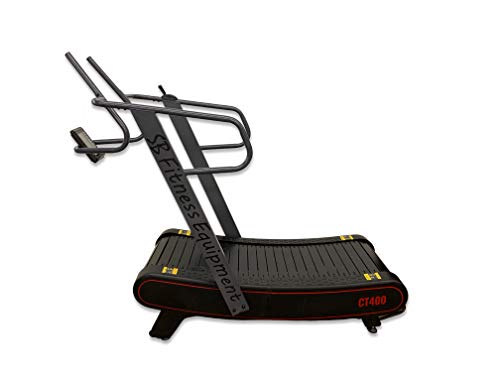
- Self-generated power with no speed limit
- 3 resistance levels for harder training
- Shock-absorbing flexible track slats
Best For: commercial gyms, HIIT, and sport-specific training
Space-Saving Home Runner
Foldable Non-Electric Curved Treadmill for Home

- Foldable handrails and transport wheels
- Anti-slip rubber track with no speed limit
- LED display for basic workout tracking
Best For: small spaces, home running, and sprint training
Heavy-Duty Wide Belt Treadmill
660 lb Curved Treadmill with 8 Resistance Levels

- Wide 27.2-inch belt for more room
- 6 adjustable resistance levels
- Heavy-duty frame supports up to 660 lbs
Best For: heavier users and serious home or gym training
Top Pick for Hardcore Conditioning
Curved Manual Treadmill with 6 Resistance Levels

- Self-powered, non-electric design
- 5-layer belt with shock absorption
- 6 resistance levels for HIIT and sprints
Best For: Hard-training users who want a durable curved treadmill for interval work
Best for Wide Running Space
8-Level Non-Electric Curved Treadmill

- 63" x 19" running belt for extra room
- 8 resistance levels with iron gear
- Quiet manual operation with transport wheels
Best For: Buyers who want a wider curved treadmill with flexible resistance
Best Feature Set
Manual Curved Treadmill with LCD and 8 Resistance Levels

- LCD tracks multiple workout metrics
- 8 metal resistance levels for training variety
- Self-powered design with transport wheels
Best For: Users who want a feature-rich manual curved treadmill for structured workouts
Magnetic No-Limit Training – Sunny Smart Curved Treadmill
If you want curved treadmills that feel closer to outdoor running, this Sunny Health & Fitness model is built for natural mechanics and high-effort sessions. The manual, no-speed-limit design lets you walk, jog, or sprint at your own pace, while the curved deck and adjustable magnetic assistance help you tailor the workout to your intensity level.
Best For: Runners and home users who want a self-powered curved treadmill for flexible speed, calorie burn, and app-connected training.
Pros:
- No speed limit, so you control the pace from walking to sprinting.
- Curved design encourages forefoot striking and more muscular effort.
- 8 levels of magnetic resistance let you fine-tune workout intensity.
- SunnyFit app access adds trainer-led workouts and virtual scenic tours.
Cons:
- Manual operation means the belt moves only with your effort.
- At 157 lbs, it is substantial and may take effort to reposition.
- Heart-rate monitoring requires the separately sold HR200.
This is a strong pick if you want a curved treadmill that balances performance, joint-friendly cushioning, and a connected training experience. The 59 x 17.7-inch surface and 330 lb capacity make it practical for a wide range of home users.
Foldable Budget Curved Pick – Adjustable Resistance Manual Treadmill
Rongle Manual Treadmill, Adjustable Resistance, Foldable, LED Display, Supports up to 350 lbs
Check Price On AmazonThis curved treadmill focuses on simple self-powered training with no speed restrictions, making it a practical option for home or office use. Its curved shape is designed to support a natural running posture, while the foldable build and wheels make it easier to store when you are done.
Best For: Buyers who want a foldable manual curved treadmill with adjustable resistance and a straightforward setup.
Pros:
- No speed limit lets you choose your own walking, jogging, or sprinting pace.
- 8 resistance levels help you scale intensity as your conditioning improves.
- Foldable, no-installation design saves space and simplifies setup.
- LED display tracks time, calories, speed, distance, pace, and heart rate.
Cons:
- Running surface is 15.7 inches wide, which is narrower than some alternatives.
- Manual design requires you to power the belt with your stride.
- Less feature-rich than larger curved treadmill models aimed at heavier use.
Overall, this is a convenient entry-level curved treadmill for compact spaces. It keeps the core benefits of curved running and adjustable resistance without adding unnecessary complexity.
Self-Generated Commercial Feel – SB Fitness CT550 Curved Treadmill
The SB Fitness CT550 is a self-generated curved treadmill built for users who want a more serious training feel without needing an outlet. Its 20-inch wide running surface, 8 levels of magnetic resistance, and light commercial rating make it a strong choice for structured workouts at home or in a shared fitness space.
Best For: Home users and light commercial settings that need a durable, self-powered curved treadmill with a wider deck.
Pros:
- Self-generated power means no electrical outlet is required.
- 8 magnetic resistance levels help vary workout difficulty.
- 20-inch wide running surface adds comfort and stability.
- LCD display tracks time, speed, distance, calories, and heart rate.
Cons:
- At 20 inches long in the listed deck specs, the sizing details may be less intuitive than standard treadmills.
- Larger light-commercial frame may not suit very small spaces.
- Fewer convenience extras than some competing curved treadmill models.
If you want a more robust curved treadmill for repeated training sessions, the CT550 stands out for its self-generated design and wide running area. It is a sensible fit when durability and workout control matter more than compact storage.
Heavy-Duty High-Capacity Choice – Curved Manual Treadmill 8 Resistance
For buyers comparing curved treadmills with a focus on stability and capacity, this manual model is built to handle demanding workouts. The heavy-duty steel frame, reinforced base, and 400 lb weight limit make it appealing for sprint intervals, HIIT, and regular home training without requiring electricity.
Best For: Taller runners and heavy-use home gym setups that need a sturdy, high-capacity curved treadmill.
Pros:
- 400 lb maximum weight recommendation offers a high-capacity option.
- Heavy-duty steel frame and reinforced base improve stability.
- 8 resistance levels support walking, running, and HIIT intervals.
- Curved rubber belt is designed to reduce impact on knees, ankles, and hips.
Cons:
- Very heavy at 418.5 lbs, so moving it is not easy despite transport wheels.
- Listed speed and horsepower specs are unusual for a manual treadmill.
- Larger footprint may be difficult to fit in smaller rooms.
This model makes sense if capacity and sturdiness are top priorities. It is less about compact convenience and more about delivering a durable curved treadmill platform for serious training.
Commercial Self-Generated Trainer – SB Fitness CT400 Curved Commercial Treadmill
If you want curved treadmills built for harder training, the SB Fitness CT400 is aimed at running, walking, sport-specific drills, and HIIT without a maximum speed cap. Its self-generated design, quick speed changes, and 3 resistance levels make it a practical pick for users who want a more demanding, calorie-focused workout.
Best For: athletes, HIIT users, and commercial training spaces that want a self-powered curved treadmill with resistance control.
Pros:
- Self-generated power means no outlet is required.
- 3 resistance levels help add challenge to workouts.
- Quick speed adjustments suit interval and high-intensity training.
- Flexible track slats add shock absorption for better comfort.
Cons:
- Large, 145-pound frame may be less convenient to move than lighter home models.
- Commercial-style build may be more machine than casual walkers need.
The CT400 stands out if you want a curved treadmill that prioritizes training intensity and durability features over basic home convenience. The digital display and Bluetooth connectivity add useful workout tracking, while the high weight recommendation and commercial design make it feel ready for serious use.
Space-Saving Home Runner – Foldable Non-Electric Curved Treadmill for Home
For home users comparing curved treadmills, this non-electric model focuses on simple self-propelled running, knee-friendly motion, and space-saving storage. The foldable handrails, rubber anti-slip track, and no-speed-limit layout make it a flexible option for running and sprint training at home or in an office.
Best For: home runners who want a foldable, manual curved treadmill with easy movement and no power requirement.
Pros:
- Foldable handrail design helps save space when not in use.
- Anti-slip rubber track is built for safer footing.
- No speed limit gives you full control over pace.
- LED display shows time, calories, speed, and distance.
Cons:
- Smaller track size may feel less spacious than larger commercial units.
- Manual design is geared more toward self-driven workouts than easy cruising.
This model makes sense if you want a curved treadmill that is straightforward, portable, and designed around home use. It is especially appealing for runners who want a compact manual machine with a clear display and a focus on sprint-style training.
Heavy-Duty Wide Belt Treadmill – 660 lb Curved Treadmill with 8 Resistance Levels
If you need one of the more robust curved treadmills, this non-electric model is built around a wide running belt, 8 adjustable resistance levels, and a high load rating. It is designed for walking, jogging, sprinting, and interval training, making it a strong fit for users who want more room and more workout control.
Best For: heavier users, athletes, and home-gym owners who want a wide, stable curved treadmill with adjustable resistance.
Pros:
- 6-level adjustable resistance helps customize workout intensity.
- Wide 27.2-inch running belt offers more space for different running styles.
- Supports up to 660 lbs for a heavy-duty feel.
- Smart display tracks time, distance, pace, calories, speed, and heart rate.
Cons:
- At about 370 lbs, it is a substantial machine to place in a room.
- Not foldable, so it needs a dedicated footprint.
This treadmill is aimed at buyers who value stability, width, and resistance control over compactness. The combination of a broad belt, transport wheels, and a commercial-grade build makes it stand out for more demanding training setups.
Top Pick for Hardcore Conditioning – Curved Manual Treadmill with 6 Resistance Levels
If you want curved treadmills that feel built for hard training, this manual model stands out for its self-powered design, fast speed response, and heavy-duty frame. The curved belt and 6-level resistance knob make it a strong fit for HIIT, sprint work, and calorie-focused sessions without relying on electricity.
Best For: Runners and home gym users who want a durable, non-electric machine for intense interval training.
Pros:
- Self-powered setup with no motor or electrical parts to maintain
- 5-layer shock-absorbing belt designed to reduce joint impact
- 6 resistance levels and instant speed changes for interval training
- Commercial-grade steel frame supports up to 400 lbs
Cons:
- Large and heavy at 316 lbs, so it is not easy to move often
- Uses manual effort only, so it is less suitable for passive walking workouts
Overall, this is a serious curved treadmill for users who prioritize training intensity and durability over convenience features. The combination of joint-friendly deck design, strong resistance control, and mechanical simplicity makes it especially appealing for frequent use.
Best for Wide Running Space – 8-Level Non-Electric Curved Treadmill
Among curved treadmills, this model focuses on giving you a roomy running surface and flexible resistance for everything from walking to sprinting. The 63″ x 19″ belt, silent manual operation, and iron resistance gear make it a practical choice for users who want a straightforward cardio machine with commercial-style features.
Best For: Home gym buyers and athletes who want a wide belt and higher resistance range.
Pros:
- Wide 63″ x 19″ curved belt for a more open running feel
- 8 resistance levels for walking, jogging, and sprint sessions
- Manual speed control with no buttons or power adjustments
- Quiet, non-electric operation with transport wheels for mobility
Cons:
- Product details show a confusing weight recommendation entry, so specs should be double-checked
- No advanced workout modes beyond the LCD tracking basics
For buyers comparing curved treadmills by feel and resistance range, this one offers a spacious deck and durable adjustment hardware. It is a solid pick if you want a no-fuss machine that can handle varied cardio intensity.
Best Feature Set – Manual Curved Treadmill with LCD and 8 Resistance Levels
This curved treadmill blends self-powered training with a more feature-rich console than many basic manual models. With multiple workout modes, real-time tracking, and 8 resistance levels, it is a practical option for users who want structured cardio sessions in a compact non-electric machine.
Best For: Home and studio users who want tracking features plus adjustable resistance in a manual treadmill.
Pros:
- LCD display tracks time, distance, pace, calories, speed, and heart rate
- 8-level metal resistance system built for different training intensities
- Curved deck and high-elastic belt help reduce impact on joints
- Self-powered design with built-in transport wheels for easier placement
Cons:
- Heavier unit at 354 lbs, so it is not ideal if you need frequent repositioning
- Some listed max-speed and horsepower specs are unusual, so buyers may want to focus on the resistance and training features instead
As curved treadmills go, this model is a strong all-around choice if you care about data tracking and resistance control. It is especially appealing for users who want a modern console without giving up the simplicity of manual operation.
How We Picked These Curved Treadmills
We prioritized build quality, running surface design, resistance control, weight capacity, display features, and overall value. Since Curved Treadmills are manually powered, we also looked at how well each model supports smooth pacing, sprint intervals, walking, and steady-state cardio.
Quick Comparison
If you want a straightforward home option, look for a foldable, non-electric model with a clear display and moderate resistance. For higher-intensity training, choose a heavier-duty frame with stronger stability, more resistance levels, and a belt that feels secure at faster speeds. Commercial-style buyers should focus on durability first, then comfort and monitor features.
Key Buying Factors for Curved Treadmills
Resistance and Training Feel
More resistance levels give you better control over workout intensity. Lower-resistance models suit beginners and general cardio, while higher-resistance options are better for sprint work, interval sessions, and athletic conditioning.
Weight Capacity and Frame Stability
A higher weight rating usually signals a sturdier frame. For Curved Treadmills, stability matters because the user powers the belt manually, which can create more force during faster runs.
Display and Tracking
Most users benefit from an LCD or digital monitor that shows time, distance, speed, calories, and workout pace. If you train by intervals, a visible readout can make sessions easier to structure.
Comfort and Belt Design
Look for a belt with enough shock absorption and grip to reduce impact and improve footing. A well-shaped curved deck can encourage better running mechanics, but comfort still depends on surface quality and belt width.
Size, Storage, and Setup
If space is limited, foldable or more compact Curved Treadmills can be easier to live with. Just make sure convenience does not come at the expense of stability or stride comfort.
Who Should Buy Which Curved Treadmills?
Beginners and casual walkers should lean toward simpler manual models with moderate resistance and clear tracking. Runners and HIIT users will usually get more from stronger frames, more resistance settings, and better traction. Home users with limited space should prioritize foldability and easy storage, while heavier or more frequent users should focus on commercial-grade durability first.
In short, the best Curved Treadmills are the ones that match your training style, available space, and need for durability. Choose the model that balances resistance, comfort, and stability for the way you actually plan to work out.