A good functional trainer for home gym training brings cable-based strength, adjustable movements, and full-body versatility into one space-efficient machine.
Below, we focus on the best options for different room sizes, training styles, and budgets so you can choose a setup that fits your goals.
Best 10 Functional Trainer for Home Gym Picks for 2026
Compact Premium Pick
Inspire Fitness FTX Functional Trainer

- Compact full functional trainer design
- Dual 165 lb weight stacks
- Smooth pulley action with 4 accessories
Best For: Home users wanting a compact, premium cable machine
Wall-Mounted Space Saver
GMWD Wall Mounted Cable Machine

- Fold-flat wall-mounted design
- 100+ exercise options
- 2:1 and 1:1 cable ratios
Best For: Tight spaces that still need a versatile cable station
Balanced Strength Builder
Marcy MFT-942 Functional Trainer

- Dual 100 lb stacks, 200 lb total
- 24 micro-adjustments for fine tuning
- Includes multiple training accessories
Best For: Lifters who want a simple, adjustable dual-stack trainer
All-in-One Heavy-Duty Pick
RitKeep ANVIL S1 Smith Machine
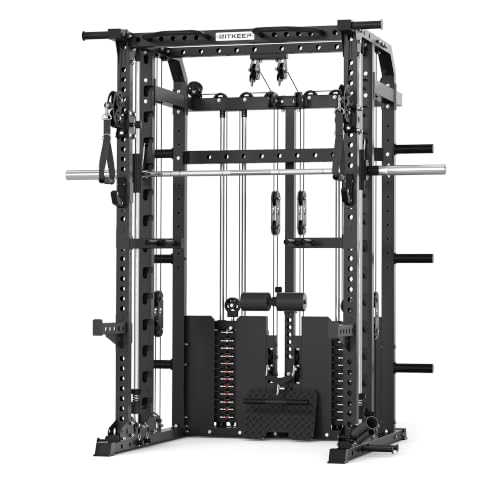
- Smith machine and functional trainer in one
- Dual 155 lb stacks with 1:1 or 2:1 use
- 33 cable positions plus storage
Best For: Serious home lifters wanting an all-in-one training station
Heavy-Duty Dual Stack
Body-Solid Dual-Stack Functional Trainer

- Two 160 lb stacks with isolateral movement
- Wide range of high and low pulley exercises
- Large, sturdy frame with 10-year frame warranty
Best For: Home gyms with space for a commercial-style cable crossover
Most Adjustable Cable Station
REP Fitness Arcadia Adjustable Trainer
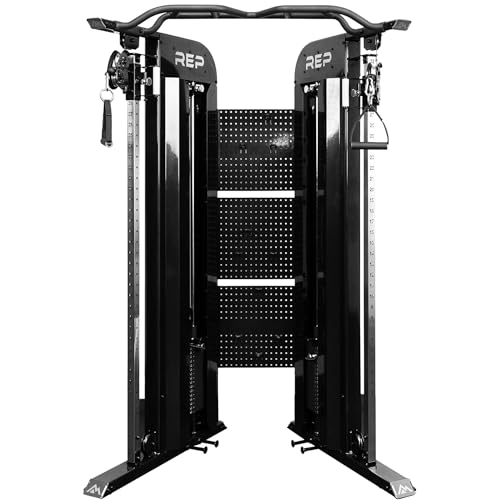
- 32 cable positions for varied movements
- Dual 170 lb stacks, upgradeable to 220 lb each
- Built-in storage and band peg options
Best For: Lifters who want customization and future upgrade paths
Space-Saving Cable Trainer
Centr Compact Functional Trainer

- 33 vertical positions and 165 pulley adjustments
- 160 lb stack in a compact footprint
- Frictionless pulleys with industrial-grade steel frame
Best For: Small home gyms that still want full-body cable training
All-in-One Powerhouse
Mikolo Smith Machine with Weight Stack

- 10-station design with Smith machine, rack, cables, and pulldown/row
- Dual 128-lb stacks let two users train independently
- 2:1 cable ratio and included attachments streamline workouts
Best For: serious home gym owners who want maximum versatility in one machine
Compact Cable Rig
Commercial Functional Trainer Cable Machine

- Space-saving 65" x 35" footprint for home gyms
- 17 positions and adjustable handles expand exercise variety
- Dual 180-lb stacks with aluminum pulleys support smooth training
Best For: buyers who want a compact, dedicated cable machine with commercial features
Shared Training Station
GMWD Dual-Station SmithΔ Machine Power Cage

- Dual-sided design supports two users at once
- Independent 121-lb stacks suit different strength levels
- Over 100 exercises plus adjustable pulleys and seating
Best For: couples or families who want a shared all-in-one gym system
Compact Premium Pick – Inspire Fitness FTX Functional Trainer
If you want a functional trainer for home gym use that feels close to a commercial setup, the Inspire Fitness FTX is built around a very compact footprint with dual 165 lb weight stacks, sliding pulleys, and a pull-up bar. It’s designed for users who want lots of exercise variety without giving up too much floor space, and the included accessory kit makes it easy to start training right away.
Best For: Home gym owners who want a space-saving functional trainer with premium-feeling pulley action and included accessories.
Pros:
- Compact footprint for a full functional trainer setup
- Dual 165 lb weight stacks support a wide range of resistance work
- Smooth, friction-free pulley system for cleaner cable movement
- Includes tricep rope, dual D handles, curl bar, and chin/dip belt
Cons:
- Heavy machine with a large overall footprint for very small rooms
- Max weight recommendation is 165 pounds per stack
- Premium feature set may be more than casual users need
The FTX stands out if you care most about compact design and smooth operation. With built-in accessory storage and a Centr subscription bonus, it’s a strong all-around choice for structured strength training at home.
Wall-Mounted Space Saver – GMWD Wall Mounted Cable Machine
For buyers comparing a functional trainer for home gym setups where floor space is tight, this wall-mounted GMWD cable machine is built to maximize versatility with a minimal footprint. It offers over 100 exercise options, dual swivel arms, 26 height adjustment holes, and fold-flat storage, making it a practical choice for a dedicated training corner.
Best For: Home gyms that need a foldable wall-mounted cable station with broad exercise variety.
Pros:
- Over 100 exercise options in one compact station
- Foldable wall-mounted design saves floor space
- Dual swivel arms with 26 height adjustment holes and 13 arm angle settings
- Switchable 2:1 and 1:1 cable ratios for different training styles
Cons:
- Requires wall mounting and installation planning
- Not as self-contained as a freestanding functional trainer
- May be less suitable if you need to move equipment often
This is a smart solution if you want a versatile cable system without dedicating a large area to it. The included hardware and accessory kit make setup more straightforward, but the wall-mounted format means installation matters.
Balanced Strength Builder – Marcy MFT-942 Functional Trainer
The Marcy MFT-942 is a straightforward functional trainer for home gym users who want solid resistance and easy cable adjustments. With dual 100 lb weight stacks, 24 micro-adjustments, and a 2:1 pulley ratio, it gives you a controlled feel for both upper- and lower-body work without overcomplicating the layout.
Best For: Users who want a dependable dual-stack cable trainer with precise resistance changes and included accessories.
Pros:
- Dual 100 lb weight stacks provide 200 lb total resistance
- 24 micro-adjustments allow precise resistance tuning
- 2:1 pulley ratio supports smooth, consistent movement
- Includes handles, tricep rope, ankle strap, and curl bar
Cons:
- Lower total stack weight than some larger trainers
- Footprint is substantial for smaller rooms
- Max weight recommendation is 200 pounds
This model is a good middle-ground option if you want a traditional cable trainer feel with useful fine-tuning. Its smooth pulley system and built-in accessory hooks help keep training organized and efficient.
All-in-One Heavy-Duty Pick – RitKeep ANVIL S1 Smith Machine
If your search for a functional trainer for home gym use also includes Smith-machine and rack features, the RitKeep ANVIL S1 packs a lot into one setup. It combines a Smith machine, functional trainer, power rack, pull-up station, lat pulldown, and low row system, along with dual 155 lb weight stacks and adjustable cable positions.
Best For: Lifters who want an all-in-one strength station with Smith machine and cable training in one unit.
Pros:
- Combines multiple training stations in one machine
- Dual 155 lb weight stacks support independent 2:1 cable work
- Internal dual-drive system can link stacks for true 1:1 resistance
- 33 adjustable cable positions and built-in storage for organization
Cons:
- Very large setup at over 80 inches wide and 83 inches tall
- Weight plates are not included
- Likely more machine than a basic cable-only buyer needs
This is the most feature-packed option in the group and makes sense if you want a serious home strength station. The heavy-duty steel frame and broad exercise coverage make it appealing, but it demands both space and a bigger commitment.
Heavy-Duty Dual Stack – Body-Solid Dual-Stack Functional Trainer
If you want a functional trainer for home gym use that feels more like a dedicated strength station than a compact cable tower, this Body-Solid Powerline model is built for it. The dual independent weight stacks support isolateral training, and the high/low pulleys open up a wide range of upper- and lower-body movements for full-body work.
Best For: Lifters who want a heavy, traditional cable crossover setup with dual stacks and lots of exercise variety.
Pros:
- Dual 160 lb weight stacks with isolateral cable movement
- Near-unlimited high and low pulley exercise options
- Sturdy extra-wide mainframe and powder-coated steel construction
- Backed by a 10-year frame warranty
Cons:
- Large footprint at 42.3″D x 62.6″W x 83″H
- Very heavy at 476 lbs, so setup and placement are not easy
- Standard resistance is fixed by the included stacks, with no stack upgrade noted
Overall, this is a solid pick if your home gym has the space for a commercial-style functional trainer and you want a straightforward, durable cable machine for broad full-body training.
Most Adjustable Cable Station – REP Fitness Arcadia Adjustable Trainer
The REP Fitness Arcadia is a versatile functional trainer for home gym setups that need a lot of cable options without giving up too much flexibility. With 32 cable positions, dual stacks, and built-in storage, it is designed to handle a wide range of movements while keeping attachments organized and easy to reach.
Best For: Home and garage gym owners who want an adjustable cable machine with upgrade options and accessory compatibility.
Pros:
- 32 cable positions for broad exercise customization
- Dual 170 lb stacks, with upgrade option to 220 lb each
- Built-in storage and integrated band pegs for added resistance
- Compatible with many cable attachments and add-on packages
Cons:
- Base footprint is still substantial at 35.8″D x 55.3″W x 80.8″H
- Maximum stack weight may need upgrades for stronger lifters
- Attachment packages are separate from the included setup
In practical terms, the Arcadia stands out if you want a flexible cable system that can grow with your training and keep your home gym better organized.
Space-Saving Cable Trainer – Centr Compact Functional Trainer
If you need a functional trainer for home gym training in a smaller space, the Centr 1 focuses on delivering cable versatility in a compact footprint. It pairs a 160 lb weight stack with two adjustable pulleys and 33 vertical positions, making it a practical option for full-body strength work without a sprawling setup.
Best For: Users who want a space-saving cable machine with smooth pulley action and plenty of exercise variety.
Pros:
- Compact, low-profile design for tighter spaces
- 33 vertical positions and 165 pulley adjustments
- Frictionless pulley system for smoother workouts
- Industrial-grade steel construction with matte black finish
Cons:
- Single 160 lb stack may feel limited for advanced lifters
- Heavier than it looks at 312 lbs, so placement still matters
- Fixed handle setup may be less flexible than models with more included attachments
For a smaller home gym, this is a strong balance of footprint, adjustability, and full-body cable training capability, especially if smooth operation matters to you.
All-in-One Powerhouse – Mikolo Smith Machine with Weight Stack
If you want a functional trainer for home gym use that does far more than basic cable work, this Mikolo system is built as an all-in-one hub. It combines a Smith machine, power cage, functional trainer, lat pulldown/low row, and several specialty stations into one footprint, while the dual weight stack setup is designed to keep training efficient for solo lifters or partners.
Best For: Home gym owners who want a commercial-style all-in-one station with dual stacks and maximum exercise variety.
Pros:
- Integrates 10 training stations, including power rack, functional trainer, lat pulldown/low row, Smith machine, and more
- Dual 128-lb weight stacks support independent training for two users
- 2:1 functional trainer ratio and seamless cable transitions reduce setup changes
- Heavy-duty steel frame with 2,200-lb capacity and included attachments
Cons:
- Large 87″ x 56″ x 68″ footprint requires serious dedicated space
- Built for high-capacity home gyms, so it may be more machine than casual users need
Overall, this is a strong pick if your priority is consolidating a full gym into one feature-rich station. The dual-stack design and broad exercise list make it especially compelling for lifters who want convenience without giving up training options.
Compact Cable Rig – Commercial Functional Trainer Cable Machine
This functional trainer for home gym setups is aimed at users who want a dedicated cable machine with a smaller footprint and precise adjustability. With 17 cable positions, dual 180-lb stacks, and a 2:1 resistance ratio, it gives you a lot of exercise control without forcing you into a huge all-in-one rig.
Best For: Lifters who want a compact, commercial-style cable machine with smooth operation and fine weight control.
Pros:
- Compact 65″ x 35″ x 84.9″ footprint suits tighter home gyms
- 17 cable positions and height-adjustable handles support many movements
- Dual 180-lb stacks with 2:1 ratio provide precise resistance changes
- 11-gauge steel frame, aluminum pulleys, and lifetime frame warranty add confidence
Cons:
- It is a standalone cable trainer, so it does not include Smith machine features
- At 855 pounds, it is heavy and not a casual move-in/move-out purchase
If your training revolves around cables, this model is the most space-efficient option in the group. It focuses on smooth movement, easy adjustments, and enough stack weight for serious strength work.
Shared Training Station – GMWD Dual-Station SmithΔ Machine Power Cage
If you need a functional trainer for home gym use that works well for couples or families, this dual-station GMWD setup is designed around shared training. It combines a Smith machine, power rack, and cable crossover system with independent weight stacks, so two people can train at the same time without getting in each other’s way.
Best For: Couples, families, or training partners who want a shared all-in-one machine with separate cable stacks.
Pros:
- Dual-sided layout allows two users to train simultaneously with zero interference
- Independent 121-lb weight stacks support different strength levels on each side
- Over 100 exercise options cover compound lifts and cable work
- Adjustable seating, backrests, and 16 pulley height settings improve fit
Cons:
- Very large 109.57″ x 71.18″ x 87.83″ footprint needs ample room
- Heavier-duty shared stations can be more machine than a solo lifter needs
This is a strong choice if your main goal is efficient shared training rather than a simple single-user cable machine. The independent stacks and broad movement list make it a practical centerpiece for a busy home gym.
How We Picked the Best Functional Trainer for Home Gym
We prioritized machines that balance resistance quality, adjustability, footprint, and overall training variety. For a Functional Trainer for Home Gym use, the best picks are the ones that offer smooth pulleys, practical attachment options, and enough load capacity to grow with your training.
We also looked for models that make sense in real homes and garages, not just commercial spaces. That means considering ceiling clearance, wall-mount versus free-standing designs, and how easily each system supports a wide range of exercises.
Quick Comparison
In general, the list includes compact cable trainers, wall-mounted units, all-in-one systems with Smith machine or power cage features, and heavier-duty options for users who want more built-in strength training capability. If you want the simplest path to cable training, choose a dedicated functional trainer. If you want maximum exercise variety in one station, a hybrid system may be the better fit.
Key Buying Factors for a Functional Trainer for Home Gym
Footprint and Mounting
Measure your available floor space and ceiling height before anything else. Wall-mounted and compact units can save valuable room, while larger all-in-one stations often need more clearance for safe use and comfortable movement.
Weight Stack and Resistance Ratio
Stack size matters, but so does the pulley ratio. A 2:1 ratio feels different from a 1:1 setup, affecting how much usable resistance you get. Choose a system that matches your current strength level and future progression.
Adjustability and Cable Travel
Look for multiple pulley positions and smooth cable travel. More adjustment points make it easier to perform presses, rows, flyes, curls, and lower-body movements with proper angles.
Attachment Compatibility
A Functional Trainer for Home Gym use should include useful accessories or support common add-ons like handles, ropes, ankle straps, and bars. Better attachment variety expands your exercise options without requiring extra machines.
Build Quality and Stability
Sturdy frames, quality pulleys, and stable uprights help maintain smooth movement and safer training. This matters even more if you plan to train heavy or use the machine daily.
Who Should Buy Which Functional Trainer for Home Gym?
If you want a compact, straightforward cable station, a dedicated functional trainer is usually the smartest choice. If you need more versatility for strength training, consider a hybrid model that combines a cable system with a Smith machine or power cage.
Home users with limited space should favor wall-mounted or smaller-frame options. Serious lifters, couples, or families sharing one setup may prefer higher-capacity systems with dual stacks and broader exercise coverage. In short, match the machine to your space, your training style, and how much you expect to use it over time.