The right at-home spine therapy tool depends on where you need support. A neck cradle and a lumbar traction device serve different purposes, and neither should be treated as a one-size-fits-all fix.
These 10 picks span simple, unpowered supports and more adjustable traction setups. Use the guide below to narrow your choices by body area, setup, and the level of control you need.
Best 10 Home Spine Therapy Device Picks for 2026
Best Motorized Table
Electric Spinal Decompression Machine

- Button-controlled horizontal traction
- Adjustable shoulder and leg supports
- Steel frame; no manual cranking
Best For: Adults wanting powered traction without inversion
Best Adjustable Neck Traction
Electric Air-Pump Cervical Stretcher

- LCD-controlled electric inflation
- Dual side adjustment knobs
- Check neck measurements before buying
Best For: Adults seeking adjustable cervical-only traction
Best Compact Neck Support

- Contoured high-density foam
- Non-slip pads; no setup needed
- Designed for 5–10 minute sessions
Best For: Portable, passive neck relaxation
Best Simple Neck Stretcher
RESTCLOUD Neck and Shoulder Relaxer

- Contoured polyurethane foam
- No power or assembly needed
- Short sessions; not for overnight use
Best For: Simple, passive neck stretching on a firm surface
Best Blue Neck Stretcher
RESTCLOUD Neck and Shoulder Relaxer
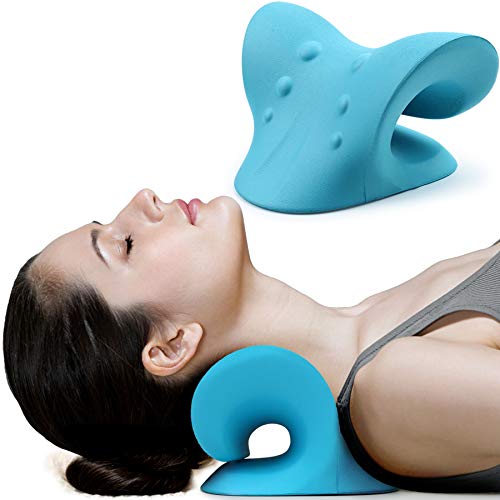
- Contoured polyurethane-foam support
- Two height sides for fit
- Designed for brief sessions, not overnight use
Best For: Portable, non-electric neck stretching at home
Best Black Neck Stretcher
RESTCLOUD Cervical Traction Pillow

- Contoured cervical support
- Portable, non-electric design
- For short sessions on a firm surface
Best For: Simple neck stretching without powered controls
Best Multi-Function Lumbar Device
4-in-1 Electric Lumbar Traction Device

- Dynamic dual-airbag traction
- Adjustable heat, vibration, and electrotherapy
- Check contraindications before use
Best For: Adjustable, powered lower-back sessions at home
Adjustable Traction Pick
ComforTrac Deluxe Cervical Traction Kit
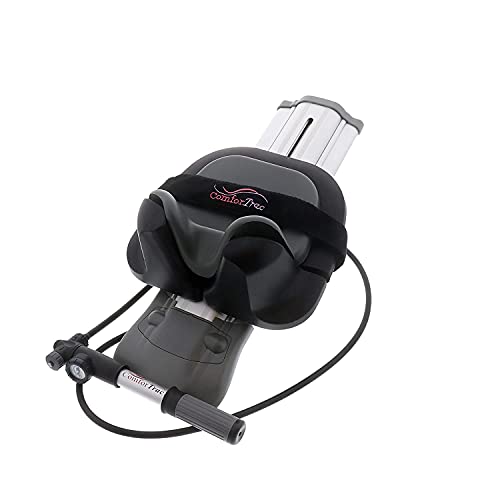
- Three incline settings: 10°, 15°, and 20°.
- Hand pump and quick release control traction.
- Memory-foam headrest; carrying case included.
Best For: Adjustable, cushioned at-home neck traction
Compact Foam Pick
Lumia Wellness Cervical Orthotic Traction Block

- Three-height positioning design.
- Firm, contoured EVA foam.
- Weighs 2.82 ounces; no door setup.
Best For: Simple, firm cervical stretching at home
Over-the-Door Pick
DMI Cervical Neck Traction Device

- Tool-free over-the-door setup.
- Graduated water bag: 2–20 pounds.
- Adjustable, foam-padded chin cover.
Best For: Portable, weight-adjustable neck traction
Best Motorized Table – Electric Spinal Decompression Machine
If you want a home spine therapy device that does not require hand-cranking or hanging upside down, this electric table offers button-controlled traction while you lie flat. Adjustable shoulder and leg supports help keep you positioned during use.
Best For: Adults seeking a motorized, horizontal alternative to a manual traction bench or inversion table.
Pros:
- Electric motor provides steady traction without manual cranking.
- Flat-lying design avoids the head-down position and ankle loading of inversion.
- Adjustable supports and sponge rollers help create a secure fit.
Cons:
- Its 47-inch-long frame needs dedicated floor and storage space.
- More involved to set up than a simple foam neck support.
This is the most substantial option here for someone who values powered operation and a stable steel frame. Because traction needs vary by person, get professional guidance before using it for a diagnosed spine condition.
Best Adjustable Neck Traction – Electric Air-Pump Cervical Stretcher
For shoppers focused on the cervical spine, this home spine therapy device combines an LCD-controlled electric air pump with side knobs for adjusting neck support. Its wraparound design and rear airbag provide a different setup from a chin-strap traction tool.
Best For: Adults looking for adjustable, neck-only traction who fit the stated neck measurements.
Pros:
- Touch-controlled pump inflates the airbag at a steady rate.
- Side knobs allow adjustments on both sides.
- Eight rear inflatable columns support the neck’s curve.
Cons:
- Fits a stated neck circumference of 13.7–16.8 inches and height of 3.2–4.7 inches; not recommended for thicker necks.
- Targets the neck rather than providing lumbar traction.
Measure before buying: fit is central to how this device supports the neck. Its powered inflation offers more adjustment than a passive foam support, but use traction under a clinician’s guidance if you have a cervical diagnosis or neurological symptoms.
Best Compact Neck Support – Occipital Release Foam Tool
If your ideal home spine therapy device is simple and portable, this contoured foam tool supports the head and neck while you rest on a firm surface. It uses your resting position for a gentle stretch, with no straps, pump, or assembly.
Best For: Adults who want brief, low-fuss neck and upper-back relaxation sessions at home or while traveling.
Pros:
- High-density memory foam provides contoured support.
- Non-slip pads help it stay in place on a flat surface.
- Compact 10-by-4.5-inch size and 11.7-ounce weight make it easy to carry.
Cons:
- Offers no adjustable traction force.
- Intended for short 5–10 minute sessions on a firm surface, not all-night use.
This is a practical pick if you prefer a passive neck support over powered or mechanical traction. Expect a gentle positioning aid rather than the controlled pull of an adjustable device.
Best Simple Neck Stretcher – RESTCLOUD Neck and Shoulder Relaxer
The RESTCLOUD is a foam home spine therapy device for people who want to lie back and give their neck a short, supported stretch. Its wave-shaped contour is designed to support the cervical curve on a firm, flat surface.
Best For: Adults seeking a straightforward, portable neck stretcher for short sessions on the floor or a yoga mat.
Pros:
- Needs no power, straps, or adjustments.
- Lightweight polyurethane foam is easy to move and clean.
- Contoured shape provides vertical and horizontal neck support.
Cons:
- Not intended as an overnight pillow; the listing recommends 10 minutes per session and no more than 30 minutes daily.
- May feel uncomfortable initially; stop use if you experience pain, numbness, or dizziness.
Choose this for uncomplicated, passive stretching rather than adjustable traction. Follow the stated time limits, and consult a healthcare professional if use causes symptoms or you have an existing cervical condition.
Best Blue Neck Stretcher – RESTCLOUD Neck and Shoulder Relaxer
If you want a simple home spine therapy device focused on the neck, this blue RESTCLOUD stretcher uses a contoured polyurethane-foam shape to support the cervical curve while you lie on a firm, flat surface. It is intended for short sessions, not overnight use.
Best For: Adults who want a portable, non-electric neck stretcher for brief sessions at home.
Pros:
- Contoured shape provides support and a gentle neck stretch.
- Two height sides offer a choice of fit.
- Lightweight foam can be used on a floor or yoga mat.
Cons:
- May take 1–2 weeks to find a comfortable fit and may not suit every neck.
- Not suitable as an overnight pillow; excessive use may cause discomfort or dizziness.
Start with a shorter session and stop if you experience pain, numbness, or dizziness. This is a straightforward option if you prefer a passive stretch over powered features.
Best Black Neck Stretcher – RESTCLOUD Cervical Traction Pillow
For shoppers seeking a compact home spine therapy device for the cervical area, this black RESTCLOUD pillow provides a contoured foam surface for neck support and stretching while you lie down. It is a manual option with no settings or power supply to manage.
Best For: Adults who prefer a portable, passive neck stretcher for use on a firm floor or yoga mat.
Pros:
- Ergonomic curve is designed to follow the cervical spine.
- Portable foam construction is easy to set up.
- Short sessions can fit into a home routine.
Cons:
- Cannot be used as an ordinary pillow all night.
- Overuse or improper use may aggravate an existing condition.
The supplied guidance recommends starting at five minutes and working toward ten-minute sessions, up to three times daily. Stop using it and consult a healthcare professional if pain, numbness, or dizziness occurs.
Best Multi-Function Lumbar Device – 4-in-1 Electric Lumbar Traction Device
If your search for a home spine therapy device is focused on the lower back rather than the neck, this electric model combines dynamic airbag traction with heat, vibration, and electrotherapy. Its controller lets you adjust functions individually or use them together.
Best For: Adults seeking adjustable, powered lumbar features for at-home use who have confirmed traction is appropriate for them.
Pros:
- Dual airbags apply and release traction dynamically.
- Offers three heat levels, three vibration levels, and 20 electrotherapy levels.
- Functions can be selected separately or paired with traction.
Cons:
- Requires careful setup and a gradual start at the lowest time and height settings.
- Not appropriate for the listed contraindications, including osteoporosis, spinal stenosis, prior lumbar surgery, and pregnancy.
This offers more adjustments than a passive stretcher, but suitability matters more than the feature count. If you have never used lumbar traction, the supplied instructions advise consulting a doctor first.
Adjustable Traction Pick – ComforTrac Deluxe Cervical Traction Kit
If you want a home spine therapy device focused on the neck, the ComforTrac Deluxe offers pump-controlled cervical traction with an adjustable incline and fit. Its memory-foam headrest and included carrying case make it a more fully equipped option than a simple stretching block.
Best For: Adults who want adjustable, at-home cervical traction with a cushioned headrest.
Pros:
- Incline adjusts to 10, 15, or 20 degrees without extra parts.
- Neck wedges adjust independently, while the hand pump and quick-release button control traction force.
- Memory-foam headrest and carrying case are included.
Cons:
- Designed for the neck rather than full-spine traction.
- At 7 pounds, it is heavier than the foam block in this roundup.
Choose this kit if adjustable traction matters more to you than the smallest possible device. Its fit and force controls offer more ways to tailor a session, but it remains a cervical-focused option.
Compact Foam Pick – Lumia Wellness Cervical Orthotic Traction Block
The Lumia Wellness block is a compact home spine therapy device for cervical stretching without a pump, pulley, or door setup. Its firm, contoured EVA foam supports different neck placements, and its three-height design lets you vary the position.
Best For: Adults who prefer a small, firm neck stretcher for use at home.
Pros:
- Three-height design offers positioning options.
- Firm, durable closed-cell EVA foam provides structured support.
- Lightweight at 2.82 ounces and requires no door-mounted hardware.
Cons:
- Firm foam may not suit anyone seeking a plush neck pillow.
- Does not offer pump- or weight-controlled traction.
This is the simplest pick for a short cervical stretching routine. Consider its firm feel and manual positioning before choosing it over an adjustable traction kit.
Over-the-Door Pick – DMI Cervical Neck Traction Device
For a home spine therapy device that uses a familiar over-the-door setup, the DMI cervical traction kit includes a pulley, rope, head halter, and graduated water bag. It requires no tools to set up and provides a way to adjust the hanging weight for neck traction.
Best For: Adults who want a portable, over-the-door cervical traction setup with adjustable weight.
Pros:
- No tools are needed for setup.
- Graduated water bag supports a listed 2–20-pound range.
- Foam-padded chin cover has a hook-and-loop adjustment.
- Includes the pulley, traction rope, spreader bar, head halter, and S-hook.
Cons:
- Requires a suitable door for its over-the-door setup.
- Has more separate components to assemble than a foam stretching block.
This kit suits shoppers who want adjustable, weight-based cervical traction without a floor unit. Its door-mounted format is the key fit consideration.
How We Picked These Home Spine Therapy Devices
We focused on practical differences a buyer can evaluate before purchase: whether a device targets the neck or lower back, how it applies support or traction, how much control the user has, and what setup and storage it requires. The selection includes simple cervical supports, powered and manual traction options, an over-the-door system, and lumbar-focused equipment. Inclusion is not a claim that a device treats a diagnosed condition or will relieve pain for everyone.
Quick Comparison: Match the Device to the Job
For a low-commitment neck support routine, compare the contoured RESTCLOUD relaxers, occipital release tool, and adjustable-height Lumia Wellness block. If you want controlled cervical traction rather than a passive support surface, look at the electric air-pump device, ComforTrac kit, or DMI over-the-door setup. For the lower back, the electric lumbar unit is a more compact option than a full decompression table. The table demands the most space and warrants especially careful review of its dimensions, operating method, and instructions.
Several RESTCLOUD listings have nearly identical names. Check the exact model, dimensions, materials, and included accessories rather than assuming they are different therapy types.
Key Buying Factors for a Home Spine Therapy Device
Body Area and Type of Support
Start with the area your clinician recommends addressing. Cervical devices are designed for the neck; a lumbar device is intended for the lower back. A molded pillow or block primarily provides positioning and support, while a traction system applies a pulling force. Do not use one as a substitute for the other without professional guidance.
Adjustability and Fit
Check how the device controls height, angle, inflation, or traction force, and whether those settings can be increased gradually. Neck size, head position, and body proportions matter. Review the stated fit range, weight limit, and setup requirements before ordering.
Setup, Safety, and Cost
Consider where you will use and store it. Over-the-door equipment needs a suitable door and careful installation; a decompression table needs floor space. Powered devices need access to power and more attention to controls. Check return terms, warranty coverage, and whether replacement parts are available. An FSA/HSA-eligible listing is not a guarantee of reimbursement; confirm eligibility with your plan.
Ask a healthcare professional before trying traction, particularly if you have a diagnosed spinal condition, recent injury or surgery, osteoporosis, or worsening symptoms. Stop use and seek medical advice if it causes increased pain, numbness, weakness, or dizziness.
Who Should Buy Which Home Spine Therapy Device?
Choose a simple neck support if you want a compact, unpowered option and do not need adjustable traction. Consider a controlled cervical traction kit if a clinician has recommended neck traction and you want repeatable settings. An over-the-door model suits buyers comfortable with its installation and operating steps. For lower-back use, compare the lumbar device with the table based on space, controls, and your clinician’s instructions. If you are unsure whether traction is appropriate, get advice before buying rather than choosing by promised pain relief.