A physical therapy balance board can help improve stability, ankle control, and core engagement while keeping training low-impact and easy to adapt. It’s also a practical option for standing desks, warmups, and home rehab routines.
Below, we’ve rounded up 10 strong options with different shapes, weight capacities, and difficulty levels so you can find the right fit for your needs.
Best 10 Physical Therapy Balance Board Picks for 2026
Wood Wobble Trainer
Amazon Basics Wood Wobble Balance Trainer Board
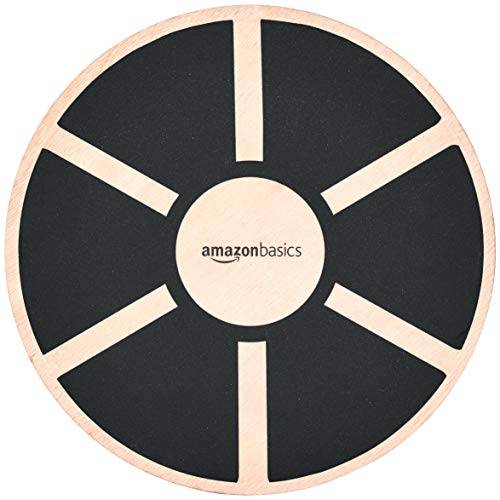
- Solid wood top with slip-resistant surface
- Supports up to 265 pounds
- Good for planks, push-ups, and balance drills
Best For: Adults needing a simple rehab and core balance board
3-in-1 Mobility Board
Adjustable Slant and Balance Board
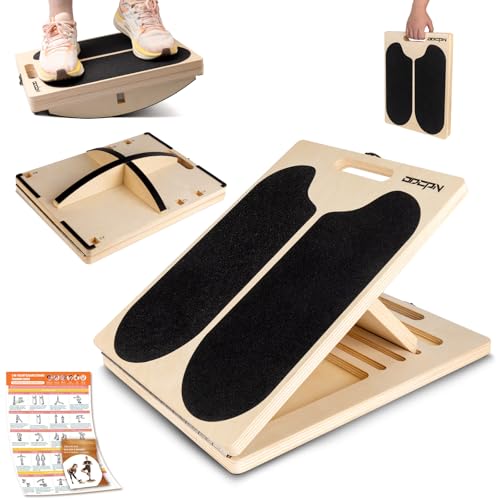
- Combines slant stretching with 180° and 360° balance modes
- Six adjustable angles for different stretch levels
- 300-lb capacity with magnetic quick-switch panels
Best For: Users who want stretch, rehab, and balance training in one board
Controlled Rehab Rocker

- One-plane rocker motion for controlled balance drills
- Textured top and anti-skid bottom
- Includes 37+ exercise guide
Best For: Rehab and post-rehab users needing linear stability training
Heavy-Duty Rotating Board
Professional Wooden 360° Rotating Balance Board

- 500-lb capacity for heavy-duty use
- 360° rotating base adds balance variety
- Anti-slip surface suits rehab and standing work
Best For: Users needing a sturdy high-capacity board for rehab and stability training
Wooden Stability Pick
Wooden Balance Board, 350LBS Anti-Slip Balance Trainer

- Supports balance, core strength, and posture work
- Anti-slip surface and base help with stability
- No assembly needed and supports up to 350 lbs
Best For: Beginners, seniors, and office users
Rehab-Friendly Wobble Board
StrongTek Wooden Balance Board
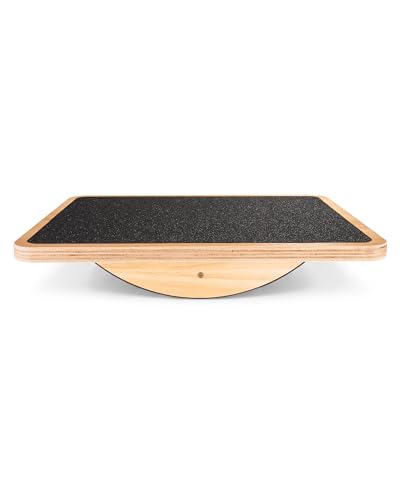
- Basic rocker or advanced 360° wobble options
- Made for ankle rehab, core stability, and balance training
- Textured surface and 350 lb capacity
Best For: Users who want a progression-friendly rehab board
Desk-Ready Therapy Board
Wooden Wobble Board for Adults

- Reinforced base supports up to 350 lbs
- Anti-slip pads improve grip and safety
- Helps with balance, coordination, and core strength
Best For: Adults, beginners, and older users
Advanced 360° Control
StrongTek Wooden Balance Board with 360° wobble

- 360° directional wobble for advanced balance training
- Cross-base design adds control compared with round-base boards
- Non-slip textured surface and 350 lb capacity
Best For: People who want a more challenging rehab and core stability board
Rehab-Friendly Stability
Wooden wobble board for therapy and desk use

- Pre-assembled design for immediate use
- Anti-slip pads plus floor-protection padding
- 350 lb capacity for balance, posture, and core work
Best For: Adults, beginners, and older users wanting easy rehab and desk movement
Compact All-Rounder
Professional wobble board for rehab and core work

- Works for physical therapy and advanced exercises
- Anti-slip surface with floor-protection pads
- Compact, portable design with 350 lb rating
Best For: Buyers who want one board for rehab and harder training
Wood Wobble Trainer – Amazon Basics Wood Wobble Balance Trainer Board
If you want a straightforward physical therapy balance board for home rehab or general stability training, this Amazon Basics option keeps things simple. The wood platform has a non-slip surface and a compact size that works well for controlled balance drills, planks, push-ups, and core-focused movement work.
Best For: Adults who want a basic wood wobble board for core training, coordination work, and rehab-style balance exercises.
Pros:
- Solid wood top with a slip-resistant surface for a secure grip
- Supports up to 265 pounds
- Useful for balance poses, planks, push-ups, and targeted muscle work
- Compact size fits a home workout space or rehab setting
Cons:
- Only intended for non-slip dry surfaces
- No adjustable angles or multi-mode design
- Lower weight capacity than some heavier-duty options
Overall, this is a no-frills pick for users who want a reliable physical therapy balance board without extra features. It is best when you need a simple platform for steady balance practice and core conditioning.
3-in-1 Mobility Board – Adjustable Slant and Balance Board
This physical therapy balance board stands out because it combines calf stretching and balance training in one setup. With 6 slant angles plus 180° and 360° balance modes, it is built for users who want a more versatile mobility tool for legs, ankles, knees, and general recovery work.
Best For: People who want one board for calf stretching, balance work, and mobility training during rehab or warm-ups.
Pros:
- 3-in-1 design combines slant board, 180° balance, and 360° rotation
- Six adjustable angles from 20° to 45°
- 300-pound capacity with a durable poplar core
- Includes a training poster and quick-switch magnetic side panels
Cons:
- More complex than a basic wobble board
- At 4.5 lbs, it is less minimal for travel than simpler boards
- Best results depend on using the right mode for the exercise
For buyers who want flexibility, this board offers more training options than a standard balance platform. It is a practical choice if your rehab or fitness routine includes stretching, directional stability, and rotation-based balance work.
Controlled Rehab Rocker – THERABAND Rocker Board
If you need a physical therapy balance board for controlled rehabilitation work, this THERABAND rocker board is designed for one plane of instability at a time. Its linear motion makes it a good fit for users focused on measured balance training, proprioceptive feedback, and post-rehab conditioning.
Best For: Rehab users and adults who want a controlled rocker board for linear balance training and core stability.
Pros:
- One controlled plane of instability for forward/back or side-to-side work
- Textured top and anti-skid bottom for added stability
- Includes an illustrated guide with over 37 exercises
- Lightweight molded plastic design is easy to move and store
Cons:
- Only provides linear balance motion, not full 360° wobble
- 150 kg max recommendation may be limiting for some users
- Smaller training variety than multi-mode boards
This is a strong choice if you want structured, repeatable balance drills rather than a more unpredictable wobble surface. The controlled design is especially useful for rehabilitation routines and progressive core stability work.
Heavy-Duty Rotating Board – Professional Wooden 360° Rotating Balance Board
For buyers looking for a physical therapy balance board with a higher load rating, this rotating wooden model is built for stability training, rehab support, and under-desk movement. It combines a 360° rotating base with an anti-slip surface, making it suitable for balance practice, standing use, and assisted exercises.
Best For: Users who want a heavy-duty rotating balance board for rehab, standing work, and core stability training.
Pros:
- 500-pound capacity for heavy-duty use
- 360° rotation design adds variety to balance training
- Anti-slip silicone pad and textured surface for safer footing
- Useful for rehab, standing desk use, and exercises like squats and planks
Cons:
- Heavier and larger than minimalist balance boards
- Rotation-based design may be less predictable for beginners
- No adjustable training angles
This board is a practical option if capacity and versatility matter more than portability. Its rotating design and sturdy build make it a good fit for users who want a more robust tool for everyday stability and recovery work.
Wooden Stability Pick – Wooden Balance Board, 350LBS Anti-Slip Balance Trainer
If you want a physical therapy balance board that also works for everyday core and posture work, this wooden trainer is a straightforward option. It supports balance drills, standing desk use, planks, squats, and push-ups, while the anti-slip surface and base help keep sessions steady.
Best For: Beginners, seniors, and office users who want simple balance and posture training.
Pros:
- Supports balance, core strength, and posture correction.
- Anti-slip surface and non-slip base pads help improve stability and protect floors.
- Ready to use out of the box with no assembly needed.
- Rated to support up to 350 lbs and works well in home, gym, office, or travel settings.
Cons:
- Uses a simpler rocker-style design rather than advanced wobble features.
- Best suited to basic balance training instead of highly specialized rehab routines.
Overall, this is a practical pick if you want one board for gentle stability work, desk breaks, and basic conditioning. Its no-assembly design and floor-friendly build make it easy to keep in regular use.
Rehab-Friendly Wobble Board – StrongTek Wooden Balance Board
This physical therapy balance board gives you a choice between a basic rocker setup and a more advanced 360° wobble, so it can grow with your training. It is built for low-impact balance work, ankle rehab, core stability, and everyday conditioning, with a textured surface that helps keep footing secure.
Best For: Users who want a progression-friendly board for rehab, balance drills, and core training.
Pros:
- Offers basic rocker or advanced 360° wobble options.
- Designed for ankle rehab, physical therapy, core stability, and balance training.
- Textured, easy-grip surface provides a secure feel for bare feet.
- Compact size and 350 lb capacity make it practical for home, gym, or office use.
Cons:
- Smaller footprint may feel less spacious than larger boards.
- Advanced wobble mode may be more challenging for absolute beginners.
If you want a board that can start simple and become more demanding, this is the most versatile option in the group. The rehab-focused design and durable hardwood construction make it a solid fit for balance progression.
Desk-Ready Therapy Board – Wooden Wobble Board for Adults
For a physical therapy balance board that leans toward stable daily use, this wobble board focuses on comfort, grip, and floor protection. It is aimed at core strength therapy, balance development, and posture support at home, in the gym, or at a standing desk.
Best For: Adults, beginners, and older users looking for steady balance practice and desk use.
Pros:
- Double reinforcement strip on the bottom adds stability and supports up to 350 lbs.
- Full-surface anti-slip pads improve grip during workouts.
- Bottom and edge pads help protect floors and reduce workout noise.
- Useful for balance issues, motor coordination, weight distribution, and core strength work.
Cons:
- Basic design may not suit users seeking advanced training angles.
- Focused on steady practice rather than highly dynamic movement.
This board makes sense if you want an easy-to-live-with therapy tool for daily balance work and standing desk comfort. Its reinforced, anti-scratch build makes it especially appealing for shared home or office spaces.
Advanced 360° Control – StrongTek Wooden Balance Board with 360° wobble
If you want a physical therapy balance board that goes beyond simple front-to-back rocking, this StrongTek model adds a 360° directional wobble for a more dynamic stability challenge. Its cross-style base is designed to feel more controlled than a traditional round-base board, making it a practical step up for balance training, ankle control, and core engagement.
Best For: Users who want an intermediate-to-advanced wobble board for rehab, balance work, and core training.
Pros:
- 360° directional wobble creates a more advanced balance challenge.
- Cross-base design offers a larger floor contact area for better control.
- Textured non-slip top helps keep feet secure during movement.
- Sturdy wooden build supports home workouts, standing desks, and balance practice.
Cons:
- More challenging than a basic rocker board, so it may not suit true first-time users.
- Larger size may take up more storage space than compact options.
Overall, this is a strong pick if you want a physical therapy balance board with more movement variety and a firmer learning curve than a basic rocker. It is a good fit for users who want to keep progressing from simple stability work into more demanding coordination and ankle-control drills.
Rehab-Friendly Stability – Wooden wobble board for therapy and desk use
This physical therapy balance board is built for everyday rehab, posture work, and core strength sessions without a lot of setup. With anti-slip pads, added bottom and edge protection, and a pre-assembled design, it aims to make balance training more convenient for home use, office movement, or beginner-friendly exercise.
Best For: Adults, beginners, and older users who want a simple wobble board for therapy, standing desk use, and balance practice.
Pros:
- Pre-assembled and ready to use right out of the box.
- Anti-slip pads help improve grip and reduce exercise-related slipping.
- Bottom and edge protection pads help reduce floor wear and noise.
- Supports up to 350 lb and is positioned for physical therapy, core strength, and posture work.
Cons:
- Its straightforward wobble-board design may not satisfy users seeking a more advanced challenge.
- Wooden construction is practical, but not as lightweight as some ultra-portable options.
As a practical therapy-focused board, this model leans toward comfort, stability, and ease of use rather than maximum difficulty. That makes it a sensible choice if you want a dependable balance board for rehabilitation basics, desk movement, or low-friction daily training.
Compact All-Rounder – Professional wobble board for rehab and core work
If you want a physical therapy balance board that can also handle more demanding exercises, this compact wobble board is built for both rehab-style stability work and advanced moves like push-ups, squats, and planks. Its anti-slip surface, protective pads, and 350 lb weight rating make it a versatile option for home, gym, or office use.
Best For: Users who want a compact board for rehabilitation, balance drills, and higher-intensity core training.
Pros:
- Supports both physical therapy and advanced exercises like planks and squats.
- Anti-slip surface and protection pads add safety and floor protection.
- Compact size makes it easy to store and move between spaces.
- Rated to hold up to 350 lb for broad adult use.
Cons:
- Its smaller footprint may feel less forgiving for users who want a wider platform.
- Advanced movement options may be more than some rehab-focused buyers need.
This is a good all-around choice if you want one board that can bridge rehabilitation and exercise progression. It is especially appealing for buyers who expect to use a balance board for both controlled therapy drills and more athletic stability work.
How We Picked the Best Physical Therapy Balance Board
For this roundup, we focused on boards that make sense for rehab, mobility work, and everyday balance training. Priority went to stable construction, non-slip surfaces, realistic weight capacity, and designs that support both beginners and more advanced users. We also considered whether each Physical Therapy Balance Board is practical for home use, office standing, or ankle and lower-body recovery.
Quick Comparison
In general, rocker boards offer a more controlled front-to-back challenge, while 360-degree wobble boards create a less predictable, more demanding instability. Slant-board hybrids add calf stretching and mobility work, which can be useful if you want one tool for multiple exercises. Wooden boards tend to feel sturdier and more durable, while textured tops and anti-slip bases matter most for safety.
Key Buying Factors for a Physical Therapy Balance Board
Shape and Motion
Choose the motion that matches your goal. Rocker boards are a smart starting point for rehab and controlled balance drills. Wobble and rotating boards are better when you want to challenge ankle stability, reaction time, and full-body coordination.
Surface Grip and Base Stability
A non-slip top helps prevent foot movement during exercise, and a grippy base reduces sliding on hardwood, tile, or gym flooring. This is especially important if you plan to use the board during physical therapy sessions or while standing at a desk.
Weight Capacity and Build Quality
Look for a sturdy platform with a capacity that comfortably exceeds your body weight. Solid wood construction often provides the best combination of durability and stability for a Physical Therapy Balance Board, especially for regular use.
Adjustability and Versatility
Some boards are more focused, while others include adjustable angles or dual-use features like slant-board stretching. If you want one tool for rehab, mobility, and light fitness, versatility may be worth prioritizing.
Who Should Buy Which Physical Therapy Balance Board?
Beginners and post-injury users usually benefit most from simpler rocker-style boards with predictable movement. Intermediate users who want more challenge may prefer a 360-degree wobble board. If you need added calf mobility, a slant-board combo can be the best value. For standing-desk use, pick a wider board with a high weight capacity and strong anti-slip features for comfort and confidence throughout the day.