Low ceilings can make pull-up training difficult, but the right bar can provide useful clearance without sacrificing stability or grip options. This roundup compares compact doorway models, ceiling- and joist-mounted bars, wall-mount designs, and freestanding stations.
Use the buying guide below to match the bar’s installation method, height, weight capacity, and available clearance to your space and training goals.
Best 10 Pull Up Bar for Low Ceilings Picks for 2026
Flexible Ceiling Placement

- Fits 16- or 24-inch joist layouts
- Four padded grip positions
- Includes mounting template and hardware
Best For: Home gyms with compatible ceiling joists
No-Drill Doorway Option
Sportneer Adjustable Pull-Up Bar

- Fits 29.5- to 37-inch doorways
- No drilling required
- 440-pound stated capacity
Best For: Compatible solid wood door frames
Heavy-Duty Mounting
Titan Fitness Ceiling Pull-Up Bar
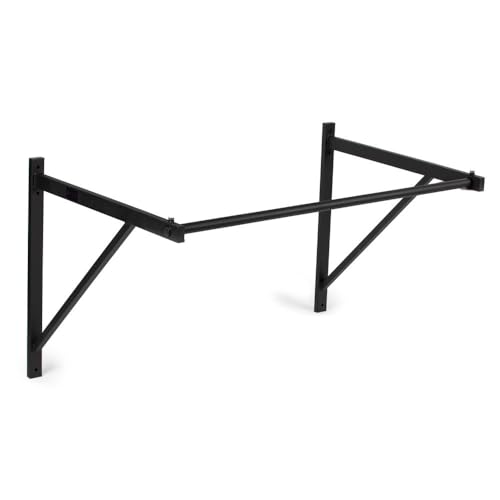
- 500-pound stated capacity
- Wall- or ceiling-mount design
- 11-gauge steel construction
Best For: Permanent home or garage-gym installations
Freestanding Space Saver

- Adjusts from 68.9 to 82.68 inches
- Folds for storage
- Adds dips and leg raises
Best For: Low-ceiling rooms without mounting options
Best Adjustable Ceiling Pick
SELEWARE Heavy-Duty Multi-Grip Bar

- Four adjustable height positions
- Five grips plus ball finger grip
- 400-pound steel construction
Best For: Adjustable, accessory-friendly home gym setups
Best Compact Joist Mount
Fitarc Joist-Mount Pull Up Bar
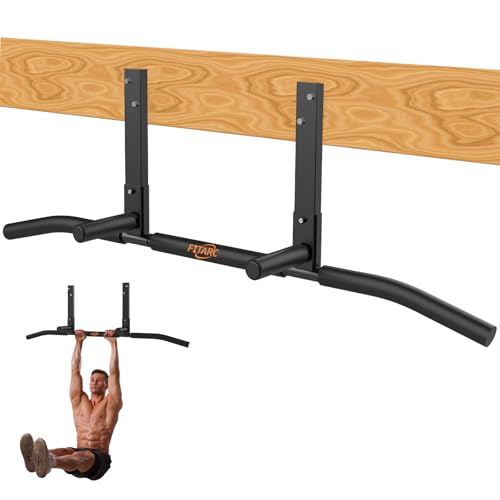
- Compact structure saves space
- Padded four-grip handles
- 440-pound steel capacity
Best For: Basement and garage gyms with wooden joists
Best High-Capacity Adjustable Bar

- 25.8- to 41-inch height range
- Eight-hole stability-focused design
- 500-pound heavy-steel capacity
Best For: Wide, adjustable ceiling-mounted training setups
Best Joist-Mounted Pick

- 440-pound maximum weight recommendation
- Six padded, anti-slip grip areas
- Designed for wood joists, beams, or rafters
Best For: Home gyms with suitable wood mounting points
Best Adjustable Option

- Five grip styles for varied exercises
- Five height positions with adjustable projection
- 48-inch mounting pattern for compatible studs
Best For: Customizable garage, basement, or home-gym setups
Best Versatile Mount

- Reversible risers support multiple mounting locations
- 400-pound maximum weight recommendation
- Padded grips and lifetime warranty included
Best For: Flexible ceiling, beam, joist, wall, or doorway installations
Flexible Ceiling Placement – Reversible-Riser Pull-Up Bar
If you need a pull up bar for low ceilings but still want a full range of motion, this ceiling-mounted model keeps the bar away from the wall and uses reversible risers for different joist layouts. Its four grip positions also add exercise variety.
Best For: Home gyms with suitable ceiling joists and users who want multiple grip options.
Pros:
- Ceiling mounting frees wall space and helps provide a full range of motion.
- Reversible risers accommodate 16- and 24-inch joist configurations.
- Four angled, foam-covered grip positions support varied training.
- Includes mounting template, hardware, instructions, and USA technical support.
Cons:
- Requires ceiling installation rather than a no-drill setup.
- Compatible mounting structure must be available overhead.
- Bodyweight resistance trainers are sold separately.
This is a practical choice when overhead mounting is possible and preserving wall space matters. Verify your joist spacing and installation surface before buying.
No-Drill Doorway Option – Sportneer Adjustable Pull-Up Bar
For a pull up bar for low ceilings, a doorway model can avoid overhead clearance concerns while keeping installation simple. This Sportneer bar adjusts from 29.5 to 37 inches and uses a locking system with large friction pads, but it requires a solid wood door frame.
Best For: Renters or home users with a compatible solid wood doorway who want a removable bar.
Pros:
- No drilling is required for installation.
- Adjusts to door frames from 29.5 to 37 inches wide.
- Dual gear locks, four fixed points, and large PVC pads support stability.
- Steel construction is rated for up to 440 pounds.
Cons:
- Only designed for solid wood door frames.
- It is not suitable outside the stated 29.5- to 37-inch width range.
- Strong adhesion may peel paint or plaster when removed.
This is the easiest installation option in the group, provided your doorway meets the fit and material requirements. Check the frame carefully and test painted surfaces before regular use.
Heavy-Duty Mounting – Titan Fitness Ceiling Pull-Up Bar
This Titan Fitness bar is a strong candidate for a pull up bar for low ceilings when you can mount directly to a suitable wall or ceiling structure. Its 500-pound capacity, 11-gauge steel construction, and 32mm bar are aimed at demanding home or garage-gym training.
Best For: Users prioritizing a high weight rating and permanent wall- or ceiling-mounted stability.
Pros:
- Supports up to 500 pounds according to the supplied specifications.
- Can be installed on a wall or ceiling.
- 11-gauge steel construction provides a heavy-duty feel.
- Designed for wood studs or concrete with standard 16-inch stud spacing.
Cons:
- Requires secure installation into suitable studs or concrete.
- The fixed mounting design may be less convenient for renters.
- Its listed dimensions should be checked against available ceiling clearance.
Choose this model when structural mounting and a high capacity matter more than portability. Confirm both the mounting surface and the bar’s dimensions before installation in a low-ceiling space.
Freestanding Space Saver – Foldable YYJO Power Tower
If ceiling mounting is not practical, this freestanding station offers an alternative pull up bar for low ceilings. Its height adjusts from 68.9 to 82.68 inches across 11 levels, and the foldable design can be stored after workouts.
Best For: Home users needing adjustable height, pull-ups, dips, and additional bodyweight exercises without ceiling installation.
Pros:
- Adjusts across 11 height levels from 68.9 to 82.68 inches.
- Foldable triangular design helps reduce storage footprint.
- Supports pull-ups, dips, leg raises, and other bodyweight movements.
- Rated for up to 350 pounds with a 24-inch interior width.
Cons:
- Requires floor space and has a listed width of 51.2 inches.
- Its maximum height may still be too tall for some low-ceiling rooms.
- Minimal assembly is required before use.
This is the most flexible choice for spaces where drilling into a ceiling or wall is undesirable. Measure both the room height and available floor area, then select a height that leaves usable overhead clearance.
Best Adjustable Ceiling Pick – SELEWARE Heavy-Duty Multi-Grip Bar
If you need a pull up bar for low ceilings, the SELEWARE is a flexible ceiling-, wall-, or joist-mount option with four height settings. Its multiple grips and compact mounting design make it useful when you want varied upper-body training without committing to a fixed-height setup.
Best For: Home gyms needing adjustable height, multiple grip options, and accessory attachment points.
Pros:
- Four adjustable height positions help accommodate different users and exercises.
- Five grip positions include a ball finger grip for specialized grip training.
- Heavy-duty steel construction is rated for up to 400 pounds.
- Includes rings for suspension straps, bands, and other training accessories.
Cons:
- Installation requires suitable wood studs or concrete and careful mounting.
- The supplied details do not specify the exact clearance needed for every height setting.
The adjustable design is particularly practical for lower-clearance rooms, while the 4-hole mounting base and included hardware support a secure installation. Confirm your ceiling structure and desired range of motion before buying.
Best Compact Joist Mount – Fitarc Joist-Mount Pull Up Bar
For shoppers seeking a pull up bar for low ceilings, the Fitarc uses a compact joist-mounted structure designed for wooden beams, basement gyms, and garages. Its straightforward design focuses on essential pull-ups, chin-ups, hanging leg raises, and core work.
Best For: Basement or garage gyms with suitable wooden beams and a preference for a compact installation.
Pros:
- Joist-mounted structure helps save space in home gym areas.
- Thick foam handles provide padded, anti-slip contact during workouts.
- Dual-support steel construction is rated for up to 440 pounds.
- Installation instructions and videos are included.
Cons:
- It is designed for wooden beams, so it may not suit every ceiling structure.
- The listed version is intended for 8- to 9-foot beams rather than a broad range of ceiling heights.
- Only four grip options are specified.
The Fitarc is a sensible space-conscious choice when your ceiling has compatible wood joists. Its 42.5-inch width and 12.9-inch height should still be checked against the available clearance and beam layout.
Best High-Capacity Adjustable Bar – Kipika 48-Inch Ceiling Bar
The Kipika is a strong contender if you need a pull up bar for low ceilings but still want room to adjust your setup. Its height ranges from 25.8 to 41 inches, letting you tailor the bar to your space while retaining multiple grip positions for varied training.
Best For: Users who want a wide, heavy-duty ceiling bar with substantial height adjustment.
Pros:
- Height adjusts from 25.8 to 41 inches for different ceiling conditions.
- Eight-hole mounting design is intended to improve stability.
- Heavy steel construction supports up to 500 pounds.
- Multiple grips and padded handles support varied pull-up training.
Cons:
- The 50.2-inch overall width may require more ceiling space than compact bars.
- Installation is intended for a standard joist, so compatibility should be verified first.
- Its 9.25-kilogram weight may make positioning and installation easier with assistance.
With the broadest stated capacity and a useful low-end height setting, the Kipika offers plenty of adjustability for lower ceilings. Measure the joist location, width, and exercise clearance before installation.
Best Joist-Mounted Pick – Compact 42-Inch Pull-Up Bar
If you need a pull up bar for low ceilings, this joist-mounted Shnlie model offers a compact 42-inch profile for installation on suitable wood beams or rafters. Its steel construction, padded grips, and drilling-based installation make it a practical choice when a doorway bar is not suitable.
Best For: Home gyms with accessible wood joists, beams, or rafters and users who want a sturdy, space-conscious setup.
Pros:
- Supports up to 440 pounds.
- Six foam grip pads provide cushioning and an anti-slip surface.
- Includes installation accessories, instructions, and installation videos.
- Multiple grip positions support pull-ups and chin-ups.
Cons:
- Requires drilling and a suitable wood mounting surface.
- Its 42-inch width and 13-inch height still need to be checked against the available space.
With the highest stated weight capacity of the three options and a compact design, this bar is a strong fit for users prioritizing load support. Verify the joist location and clearance before installation.
Best Adjustable Option – Kipika 48-Inch Multi-Grip Bar
For shoppers comparing a pull up bar for low ceilings, the Kipika ceiling-mounted model stands out for its adjustable support height and broad grip selection. The arms adjust through five positions, while the bar can sit 18 to 26 inches from the mounting surface.
Best For: Users who want adjustable positioning and several pull-up variations in a garage, basement, or home gym.
Pros:
- Offers five grip styles, including wide, narrow, neutral, chin-up, and hammer grips.
- Five height positions and 18- to 26-inch mounting distance provide setup flexibility.
- Powder-coated metal is described as rust- and scratch-resistant.
- Mounting holes are spaced 48 inches apart for compatible stud layouts.
Cons:
- Its 300-pound maximum weight recommendation is lower than the other listed models.
- The 48-inch mounting span and ceiling support requirements may not suit every room.
This is the most configurable choice in the group, particularly if you need to fine-tune the bar’s position. Measure the ceiling, studs, and available clearance carefully before buying.
Best Versatile Mount – ATENTO Reversible-Riser Bar
This ATENTO model is a versatile pull up bar for low ceilings because its reversible risers can be positioned for ceiling, joist, beam, wall, or doorway installation. The 40-inch bar combines a heavy-gauge steel frame with padded grips and includes mounting hardware and instructions.
Best For: Buyers who need flexible mounting options across beams, joists, ceilings, walls, or doorways.
Pros:
- Reversible risers support several installation environments.
- Heavy-duty steel construction has a stated 400-pound capacity.
- High-density foam grips are described as thick, wear-resistant, waterproof, and slip-resistant.
- Includes installation tools, hardware, instructions, and a lifetime warranty.
Cons:
- The bar is 14 inches high, so low-clearance measurements remain important.
- Installation still depends on a suitable structural mounting surface and drilling.
- Its 40-inch width may provide less horizontal room than a wider multi-grip bar.
The reversible-riser design gives this bar the broadest stated mounting flexibility, while its 400-pound capacity suits demanding workouts. Confirm the intended mounting surface and overhead clearance before installation.
How We Picked the Best Pull Up Bar for Low Ceilings
We focused on designs that can work in rooms with limited overhead space, prioritizing mounting flexibility, compact dimensions, stated weight capacity, grip variety, and installation requirements. The selection includes no-drill doorway bars, fixed ceiling and joist mounts, wall-mounted options, and a freestanding power tower. Because low-ceiling installations leave less room for movement, we also considered whether each format can be positioned to reduce head and knee interference.
Always verify the manufacturer’s dimensions, hardware requirements, and load rating for your specific ceiling, wall, door frame, joist, or beam. A capacity rating does not replace proper structural installation.
Quick Comparison
- Best for renters: A no-drill doorway bar, such as the Sportneer model, avoids permanent mounting but depends on a suitable frame.
- Best for fixed installations: Ceiling-, joist-, and wall-mounted bars offer a more stable long-term setup when attached to sound structure.
- Best for multiple exercises: The YYJO freestanding power tower adds dip and assisted-training functionality, but it requires more floor space.
- Best for grip variety: Multi-grip ceiling bars from Kipika and similar options can support wider, neutral, and chin-up positions.
Key Buying Factors for a Pull-Up Bar for Low Ceilings
Installation Height and Clearance
Measure from the mounting surface to the floor, then account for the bar’s projection and your body position. You need enough room to bend your knees or keep your feet clear, while still leaving headroom during the pull. Adjustable-height models can help fine-tune positioning, but they may require careful locking and installation.
Mounting Surface
Joist and beam mounts should attach directly to properly sized structural members, not just drywall or thin ceiling material. Wall-mounted models require solid studs, masonry, or an appropriately reinforced surface. Doorway bars are simpler to install but may have narrower grip space and frame-compatibility limits.
Capacity and Construction
Look for a clearly stated weight rating and consider your body weight, clothing, accessories, and any dynamic movement. Welded steel construction, secure brackets, quality fasteners, and non-slip grips are especially important for repeat training. Follow the supplied hardware and inspect connections regularly.
Bar Width and Grip Style
A wider bar can provide more hand-position options, while a compact bar may be easier to fit in a tight room. Foam or textured grips can improve comfort, but the most important factor is that the handle positions suit your preferred pull-ups, chin-ups, or neutral-grip work.
Who Should Buy Which Pull Up Bar for Low Ceilings?
Choose a doorway model if you rent, need quick setup, or cannot alter the structure. Choose a ceiling or joist-mounted Pull Up Bar for Low Ceilings if you have accessible, structurally sound overhead framing and want a dedicated training station. Wall-mounted bars suit garages and home gyms with reliable studs or masonry. A freestanding tower is the most versatile choice for dips and assisted exercises, provided you have adequate floor and ceiling clearance. If you are uncertain about the structure, consult a qualified installer before drilling or training on the bar.