The best pull-up bars make it easier to train your back, arms, shoulders, and core at home without committing to a full commercial gym setup. This roundup includes doorway bars, joist-mounted models, and freestanding power towers for different spaces, budgets, and training styles.
Before buying, consider more than the advertised weight limit. Mounting method, available clearance, grip options, stability, adjustability, and installation requirements can determine whether a bar is genuinely safe and useful in your home.
Best 10 Pull Up Bars Picks for 2026
Best Overall

- 11 height settings for varied users
- Pull-ups, dips, knee raises, and push-ups
- Extended base and 450-lb stated capacity
Best For: Families building a versatile home gym
Best Doorway Bar
KAKICLAY Multi-Grip Pull Up Bar

- Fits 21.65-36.22-inch doorways
- Folds for convenient storage
- Includes suspension straps and door protectors
Best For: Space-conscious users with compatible door frames
Best Budget Station

- Compact 9.4-square-foot footprint
- Six adjustable height levels
- Supports pull-ups, dips, push-ups, and knee lifts
Best For: Beginners needing a movable home workout station
Best Comfort Features
Sportsroyals 10-in-1 Power Tower

- 10-in-1 full-body training design
- Eight height and five backrest settings
- Thick pads and ergonomic grip features
Best For: Users wanting varied workouts with added padding
Best No-Drill Pick
Sportneer Adjustable Doorway Pull Up Bar

- No-drill mounting for solid wood door frames
- Adjusts from 29.5 to 37 inches
- Integrated anti-slip handlebar and locking system
Best For: Adults needing a removable bar for compatible solid wood doorways
Best Joist-Mount Option
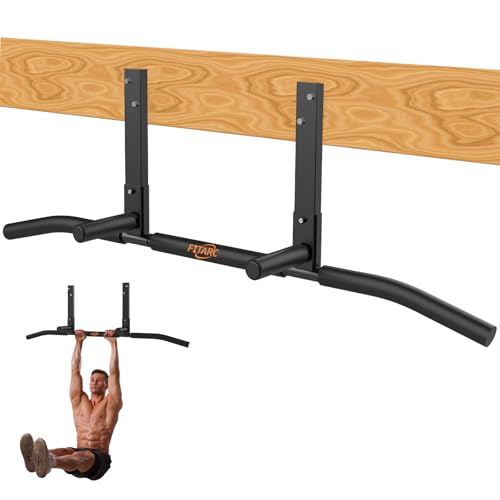
- Mounts to suitable wooden beams
- 440-pound stated weight capacity
- Four padded grip positions
Best For: Basement and garage gyms with compatible wooden joists
Best Wide-Range Doorway Pick
Ally Peaks Adjustable Pull Up Bar

- Fits doorways from 21.65 to 39.37 inches wide
- Five width and two thickness adjustments
- Silicone protection helps shield door frames
Best For: Users needing precise fit adjustment across varied doorways
Best Foldable Power Tower
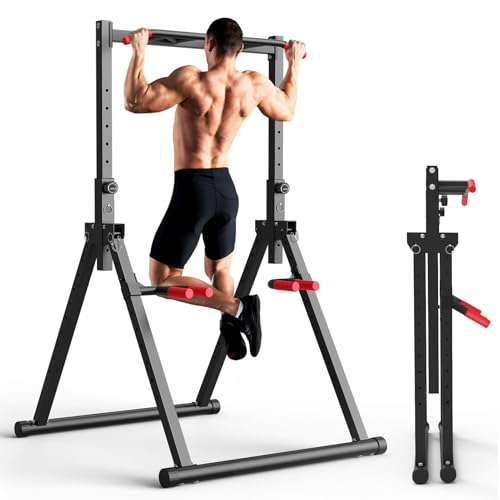
- 440-pound capacity with 2mm steel tubing
- Folds flat for easier storage
- Supports pull-ups, dips, push-ups, and more
Best For: Home gyms needing a versatile freestanding station
Best Heavy-Duty Doorway Bar

- 440-pound maximum weight recommendation
- No-drill leverage installation
- Silicone pads help protect door frames
Best For: Portable workouts in compatible standard doorways
Best Simple Doorway Bar
Adjustable Multi-Grip Pull-Up Bar

- No-drill installation for compatible doorways
- Multiple grips and exercise options
- Padded frame contact and handles
Best For: Compact upper-body training at home
Best Overall – Pooboo Adjustable Power Tower
If you want pull up bars that cover more than standard pull-ups, this Pooboo power tower is a versatile home-gym option. Its adjustable height, padded backrest, dip handles, knee-raise station, and included resistance bands support a broad range of upper-body and core exercises.
Best For: Families and users who want an adjustable, multi-exercise power tower with a high stated weight capacity.
Pros:
- 11 height settings from 71.4 to 84.9 inches accommodate different users.
- Supports pull-ups, chin-ups, dips, push-ups, and vertical knee raises.
- Extended H-shaped base, enlarged foot pads, and safety locknuts improve stability.
- Includes resistance bands and a 12-month manufacturer warranty.
Cons:
- At about 60 pounds, it is heavier than a basic doorway bar.
- Assembly instructions recommend two people, despite the product notes also describing quick setup.
- Its approximately 43.5-inch width requires dedicated floor space.
Choose this model if exercise variety and adjustability matter more than portability. The broad height range and multiple stations make it a practical centerpiece for a home gym.
Best Doorway Bar – KAKICLAY Multi-Grip Pull Up Bar
For shoppers seeking pull up bars without a freestanding tower, the KAKICLAY doorway model offers multiple grips in a foldable design. It fits door frames 21.65 to 36.22 inches wide and includes suspension straps for more workout variety.
Best For: Adults who need a foldable, space-saving pull-up bar for a compatible doorway.
Pros:
- Multiple grip positions include angled, shoulder-width, and close-grip options.
- Foldable construction stores quickly after training.
- Silicone door protectors are designed to help prevent frame marks.
- Includes suspension straps and a 24-month warranty.
Cons:
- Requires careful measurement of doorway width, depth, and trim height.
- Not suitable for hollow plasterboard walls or door frames unable to withstand workout stress.
- Doorway mounting provides less exercise versatility than a full power tower.
This is a strong fit for compact spaces, provided your doorway meets the stated dimensions and is structurally sound. Its folding design is especially useful in bedrooms, apartments, or shared rooms.
Best Budget Station – Z ZHICHI Compact Dip Station
The Z ZHICHI is a compact choice for pull up bars and dip-station training, with a 9.4-square-foot footprint and a relatively light 33.5-pound frame. Its carbon-steel construction and six height settings support basic bodyweight workouts in a home, garage, garden, or bedroom.
Best For: Beginners who want a movable, compact station for pull-ups, dips, push-ups, and knee lifts.
Pros:
- Compact footprint fits a range of home workout spaces.
- Reinforced pipe connections are designed to reduce shaking.
- Six height levels allow some user adjustment.
- Rubber feet help protect floors from scratches and marks.
Cons:
- Product details list both 350 and 330 pounds as maximum weight figures.
- Users over 6 feet 3 inches or 19.5 inches wide should consider a larger station.
- No warranty is listed in the supplied specifications.
Its lighter weight and small footprint make it easier to reposition than many power towers. Check the sizing guidance carefully, particularly if you are tall or broad-shouldered.
Best Comfort Features – Sportsroyals 10-in-1 Power Tower
The Sportsroyals power tower is designed for shoppers who want pull up bars with a broad exercise menu and extra padding. It combines pull-ups, dips, inverted rows, leg raises, and push-ups with adjustable height and backrest settings for shared home use.
Best For: Home-gym users prioritizing exercise variety, padded support, and adjustable positioning.
Pros:
- 10-in-1 design supports full-body strength exercises.
- Eight height levels range from 57.09 to 83.07 inches.
- Five backrest settings and thickened pads add positioning flexibility.
- Commercial steel, a Pi-shaped base, and adjustable foot covers support stability.
Cons:
- Its multifunction design takes more space than a simple doorway bar.
- The supplied notes do not provide an exact footprint despite describing it as space-saving.
- The listed 360-pound load capacity is lower than some competing models in this roundup.
This tower stands out when comfort and exercise variety are central to your buying decision. Its height and backrest adjustments also make it more adaptable for a household with multiple users.
Best No-Drill Pick – Sportneer Adjustable Doorway Pull Up Bar
If you want pull up bars without drilling, the Sportneer is designed for solid wood door frames measuring 29.5 to 37 inches wide. Its adjustable, integrated bar and locking system support several upper-body exercises, but careful installation and adherence to the 297-pound manual limit are essential.
Best For: Adults seeking a removable, no-drill bar for compatible solid wood doorways.
Pros:
- Adjusts from 29.5 to 37 inches and includes spirit levels for setup.
- No-drill design uses large PVC anti-slip pads and four metal fixed points.
- Integrated cotton handlebar supports varied grips and exercises.
- Includes installation instructions, video guidance, and a two-year manufacturer warranty.
Cons:
- Only intended for solid wood door frames; painted, plastered, tiled, glass, and other non-solid surfaces are unsuitable.
- The manual specifies a 297-pound maximum, despite higher stated testing and product capacity figures.
- Door-frame width and pad clearance must be checked before purchase.
The Sportneer offers flexible sizing and a reassuring locking design for the right doorway. Verify the frame dimensions and material first, then follow the marked rotation direction during installation.
Best Joist-Mount Option – Fitarc Ceiling Pull Up Bar
Among pull up bars for a basement, garage, or home gym, the Fitarc stands out as a joist-mounted option. Its dual-support steel structure is designed for wooden beams and combines multiple grip positions with padded handles for pull-ups, chin-ups, hanging leg raises, and core training.
Best For: Home gym users with suitable wooden beams who prefer a fixed ceiling or joist-mounted setup.
Pros:
- Designed for installation on wooden beams in basement and garage gyms.
- Dual-support steel construction is rated for up to 440 pounds.
- Four padded grip positions help vary upper-body workouts.
- Compact structure saves space and includes installation instructions and videos.
Cons:
- Requires an appropriate wooden-beam mounting location rather than a doorway setup.
- The supplied notes do not specify included mounting hardware.
- Installation is more permanent than a removable doorway bar.
The Fitarc is a practical choice when you have a suitable joist and want a dedicated workout station. Confirm the beam setup and installation requirements before mounting.
Best Wide-Range Doorway Pick – Ally Peaks Adjustable Pull Up Bar
The Ally Peaks is one of the more adaptable pull up bars for doorways, with five width settings and two thickness adjustments. It fits doorways from 21.65 to 39.37 inches wide and offers additional silicone protection, making it useful for users who need a more precise fit without screwing into the frame.
Best For: Adults who need broad doorway compatibility and adjustable mounting for standard door frames.
Pros:
- Adjusts for doorways 21.65 to 39.37 inches wide and 4.7 to 8.27 inches deep.
- Does not require screws and can be removed for storage.
- Heavy-duty chrome steel construction is rated for up to 500 pounds.
- Silicone contact surfaces and removable pads help protect the door frame.
Cons:
- Requires checking doorway width, depth, and trim height before installation.
- Users should tug down on the grips to confirm secure installation before exercising.
- The wide, multi-part mounting design may require more careful setup than simpler bars.
With its broad adjustment range and dual silicone protection, the Ally Peaks is a strong fit for varied doorway dimensions. Measure carefully and test the installation before each workout.
Best Foldable Power Tower – Adjustable Full-Body Station
If you want pull up bars that do more than chin-ups, the SERTT Foldable Power Tower combines pull-ups, dips, push-ups, knee raises, and inverted rows in one freestanding station. Its triangular base folds flat for storage, while multiple height and handle adjustments help accommodate different users.
Best For: Home gyms that need a versatile, heavy-duty station with foldable storage.
Pros:
- Supports up to 440 pounds with 2mm steel tubing.
- Offers 10 pull-up heights, five grip styles, and adjustable dip/push-up handles.
- Folds flat and provides a spacious 39.4-inch width.
- Includes tools and labeled parts for relatively straightforward assembly.
Cons:
- Requires more floor space than a doorway-mounted bar during use.
- Assembly is still necessary before the first workout.
This is the most comprehensive option in the group for users who want one piece of equipment for varied bodyweight training. Its foldable frame helps offset the larger footprint, but a doorway bar may be more practical for smaller spaces.
Best Heavy-Duty Doorway Bar – Multi-Grip Chin-Up Trainer
The Ally Peaks is a practical choice if you want pull up bars that mount without drilling. It uses doorway leverage, fits specified standard doorways, and adds multiple grips for pull-ups and chin-ups while also supporting push-ups, dips, and hanging crunches.
Best For: Users who want a portable, multi-function bar for compatible door frames.
Pros:
- Heavy steel construction is rated for up to 440 pounds.
- Fits doorways 24 to 32 inches wide with specified depth and trim dimensions.
- Includes double silicone protection and extra removable no-trace pads.
- Portable, screw-free installation makes it easy to remove and store.
Cons:
- Compatibility depends on matching the listed doorway measurements.
- Requires checking the bar is secure before each use.
Among these options, the Ally Peaks offers a strong balance of capacity, portability, and exercise variety. Measure your door frame carefully before buying, since its leverage-mounted design depends on a compatible opening.
Best Simple Doorway Bar – Adjustable Multi-Grip Pull-Up Bar
The TOPOKO is a straightforward doorway option for shoppers seeking pull up bars for home upper-body training. Its heavy-duty steel frame provides multiple grip positions, while foam padding is designed to improve comfort and help protect the door frame during installation.
Best For: Adults and teens who want an adjustable, portable bar for a compatible doorway.
Pros:
- Supports multiple exercises, including pull-ups, push-ups, and sit-ups.
- Fits listed doorways 23 to 31 inches wide without drilling.
- Uses padded contact areas and ergonomic foam handles.
- Includes assembly instructions and an assembly tool.
Cons:
- Door-frame depth must fall within the specified 4.7- to 7.5-inch range.
- Initial assembly is required before installation.
The TOPOKO is a sensible pick when you want a compact, no-drill training bar with adjustable grip options. Its main limitation is doorway compatibility, so confirm both width and jamb depth before ordering.
How We Picked the Best Pull Up Bars
We organized this selection around the main ways people train at home: doorway pull-ups, permanent joist or wall mounting, and freestanding power-tower workouts. We compared stated weight capacities, adjustment ranges, grip configurations, included features, portability, and the exercises each design supports.
Because fit and installation are especially important for Pull Up Bars, we also considered whether each style requires drilling, dedicated floor space, suitable doorframe geometry, or a strong structural mounting point. Product claims should always be checked against the manufacturer’s instructions before use.
Quick Comparison
| Type | Best For | Main Advantage | Potential Limitation |
|---|---|---|---|
| Doorway bar | Renters and compact spaces | Fast setup and easy storage | Depends on compatible trim and clearance |
| Joist or wall mount | Frequent, serious training | Solid permanent connection | Requires careful installation and drilling |
| Power tower | Full upper-body workouts | Supports pull-ups, dips, and push-ups | Uses more floor space |
Key Buying Factors for Pull Up Bars
Mounting and Compatibility
Measure the doorway, trim depth, ceiling height, or joist spacing before ordering. A no-drill bar may be convenient, but it still needs a structurally suitable frame and enough clearance for your head and shoulders. Mounted bars should attach only to appropriate structural members using the supplied hardware and directions.
Weight Capacity and Stability
Choose a model with a stated capacity comfortably above your body weight, particularly if you plan to add a weight belt or perform kipping movements. Freestanding towers need a wide, stable base, while doorway bars should sit evenly and resist twisting during use.
Grip Variety and Comfort
A straight bar is adequate for basic pull-ups and chin-ups, while angled or parallel grips can offer more hand positions. Foam or textured handles may improve comfort, but padding should not compromise your ability to maintain a secure grip.
Space and Storage
Check the bar’s overall width and the space above it. Foldable or removable designs suit shared rooms, while a power tower is better for a dedicated workout area. Leave enough room behind and below the bar for a controlled range of motion.
Who Should Buy Which Pull Up Bars?
Choose a doorway pull-up bar if you want a compact, relatively portable option for pull-ups, chin-ups, and hanging exercises. Adjustable multi-grip models are useful when several people share the equipment, but verify the width range and frame compatibility first.
Choose a joist- or wall-mounted bar if you train often and can make a permanent installation. This is generally the better route for a dedicated home gym, provided the mounting surface and fasteners are appropriate.
Choose a power tower if you want one station for pull-ups, dips, push-ups, and related bodyweight exercises. It is the most versatile choice here, but it requires more floor space and careful attention to base stability.