Excess humidity can make a home feel warmer, encourage musty odors, and contribute to condensation or mold growth. The best quiet dehumidifiers remove moisture without adding distracting compressor noise to bedrooms, living areas, or finished basements.
This roundup compares 10 models across small rooms, apartments, basements, and larger spaces. Use the guide below to match each unit’s capacity, coverage, drainage setup, and controls to your home.
Best 10 Quiet Dehumidifiers Picks for 2026
Best Large-Capacity Pick
Waykar 120-Pint Quiet Dehumidifier
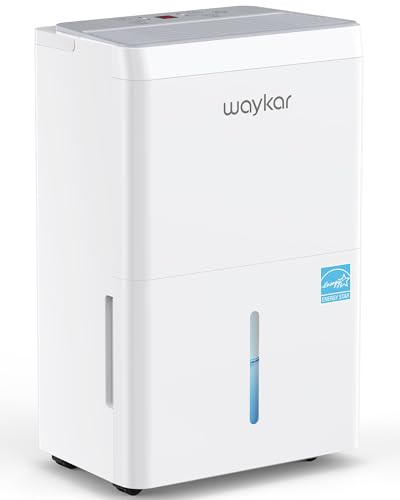
- Up to 6,000 sq. ft. coverage
- 40 dB low-speed operation
- Tank or hose drainage
Best For: Large basements and homes needing quiet, high-capacity moisture removal
Best for Bedrooms
VEAGASO 28-Pint Sleep-Mode Dehumidifier

- 38 dB Sleep Mode
- Dimming display for nighttime use
- Up to 2,000 sq. ft. coverage
Best For: Bedrooms, nurseries, and smaller damp spaces
Best Whole-Space Value
4,500-Sq.-Ft. Energy Star Dehumidifier

- Up to 4,500 sq. ft. coverage
- 40 dB listed operation
- 45–80 pint adjustable output
Best For: Large homes, basements, garages, and utility spaces
Best Compact Option
PS-01SG Humidity-Display Dehumidifier
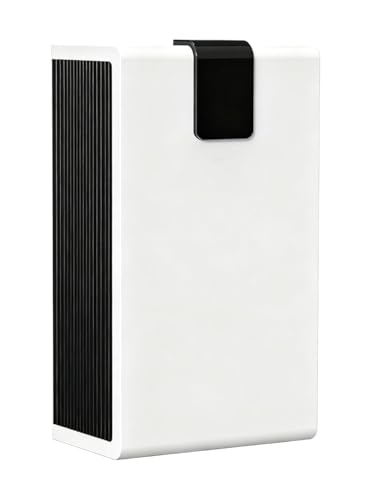
- Compact 8.25-inch depth
- Two fan speeds and humidity display
- Listed 1,000 sq. ft. coverage
Best For: Small residential rooms needing a compact unit and humidity monitoring
Best Quiet Basement Pick

- 36 dB operation for bedrooms and workspaces
- Covers up to 2,500 square feet
- Includes continuous-drain hose and four modes
Best For: Quiet bedroom or basement humidity control
Best Quiet Smart-Control Pick

- 39–42 dB operation with child lock
- Covers up to 2,600 square feet
- Three modes, timer, auto-restart, and hose included
Best For: Bedrooms and basements needing scheduled, hands-off control
Best for Large Basements

- Up to 5,000 sq. ft. coverage
- 35 dB operation with Sleep mode
- Energy Star certified with continuous drainage
Best For: Large basements and expansive damp areas
Best Balanced Option
ASAHWo 34-Pint Basement Dehumidifier

- Covers areas up to 2,500 sq. ft.
- 36 dB Sleep Mode
- Four modes and included drain hose
Best For: Medium-sized rooms and flexible everyday use
Best for Bedrooms and Small Rooms

- Below 30 dB in Sleep Mode
- Compact 5.5-pound portable design
- Timer, drain hose, and auto shutoff
Best For: Bedrooms, nurseries, closets, and compact spaces
Best Large-Capacity Pick – Waykar 120-Pint Quiet Dehumidifier
For shoppers seeking quiet dehumidifiers with broad coverage, the Waykar combines up to 120 pints of daily moisture removal with a listed 40 dB low-speed setting. Its adjustable humidity range, auto comfort mode, and included drain hose make it suited to larger, damp areas.
Best For: Large basements, homes, laundry areas, and users who want quiet operation with automatic humidity control.
Pros:
- Covers spaces up to 6,000 square feet and removes up to 120 pints per day under stated test conditions.
- Runs at 40 dB on low and includes an auto comfort mode with a 30%–80% RH adjustment range.
- Offers tank or hose drainage, auto-defrost, full-tank shutoff, wheels, and a handle.
- 2025 ENERGY STAR compliant and includes a washable, reusable mesh filter.
Cons:
- The 3.3-foot included hose may be limiting for some basement layouts.
- A garden hose for extended drainage is not included.
- Its large capacity may be more than needed for a small room.
This is a strong choice when you need whole-home moisture control without a prominently loud appliance. Its large capacity and flexible drainage are especially practical for unattended basement use.
Best for Bedrooms – VEAGASO 28-Pint Sleep-Mode Dehumidifier
The VEAGASO stands out among quiet dehumidifiers with a listed 38 dB Sleep Mode and a display that fully dims. It uses a rotary compressor, supports continuous drainage, and covers spaces up to 2,000 square feet.
Best For: Bedrooms, nurseries, smaller basements, and light sleepers who want reduced noise and display brightness.
Pros:
- Sleep Mode operates at a listed 38 dB and dims the digital display.
- Removes up to 28 pints per day and uses auto-defrost for temperatures as low as 41°F.
- Includes a 3.28-foot drain hose, automatic tank shutoff, auto mode, continuous drying, and a 24-hour timer.
- Has a washable filter, child lock, auto-restart, caster wheels, and a carry handle.
Cons:
- The 0.44-gallon tank may require frequent emptying when hose drainage is unavailable.
- The included hose length may not suit every floor-drain arrangement.
- Its 2,000-square-foot rating is narrower than larger-capacity models.
With the lowest listed noise level in this roundup and a darkened Sleep Mode display, this model is particularly convenient for nighttime use. Choose it when bedroom-friendly operation matters more than maximum capacity.
Best Whole-Space Value – 4,500-Sq.-Ft. Energy Star Dehumidifier
This model is a practical option for shoppers comparing quiet dehumidifiers for larger areas. It provides up to 4,500 square feet of coverage, a stated 40 dB operating volume, adjustable 45–80 pint output, and both tank and hose drainage.
Best For: Large basements, garages, laundry rooms, and households wanting broad coverage with energy-focused operation.
Pros:
- Covers up to 4,500 square feet with adjustable 45–80 pint dehumidification output.
- Lists 40 dB operation and a low-speed sleep mode for quieter use.
- Includes smart humidity sensing, auto-defrost, five working modes, and a 24-hour timer.
- Offers continuous hose drainage or manual tank emptying with automatic shutoff protection.
Cons:
- The notes do not specify the water-tank capacity or hose length.
- The stated capacity range may be more than necessary for compact rooms.
- Quiet operation is listed, but no separate sleep-mode decibel rating is provided.
This unit balances extensive coverage, flexible output, and energy-conscious operation. It is a sensible fit for larger spaces where 40 dB performance and unattended drainage are useful priorities.
Best Compact Option – PS-01SG Humidity-Display Dehumidifier
The PS-01SG is a compact dehumidifier for shoppers who want basic humidity-focused operation in a smaller residential space. It has a listed 1,000-square-foot coverage area, two fan speeds, and a humidity display, though the supplied notes do not provide a noise rating.
Best For: Smaller residential rooms where compact dimensions, adjustable fan speed, and humidity monitoring are more important than documented quietness.
Pros:
- Compact dimensions of 8.25 by 5.5 by 13.75 inches make it suitable for space-constrained setups.
- Provides two fan speeds and a humidity display.
- Lists 1,000-square-foot coverage and a 98-fluid-ounce tank.
- Uses 60 watts and includes the water tank and user manual.
Cons:
- The supplied notes do not state an operating noise level, so quiet performance is not confirmed.
- No drain hose or continuous-drain feature is listed.
- The product details contain inconsistent capacity information, listing both 40 pints per day and a 98-fluid-ounce tank.
This is the most compact option in the group, but it should not be treated as a verified quiet dehumidifier because no decibel figure is supplied. Consider it mainly for smaller spaces where its display and modest footprint are useful.
Best Quiet Basement Pick – Kesnos 30-Pint Dehumidifier
For shoppers comparing quiet dehumidifiers, the Kesnos offers a strong balance of moisture removal, portability, and low-noise operation. It removes up to 30 pints per day and is rated for spaces up to 2,500 square feet, with continuous drainage available for longer basement use.
Best For: Bedrooms, basements, and medium-sized homes where quiet operation and flexible drainage matter.
Pros:
- Runs at a stated 36 dB noise level.
- 2025 ENERGY STAR certified with four operating modes.
- Includes a drain hose, washable filter, auto-defrost, and memory restart.
- Compact design with caster wheels and a hidden handle.
Cons:
- The 0.39-gallon tank may require frequent emptying without continuous drainage.
- The included hose is 3.3 feet long and requires a suitable drain setup.
Its combination of 36 dB operation, broad room coverage, and useful automation makes this a practical choice when you want quiet humidity control without giving up basement-friendly features.
Best High-Capacity Quiet Option – Waykar 34-Pint Dehumidifier
The Waykar is one of the more capable quiet dehumidifiers in this roundup, removing up to 34 pints of moisture per day for spaces up to 2,000 square feet. Its adjustable humidity range, directional airflow, timer, and dual-drainage design make it suitable for both everyday comfort and demanding damp areas.
Best For: Basements, garages, whole-home areas, and users who want higher moisture capacity with adjustable controls.
Pros:
- Removes up to 34 pints per day and supports spaces up to 2,000 square feet.
- Offers a broad 30%–80% humidity-control range.
- Includes a 90° airflow adjustment, two fan speeds, and a 24-hour timer.
- Supports both a removable 0.66-gallon tank and continuous drainage.
Cons:
- The supplied notes describe quiet operation but do not provide a specific decibel rating.
- Its larger tank and high-capacity design may be more than needed for a small room.
Choose the Waykar if moisture load and control flexibility are higher priorities than compact size. Its quiet-focused construction and continuous-drain option also suit extended operation in shared spaces.
Best Quiet Smart-Control Pick – 32-Pint Basement Dehumidifier
This 32-pint model is designed for homeowners who want quiet dehumidifiers with straightforward scheduling and automatic recovery. It covers spaces up to 2,600 square feet, offers three modes and a 24-hour timer, and can drain continuously through the included hose.
Best For: Basements, bedrooms, laundry areas, and homes needing child-safe controls and scheduled moisture management.
Pros:
- Removes up to 32 pints per day across areas up to 2,600 square feet.
- Operates at a stated 39–42 dB and includes a child lock.
- Provides DEHU, CONT, and DRY modes with 30%–80% humidity settings.
- Includes auto-restart, auto-defrost, washable filter, wheels, and a drain hose.
Cons:
- The 2-liter tank is smaller than the Waykar’s stated 0.66-gallon tank.
- Its stated noise range is higher than the Kesnos specification.
This unit is a good fit when smart convenience matters: the timer, auto-restart, child lock, and continuous drainage reduce day-to-day supervision while keeping noise within a bedroom-friendly range.
Best for Large Basements – 80-Pint Quiet Dehumidifier
For large, persistently damp spaces, this quiet dehumidifier combines high moisture-removal capacity with Energy Star-certified efficiency. It removes up to 80 pints per day under rated conditions, covers spaces up to 5,000 square feet, and operates at a stated 35 dB.
Best For: Large basements, garages, RVs, offices, and other expansive areas needing continuous moisture control.
Pros:
- Removes up to 80 pints of moisture per day and supports coverage up to 5,000 square feet.
- 35 dB operation, plus Sleep, Fan, and Dry modes for flexible use.
- Energy Star certified with adjustable humidity settings from 30% to 80%.
- Supports automatic continuous drainage through a drain hose connection.
Cons:
- Its larger capacity and 1.72-gallon tank may be more than needed for small rooms.
- Continuous drainage requires a suitable hose setup and gravity path.
This is the strongest choice of the three for whole-basement or large-area moisture control. Its quiet rating and continuous-drain option make it practical for extended operation, while the high capacity helps reduce frequent tank emptying.
Best Balanced Option – ASAHWo 34-Pint Basement Dehumidifier
This quiet dehumidifier offers a practical balance of capacity, portability, and control for medium-sized spaces. It removes up to 34 pints per day under rated conditions, covers up to 2,500 square feet, and reaches 36 dB in Sleep Mode.
Best For: Basements, bedrooms, bathrooms, and living rooms that need flexible humidity control without a large cabinet.
Pros:
- Designed for areas up to 2,500 square feet with humidity settings from 30% to 80%.
- Sleep Mode operates at a stated 36 dB for quieter nighttime use.
- Offers DEHU, Dry, CONTI, and Sleep modes, including laundry-drying and continuous operation.
- Includes a drain hose, auto-stop protection, auto-defrost, and auto-restart.
Cons:
- The 0.52-gallon tank is relatively small for frequent operation without the hose.
- Its 34-pint capacity is less suited to very large or severely damp spaces than an 80-pint model.
With four modes, automatic humidity control, and both tank and hose drainage, this model is a versatile middle-ground pick. Its casters and hidden handles also make it easier to move between rooms than many larger basement units.
Best for Bedrooms and Small Rooms – Compact Quiet Dehumidifier
For compact spaces where noise and size matter most, this quiet dehumidifier runs below 30 dB in Sleep Mode and uses a lightweight, space-saving design. Its dual-core semiconductor system is intended for enclosed areas up to 1,000 square feet, with a 98-ounce tank and included drain hose.
Best For: Bedrooms, nurseries, closets, dorms, bathrooms, RVs, and other small indoor spaces.
Pros:
- Sleep Mode operates below 30 dB for quiet bedroom or nursery use.
- Compact 5.5-pound design with a built-in handle for easy relocation.
- Provides both tank collection and continuous gravity drainage, with automatic shutoff when full.
- Includes 8-, 16-, and 24-hour timers, plus an aroma slot and optional seven-color ambient light.
Cons:
- Its stated moisture-removal capacity is 1 liter per day, so it is not intended for severe dampness or large basements.
- The smaller 98-ounce tank may require regular emptying if continuous drainage is not used.
This is the most bedroom-friendly option in the lineup, especially for shoppers prioritizing low noise, portability, and compact placement. Choose it for localized moisture control rather than heavy-duty whole-basement drying.
How We Picked These Quiet Dehumidifiers
We focused on models that combine meaningful moisture removal with features that make everyday operation easier and less disruptive. Selection factors included published pint capacity, suggested room coverage, noise or sleep-mode claims, Energy Star labeling where provided, automatic shutoff, humidity displays, continuous-drain options, and portability.
Coverage figures are useful for comparison, but real performance depends on temperature, insulation, ceiling height, air circulation, and how much moisture enters the space. A unit rated for a large area may still need to run frequently in a damp basement.
Quick Comparison
| Best for | Look for | Why it matters |
|---|---|---|
| Bedroom or office | Sleep mode and low noise rating | Reduces disruption during work or sleep |
| Small room or apartment | Compact design and modest pint capacity | Uses less space and may consume less energy |
| Basement | Higher capacity and continuous drainage | Handles persistent moisture with less emptying |
| Large or very damp area | High daily extraction and reliable controls | Removes moisture faster during demanding conditions |
Key Buying Factors for Quiet Dehumidifiers
Noise Level and Operating Modes
Check the stated decibel rating, but treat it as a comparison point rather than a guarantee. Compressor units can sound different as they start, stop, and cycle. Sleep mode may reduce fan speed or dim the display, making it especially useful in bedrooms.
Capacity and Room Size
Pint-per-day ratings describe moisture removal under specific test conditions. For a mildly humid room, a smaller unit may be sufficient. Choose more capacity for basements, laundry areas, poor ventilation, water intrusion, or consistently high humidity. Oversizing can shorten run times, but it does not replace fixing leaks or drainage problems.
Drainage and Maintenance
A tank with auto shutoff is convenient, while a drain hose is better for long unattended operation. Confirm that the hose outlet, included fittings, and floor drain or pump arrangement suit your installation. Clean the filter regularly, keep air inlets clear, and leave adequate clearance around the unit.
Controls, Efficiency, and Safety
A built-in humidistat and humidity display make it easier to target a comfortable relative humidity, commonly around 40% to 60% indoors. Energy Star models can help reduce operating costs, but actual consumption varies with runtime. Look for auto-restart, timer controls, casters or handles, and a full-tank warning if those features matter for your setup.
Who Should Buy Which Quiet Dehumidifiers?
- For a bedroom, nursery, or office: Prioritize the lowest practical noise rating, sleep mode, a dimmable display, and a compact footprint.
- For a small apartment or single room: Choose a portable model with simple humidity controls and a tank sized for your routine.
- For a basement: Favor a higher-capacity unit with continuous drainage, auto restart, and easy filter access.
- For a large or persistently damp space: Select one of the higher-pint models and plan for a permanent drain or condensate pump.
- For occasional moisture control: A smaller unit may be more economical and easier to store, provided its coverage matches the room.
Before buying, measure the space, identify where the water will drain, and decide whether nighttime noise or unattended operation is the greater priority. Those details usually matter more than the maximum coverage number printed on the box.