A red light therapy belt lets you position LEDs around your lower back, waist, or other areas without holding a panel in place. The best choice depends less on the biggest advertised chip count and more on whether the wrap fits, covers your target area, and works with your routine.
These 10 options include corded and rechargeable belts, vibration-equipped designs, and flexible wraps. Here’s how to compare their features without treating marketing claims as guaranteed results.
Best 10 Red Light Therapy Belt Picks for 2026
Best for Flexible Coverage
Lifepro Allevared Red Light Therapy Belt

- 105 triple-chip LEDs
- Red, near-infrared, or combined modes
- Adjustable 1–30 minute timer
Best For: Flexible wear on the waist, back, or legs
Best Cordless Massage Combo
Comfytemp Red Light Vibration Belt

- Red and near-infrared LEDs
- Three adjustable vibration modes
- Fits waists up to 70 inches
Best For: Cordless lower-back sessions with vibration
Best Slim Everyday Wrap
BestQool Red Light Therapy Belt

- 21.5-by-5-inch light coverage
- Adjustable time and intensity
- 660nm red and 850nm near-infrared light
Best For: A slimmer wrap with adjustable controls
Best for Multiple Power Options
ALLOLO 3-in-1 LED Red Light Belt

- 70 triple-chip lamp beads
- Four light modes, including pulse
- Adapter or USB power-bank operation
Best For: Flexible wired power and targeted pad placement
Most Customizable
KingPavonini 140-LED Red Light Therapy Belt

- 140 LEDs with three wavelengths
- 12 light and pulse combinations
- Compression straps and six timers
Best For: Adjustable, corded sessions across multiple body areas
Best Cordless Option
Comfytemp Rechargeable Red Light Belt

- 5000mAh rechargeable battery
- Up to 70-inch waist fit with extension
- Four modes and nine levels
Best For: Cordless use and adjustable fit
Simplest Corded Pick
Comfytemp 126-LED Red Light Belt
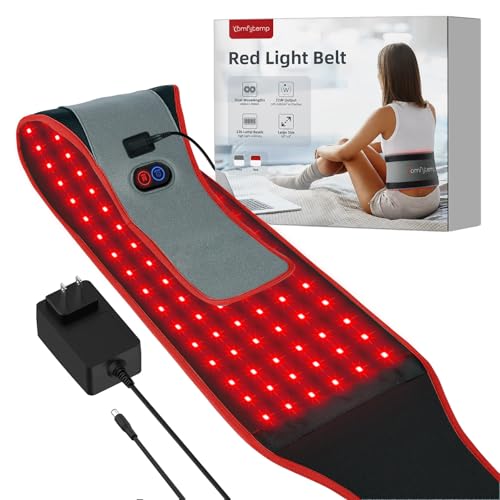
- 126 LEDs with two wavelengths
- Four modes and three levels
- 22-by-8-inch light area
Best For: Straightforward sessions near a wall outlet
Best Long Wrap
Feangli 660nm/850nm Red Light Belt

- 51-by-7.5-inch adjustable wrap
- Five brightness levels; 5–30-minute timer
- 9.84-foot cord and optional 10Hz pulse
Best For: A long adjustable wrap with simple controls
Best Three-Wavelength Belt
Feangli 132-LED Red Light Belt

- 132 LEDs with 660nm, 850nm, and 940nm chips
- 50-by-8-inch adjustable wrap
- Five brightness levels and 5–30-minute timer
Best For: Shoppers seeking three listed wavelengths in a body wrap
Best Targeted Pad
Bonodave Red Light Pad and Strap

- 16.1-by-7.9-inch pad with separate strap
- 105 beads with 660nm and 850nm chips
- 30-minute shutoff and 10Hz pulse mode
Best For: Repositioning a compact pad across different body areas
Best for Flexible Coverage – Lifepro Allevared Red Light Therapy Belt
The Lifepro Allevared red light therapy belt is a soft, adjustable wrap that contours to the waist, back, or legs. Its 105 triple-chip LEDs offer 660nm red light, 850nm near-infrared light, or both.
Best For: Shoppers who want a flexible wrap with selectable light modes and a built-in timer.
Pros:
- Three light modes: red, near-infrared, or both.
- Adjustable 1–30 minute timer with automatic shutoff.
- Soft neoprene belt measures approximately 49.5 inches long.
Cons:
- USB-powered, so it needs a power source during use.
- No massage feature is listed.
This is a straightforward choice for wrapping different areas and tailoring the light setting. Check the user manual before your first session, as the listing recommends.
Best Cordless Massage Combo – Comfytemp Red Light Vibration Belt
The Comfytemp red light therapy belt combines 660nm red and 850nm near-infrared LEDs with two lower-back vibration points. Its rechargeable battery lets you wear it without staying near an outlet.
Best For: People who want cordless light sessions with adjustable vibration for the lower back.
Pros:
- Three vibration modes with adjustable intensity.
- Rechargeable battery offers up to 4.9 hours on the low setting.
- Included extension strap accommodates waists up to 70 inches.
Cons:
- Battery life varies with the selected setting.
- Its two massage points are positioned for the lower back rather than general-purpose placement.
Choose this model if freedom of movement and vibration matter as much as the light settings; the extension strap also makes sizing more flexible.
Best Slim Everyday Wrap – BestQool Red Light Therapy Belt
The BestQool red light therapy belt pairs 660nm red and 850nm near-infrared light with a slim, hands-free wrap. Its 21.5-by-5-inch light coverage area makes it worth considering if you prefer a narrower belt.
Best For: Shoppers seeking a slim wrap with adjustable time and light intensity for at-home routines.
Pros:
- Selectable session time and light intensity.
- Soft TPU and stretchable, breathable fabric.
- Listed output of up to 72 mW/cm² irradiance.
Cons:
- Five-inch light coverage width may be narrow for larger areas.
- The notes do not list a rechargeable battery.
This belt emphasizes a compact fit and adjustable controls. Compare its coverage dimensions with the area you plan to wrap before buying.
Best for Multiple Power Options – ALLOLO 3-in-1 LED Red Light Belt
The ALLOLO red light therapy belt uses 70 triple-chip lamp beads across a 12.6-by-6.3-inch pad. It offers red, near-infrared, combined, and pulsed modes, plus an extension belt for positioning the pad on different body areas.
Best For: Users who want several light modes and the option to power a wired wrap from an adapter or USB power bank.
Pros:
- Four modes, including a 10Hz pulsed setting.
- Timer choices from 5 to 30 minutes in five-minute increments.
- Includes an adapter, extension belt, and long USB controller cable.
Cons:
- Wired design requires a connected power source.
- USB power bank is not included.
The supplied accessories and mode selection make this a versatile pad-style option. Its illuminated area is smaller than the full belt, so position it over the spot you want to cover.
Most Customizable – KingPavonini 140-LED Red Light Therapy Belt
This red light therapy belt stands out for its broad coverage and extensive controls. Its 140 LEDs combine 630nm and 660nm red light with 850nm infrared, while the contoured design and compression straps help keep it positioned against the lower back or other areas.
Best For: Shoppers who want a corded wrap with plenty of light, pulse, brightness, and timer options.
Pros:
- Offers 12 light and pulse combinations, plus five brightness levels.
- Adjustable compression straps help secure the 48-by-8.6-inch wrap.
- Includes six timer settings from 5 to 30 minutes and a 3-meter cord.
Cons:
- Needs a wall outlet or a separate power bank; the power bank is not included.
- The number of settings may be more than a shopper seeking simple controls needs.
Choose this model if fit and session customization matter more than cordless convenience. Its long cord offers some room to move, but it still needs an external power source.
Best Cordless Option – Comfytemp Rechargeable Red Light Belt
If you want a red light therapy belt without an outlet nearby, this Comfytemp model uses a rechargeable 5000mAh battery. It combines 660nm red and 850nm near-infrared light in a soft wrap designed for use around the waist, lower back, hips, or legs.
Best For: People who prioritize cordless wear and adjustable sizing for use away from home.
Pros:
- Rated for 80 to 250 minutes per charge, depending on settings.
- Includes an extension strap for waist sizes up to 70 inches.
- Offers four light modes, nine levels, and button or app controls.
Cons:
- Runtime falls to about 80 minutes on high.
- Requires recharging, unlike a corded belt used near an outlet.
This is the more flexible choice for moving between rooms or wearing a belt on the go. Check the high-setting runtime against how often you plan to use it between charges.
Simplest Corded Pick – Comfytemp 126-LED Red Light Belt
This corded red light therapy belt is a straightforward option for seated or reclining sessions near an outlet. Its 126 LEDs pair 660nm red and 850nm near-infrared chips, with controls located on the belt itself.
Best For: Shoppers who prefer a plug-in belt with basic onboard controls and a fixed session timer.
Pros:
- Four modes and three levels provide a manageable set of options.
- Has a stated light coverage area of 22 by 8 inches.
- Includes a wall-outlet cable and a 20-minute automatic shutoff.
Cons:
- Requires access to a wall outlet during use.
- The 20-minute timer is less flexible than a selectable timer range.
Pick this model for uncomplicated at-home use rather than mobility or extensive customization. Its coverage dimensions are worth checking against the area you want to wrap.
Best Long Wrap – Feangli 660nm/850nm Red Light Belt
This red light therapy belt offers a 51-by-7.5-inch adjustable wrap for at-home use. Each LED combines one 660nm red-light chip with two 850nm infrared chips, while the 9.84-foot cord gives you room to position yourself near an outlet.
Best For: Shoppers who want a long, adjustable wrap with straightforward brightness and timer controls.
Pros:
- Five brightness levels and a 5–30-minute timer.
- Optional 10Hz pulse mode.
- Transparent TPU inner film makes the surface easier to wipe clean.
Cons:
- Requires a power connection during use.
- At 7.5 inches wide, it covers a narrower area than the 8-inch-wide belt listed here.
Choose this model if wrap length and simple controls matter more to you than cordless use.
Best Three-Wavelength Belt – Feangli 132-LED Red Light Belt
This red light therapy belt stands out for its 132 LEDs, each combining 660nm red, 850nm infrared, and 940nm near-infrared chips. Its 50-by-8-inch Velcro wrap is designed for adjustable body coverage at home.
Best For: Buyers specifically seeking a wrap with all three listed wavelengths and adjustable settings.
Pros:
- Includes 660nm, 850nm, and 940nm chips in each LED.
- Five brightness levels, a 5–30-minute timer, and optional 10Hz pulse mode.
- 9.84-foot cord and wipeable transparent TPU inner film.
Cons:
- Must stay connected to power while in use.
- The supplied notes do not specify a separate controller for each wavelength.
This is the more wavelength-varied Feangli option in the roundup; select it for its stated light configuration, not an assumed difference in results.
Best Targeted Pad – Bonodave Red Light Pad and Strap
If a full-length red light therapy belt feels like more coverage than you need, this 16.1-by-7.9-inch pad pairs with a separate elastic strap to wrap areas such as a knee, shoulder, or foot. Its 105 beads contain one 660nm red-light chip and two 850nm infrared chips apiece.
Best For: People who want a smaller pad they can reposition across different body areas.
Pros:
- Separate 35.2-inch elastic strap supports flexible placement.
- Includes an adapter and USB controller line.
- Offers a 30-minute automatic shutoff and 10Hz pulse mode.
Cons:
- Needs an outlet; it is not a cordless pad.
- Its smaller pad covers less area at once than the longer wraps in this roundup.
This is a practical pick for localized placement, especially when you would rather move one compact pad than wear a long belt.
How We Picked These Red Light Therapy Belts
We focused on practical differences a shopper can check before buying: intended coverage, corded versus rechargeable operation, stated wavelengths, controls, and whether a belt includes extras such as vibration. We also considered how clearly each listing describes its LED layout and fit. Manufacturer specifications are useful for narrowing choices, but an LED or chip count alone cannot establish how much light reaches your skin.
Quick Comparison
Start with how you plan to use the wrap. A corded belt suits sessions near an outlet and avoids battery charging. A rechargeable belt offers more freedom to move, but battery life and charging time matter. A belt shaped for the lower back may be simpler to position there; a more flexible pad-style wrap may suit knees, shoulders, or other areas. If you want vibration, look for a model that offers it separately from the light settings so you can use the features as you prefer.
Key Buying Factors for a Red Light Therapy Belt
Fit and Coverage
Check the illuminated area and the strap or wrap dimensions, not just the product photo. A comfortable, secure fit helps keep the LEDs positioned over the area you intend to cover. For use on several body parts, prioritize a flexible shape and an attachment method that works in each position.
Wavelengths and Light Output
Many listings specify red light around 660 nm and near-infrared light around 850 nm; some also list 940 nm. These numbers tell you the advertised wavelengths, not the dose delivered. If available, look for clearly reported irradiance measured at a stated distance, along with session guidance. Be cautious about comparing wattage, LED count, or multi-chip labels across brands as if they measured treatment strength in the same way.
Power, Controls, and Upkeep
For a cordless model, check stated runtime, charging requirements, and whether it can operate while plugged in. For a corded model, consider cable length and where you’ll sit or lie during a session. A timer, adjustable modes, straightforward cleaning instructions, a clear return policy, and warranty terms can make a bigger day-to-day difference than an extra mode you may never use.
Who Should Buy Which Red Light Therapy Belt?
Choose a rechargeable belt if mobility is your priority and its stated runtime fits your planned sessions. Choose a corded model if you expect to use it mainly in one spot and want to skip charging. Pick a flexible pad-style wrap for multiple body areas, or a lower-back-focused belt if easy positioning there matters most. Consider a vibration model only if you specifically want that sensation; it is not a substitute for evaluating the light specifications.
Red light therapy devices are not a guaranteed pain treatment. Follow the product’s instructions and safety warnings, and speak with a healthcare professional about persistent pain or concerns related to medications or light sensitivity.