Choosing the right flooring can make a home gym quieter, safer, and easier to clean. The best rubber gym flooring tiles also help protect your subfloor from heavy equipment, dropped weights, and daily wear.
In this roundup, we focus on durable, interlocking options that suit garages, workout rooms, and multi-use spaces, with a close look at thickness, coverage, and support under equipment.
Best 10 Rubber Gym Flooring Tiles Picks for 2026
Heavy-Duty Solid Rubber Choice
100% Rubber Gym Flooring for Home Gyms

- 100% solid rubber with no foam or fillers
- Interlocking design for a tight, secure fit
- Slip-resistant and moisture-tolerant for gym use
Best For: Lifters and garage gyms that need durable solid rubber tiles
Rubber-Top Cushioned Pick
48 Sq Ft Interlocking Gym Flooring

- Dual-layer EVA foam base with EPDM rubber top
- Cushioned surface helps reduce noise and vibration
- Interlocking tiles with detachable borders
Best For: Home gyms that need grip plus cushioning
Black Solid Rubber Upgrade
100% Rubber Gym Flooring Tiles

- Solid rubber construction with no foam or fillers
- Interlocking edges create a secure, flush fit
- Black finish with slip-resistant, moisture-tolerant use
Best For: Buyers who want a durable black rubber tile set
Larger Cushioned Layout
96 Sq Ft Rubber-Top Gym Flooring
- 96 sq. ft. coverage for bigger spaces
- EVA foam base with grippy EPDM rubber top
- Interlocking tiles help with easy setup
Best For: Larger home gyms and multi-use workout rooms
Extra-Thick Cushioned Pick
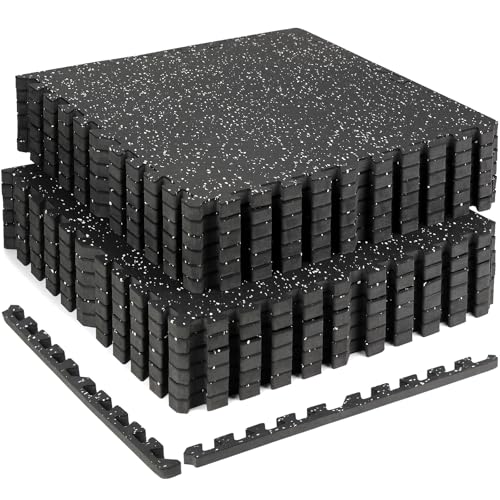
- 0.79-inch build for added cushioning
- Rubber top improves grip and wear resistance
- EVA foam layer helps reduce noise
Best For: Home gym users wanting a quieter, more cushioned floor
Heaviest-Duty Choice
1in Extra-Thick Rubber Top Mat

- 1-inch thickness for maximum cushioning
- EPDM rubber top supports better traction
- Built for high-impact training and floor protection
Best For: Serious lifters needing the most impact protection
Balanced Budget-Friendly Pick

- 0.56-inch dual-layer rubber/EVA build
- Waterproof and easy to clean
- Secure interlocking locks for setup
Best For: General home gym users wanting versatile floor coverage
Heavy-Duty Comfort Pick
SUPERJARE 0.79'' Extra-Thick Exercise Equipment Mats

- 0.79-inch thick with EVA foam and rubber top
- Adds grip, cushioning, and noise reduction
- 48 sq. ft. coverage with interlocking tiles
Best For: Home gyms needing a thick, grippy, quieter flooring layer
Largest Coverage Pick
VEVOR 0.56Inch 100sq.ft Exercise Equipment Mats

- 100 sq. ft. coverage in a 25-tile set
- Rubber top with dense EVA foam bottom
- Waterproof, anti-slip, and easy to clean
Best For: Big rooms that need broad coverage and simple upkeep
Secure-Fit Premium Pick
AIRHOP 0.79in Thick 48 Sq Ft Exercise Equipment Mats

- 0.79-inch thick with textured rubber top
- Upgraded interlocking locks for a secure fit
- Waterproof, cushioned, and easy to maintain
Best For: Users who want a stable interlocking setup with a thick feel
Heavy-Duty Solid Rubber Choice – 100% Rubber Gym Flooring for Home Gyms
If you want rubber gym flooring tiles that feel built for real training, this 100% solid-rubber option is aimed at home gyms and garages where racks, free weights, and cardio machines need a tougher surface. The interlocking design helps create a flush finish, while the moisture-tolerant, slip-resistant rubber is practical for indoor or outdoor workout spaces.
Best For: Lifters and garage gym owners who want solid rubber tiles without foam or fillers.
Pros:
- 100% heavy-duty rubber construction with no foam or fillers
- Precision interlocking edges for a tight, secure DIY install
- Slip-resistant and moisture-tolerant for garages, basements, or outdoor zones
- Made in the USA from recycled rubber
Cons:
- Four-tile pack covers only about 14 sq. ft.
- Hand wash care is less convenient than wipe-clean flooring
- At 0.5 inches thick, it focuses more on durability than plush cushioning
For buyers comparing rubber gym flooring tiles, this is the more rugged, no-compromise pick when impact resistance and stable footing matter most. It makes the most sense for compact training areas where solid rubber performance is the priority.
Rubber-Top Cushioned Pick – 48 Sq Ft Interlocking Gym Flooring
This set blends an EVA foam base with an EPDM rubber top, making it a practical choice if you want rubber gym flooring tiles that balance grip, cushioning, and floor protection. The interlocking pieces are designed to be easy to assemble and detach, and the larger 48 sq. ft. coverage fits a wide range of home gym layouts.
Best For: Home gym users who want a cushioned, quieter floor with a grippy rubber surface.
Pros:
- Dual-layer construction with a high-density EVA base and rubber top
- Rubber surface adds traction while the foam layer helps absorb noise and vibration
- Interlocking edges with detachable borders for flexible layout options
- 48 sq. ft. coverage is useful for larger workout spaces
Cons:
- Not a solid rubber tile; it uses foam and rubber together
- Odor is reduced, but the product still notes rubber odor considerations
- Better suited to general training than the most demanding heavy-impact setups
If you want rubber gym flooring tiles that lean toward comfort and noise reduction, this is a strong middle-ground option. It’s especially appealing for shared spaces where cushioning matters as much as durability.
Black Solid Rubber Upgrade – 100% Rubber Gym Flooring Tiles
For buyers searching for rubber gym flooring tiles in a darker finish, this black version offers the same heavy-duty solid-rubber build as the gray fleck set. It’s designed for home gyms and garages where tearing, shifting, and floor impact are common concerns, and the interlocking edges help the pieces sit securely in place.
Best For: Users who want the durability of solid rubber in a clean black colorway.
Pros:
- 100% heavy-duty rubber with no foam or fillers
- Precision interlocking design for a flush, secure finish
- Slip-resistant and moisture-tolerant for garage or basement use
- Made in the USA from recycled rubber
Cons:
- Four-pack coverage is limited to about 14 sq. ft.
- Hand wash care may be less convenient than simple wipe-down flooring
- Only 0.5 inches thick, so it is not the softest option available
This is a straightforward choice if you want the same rugged solid-rubber performance in black. It works best when you value toughness, fit, and a cleaner visual look over extra padding.
Larger Cushioned Layout – 96 Sq Ft Rubber-Top Gym Flooring
This larger pack of rubber gym flooring tiles is built for bigger home gym layouts that need both grip and cushioning. With a high-density EVA foam base and an EPDM rubber top, it’s meant to protect floors, reduce noise, and handle a variety of training styles while still being easy to assemble with interlocking edges.
Best For: Larger home gyms, fitness rooms, or playrooms that need coverage plus comfort.
Pros:
- 96 sq. ft. coverage suits larger spaces
- Dual-layer design combines cushioning with a grippy rubber top
- Helps reduce noise, vibration, and floor friction
- Interlocking tiles with detachable borders make layout changes easier
Cons:
- Uses EVA foam plus rubber rather than solid rubber
- May be more flooring than needed for small rooms
- Designed for general training and floor protection, not just heavy lifting
When coverage matters as much as comfort, this set stands out as a flexible flooring solution. It’s a practical pick for anyone building a larger training area and wanting a softer feel underfoot.
Extra-Thick Cushioned Pick – 0.79in Rubber Top Gym Tiles
If you want rubber gym flooring tiles that feel more protective underfoot, this 0.79-inch set is built for cushioning, noise reduction, and basic floor protection. The rubber top adds grip and abrasion resistance, while the EVA foam base helps soften impact in home gyms, garages, and basements.
Best For: Home gym users who want extra cushioning and a quieter workout surface for general training and equipment placement.
Pros:
- 0.79-inch thickness adds more cushioning and durability than thinner tiles
- Rubber top layer provides a non-slip, abrasion-resistant surface
- EVA foam base helps reduce noise and absorb shock
- Interlocking tiles include removable borders for easier layout changes
Cons:
- Not as thick as the 1-inch option in this group
- Rubber/EVA construction may feel less heavy-duty than all-rubber flooring
This is a practical choice if your priority is a quieter, more cushioned floor that still protects against scratches and scuffs. It works best for moderate home gym use where comfort and easy assembly matter.
Heaviest-Duty Choice – 1in Extra-Thick Rubber Top Mat
For rubber gym flooring tiles aimed at heavier training, this 1-inch set offers the thickest cushioning in the group and is designed for stronger shock absorption. The EPDM rubber top and EVA foam base are meant to protect floors, equipment, and joints during high-impact workouts, heavy lifting, and repeated drops.
Best For: Lifters and home gym owners who want maximum thickness and stronger impact protection for high-intensity training.
Pros:
- 1-inch thickness provides the most cushioning in this roundup
- Rubber top and EVA base are built for shock absorption and floor protection
- Non-slip matte surface adds traction for strength training
- Interlocking tiles with detachable borders make setup flexible
Cons:
- Bulkier than thinner tiles, so it may feel more substantial to handle
- Primarily geared toward serious training rather than light-use flooring
If your workouts include heavy weights, HIIT, or frequent impact, this is the most protective option here. It makes the most sense when durability, traction, and noise control matter more than a slim profile.
Balanced Budget-Friendly Pick – 0.56in Rubber Top Gym Tiles
If you need rubber gym flooring tiles that cover space efficiently without going as thick as the premium options, this 0.56-inch set offers a balanced dual-layer design. The rubber top and EVA foam base provide a non-slip surface, shock absorption, and easy cleanup for garages, basements, and home fitness rooms.
Best For: Buyers who want a versatile, lighter-profile flooring option for general home gym use and equipment protection.
Pros:
- Dual-layer rubber and EVA design helps protect floors and reduce impact
- Textured rubber top offers non-slip traction
- Waterproof and easy to wipe clean
- Upgraded interlocking locks are designed for a secure fit
Cons:
- At 0.56 inches, it is thinner than the other two options
- Less cushioning than the 0.79-inch and 1-inch sets for heavier drops
This set makes sense if you want practical coverage, simple maintenance, and a more affordable-feeling profile for everyday workouts. It’s a flexible option for mixed-use spaces where you still want grip and basic shock absorption.
Heavy-Duty Comfort Pick – SUPERJARE 0.79'' Extra-Thick Exercise Equipment Mats
If you want rubber gym flooring tiles that can handle both hard training and home-floor protection, this SUPERJARE set is built around a thick dual-layer design. The rubber top adds grip, while the high-density EVA foam base helps absorb shock, cut noise, and support heavier equipment without feeling flimsy.
Best For: Home gyms that need a thick, quiet, grip-focused tile set for weights, cardio, and equipment use.
Pros:
- 0.79-inch thickness adds extra cushioning and durability.
- Rubber top surface improves traction and helps reduce slipping.
- EVA foam base helps absorb vibration and reduce noise.
- Interlocking design with detachable borders makes layout easier.
Cons:
- Covers 48 sq. ft., so larger rooms may need multiple sets.
- Best suited to square or rectangular layouts rather than custom coverage right out of the box.
This is a strong all-around option if you want a thicker mat feel without giving up grip. It makes the most sense for users who care about cushioning, floor protection, and a tidy interlocking install.
Largest Coverage Pick – VEVOR 0.56Inch 100sq.ft Exercise Equipment Mats
For buyers comparing rubber gym flooring tiles by coverage first, this VEVOR set stands out with 100 sq. ft. total area. It uses a rubber top and dense EVA foam bottom to balance traction, cushioning, and floor protection, while the interlocking format keeps installation simple for bigger spaces.
Best For: Larger home gyms, basements, and garages that need broad coverage and easy-clean flooring.
Pros:
- 100 sq. ft. coverage is the largest in this group.
- Rubber top and EVA base help absorb shock and reduce noise.
- Non-slip surface is designed to improve traction on multiple floor types.
- Waterproof and easy to wipe clean.
Cons:
- At 0.56 inches, it is thinner than the 0.79-inch options here.
- 25-tile set may be more than you need for smaller workout areas.
This is the practical pick when room size matters more than maximum thickness. It offers a useful mix of coverage, grip, and simple maintenance for everyday training spaces.
Secure-Fit Premium Pick – AIRHOP 0.79in Thick 48 Sq Ft Exercise Equipment Mats
If you want rubber gym flooring tiles with a secure fit and a more premium feel, this AIRHOP set is built around an upgraded dual-layer design. The textured rubber top provides a non-slip surface, while the high-density EVA foam bottom adds shock absorption and helps keep workouts quieter.
Best For: Garage or home gym users who want thick, stable tiles with a secure interlocking connection.
Pros:
- 0.79-inch thickness gives it a cushioned, heavy-duty feel.
- Upgraded larger interlocking locks are designed to prevent separation.
- Rubber top and EVA foam help with grip and shock absorption.
- Waterproof and easy to clean with a damp cloth.
Cons:
- 48 sq. ft. coverage is modest for larger setups.
- Best in garage-style spaces where a tighter locked-tile layout matters most.
This is a smart option if you care about stable assembly as much as surface performance. It looks especially well-suited to users who want a thick, durable tile set that stays connected during intense workouts.
How We Picked the Best Rubber Gym Flooring Tiles
We prioritized durable construction, practical coverage options, and user-friendly installation. For Rubber Gym Flooring Tiles, that means looking at thickness, surface traction, interlocking stability, and whether the tiles make sense for cardio, free weights, or machine use.
We also considered how well each option balances cushioning and firmness. Too soft can feel unstable under racks and benches; too firm can be harsh underfoot. The best choices offer a reliable middle ground for typical home gym setups.
Quick Comparison: What Matters Most
If you want the simplest breakdown, think in terms of three questions: how much area do you need to cover, how much impact will the floor handle, and how much cushioning do you want? Smaller 48 sq ft sets work well for a single lifting zone or equipment corner, while larger packs suit full-room coverage.
Thickness matters too. Thicker tiles generally reduce impact and improve comfort, while thinner options can be easier to move and may work better when you need a cleaner, lower-profile fit.
Key Buying Factors for Rubber Gym Flooring Tiles
Thickness and Density
Look for a thickness that matches your training style. For dumbbells, kettlebells, and general workouts, mid-to-thick tiles are usually enough. For heavier machines or repeated dropping of weights, denser and thicker tiles are the safer choice.
Coverage and Layout
Measure your space before you buy. Rubber Gym Flooring Tiles are usually sold by square footage, so it helps to map out benches, racks, and movement paths first. Buying a little extra can prevent awkward gaps and edge issues.
Traction and Surface Finish
A good surface should help reduce slipping without feeling sticky. If your gym sees sweat, chalk, or occasional moisture, choose a finish that is easy to wipe down and stays stable during training.
Noise, Impact, and Subfloor Protection
If you train in a garage or upstairs room, impact control matters. Stronger tiles can reduce vibration and help protect concrete, laminate, or other finished floors beneath your equipment.
Who Should Buy Which Rubber Gym Flooring Tiles?
Choose thinner or mid-thickness Rubber Gym Flooring Tiles if you want a versatile floor for bodyweight training, light equipment, or a multi-use room. Go thicker if you plan to place a rack, treadmill, or other heavy machines on top.
For small spaces, a 48 sq ft pack can be enough for one focused workout area. For larger garages or full-room builds, higher-coverage sets are usually the better value and create a more seamless finished look. If you want the most stable setup, prioritize dense interlocking tiles with a surface that feels secure underfoot and easy to maintain.