The best stretching straps make it easier to control range of motion, maintain alignment, and progress gradually during flexibility work. The right design can support yoga, rehabilitation exercises, warmups, and everyday mobility without forcing a stretch.
This roundup compares 10 stretching straps by loop layout, material, width, length, and intended use so you can choose a practical option for your routine.
Best 10 Stretching Straps Picks for 2026
Top Choice

- 10 durable loops for adjustable positioning
- Includes booklet and video stretching guide
- USA-made, non-elastic nylon design
Best For: Guided yoga, physical therapy, and mobility work
Rehab Ready

- Non-elastic for steady, controlled holds
- Loops adjust stretch depth and intensity
- Durable, portable design for daily use
Best For: Home rehabilitation and controlled mobility training
Independence Pick
Trideer Recovery Stretch Strap

- Steady, non-elastic holds for gradual mobility
- Loops help adjust and track stretch depth
- Can assist with leg positioning in bed or car
Best For: Home recovery and gentle range-of-motion work
Most Customizable
Acozycoo Loop Stretching Strap
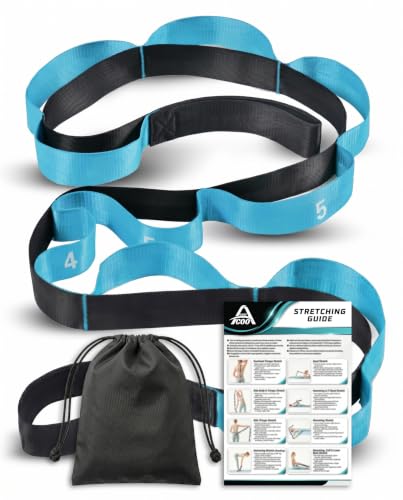
- Choose between 86-inch professional and 75-inch minimalist styles
- Numbered loops support progress tracking
- Professional version includes pouch and exercise guide
Best For: Rehabilitation, travel, and customizable stretching routines
Adjustable Elastic Pick
Slim Panda 9-Loop Stretch Strap

- Extends from 55 to 100 inches
- Nine numbered loops for easy adjustments
- Elastic resistance with guided pose references
Best For: Flexible home, studio, and travel stretching
Therapy-Ready Pick
12-Loop Physical Therapy Stretch Strap

- Eight feet long and 1.5 inches wide
- Twelve reinforced loops for positioning
- Includes instruction manual and storage bag
Best For: Rehabilitation, athletic recovery, and mobility work
Simple Non-Elastic Pick
Oak-Sports 10-Loop Stretch Strap

- Stable, non-elastic nylon construction
- Ten loops and 75-inch length
- Lightweight design with a one-year warranty
Best For: Beginner-friendly yoga and physical therapy stretching
Heavy-Duty Choice

- Reinforced nylon with 12 independent loops
- Rigid, non-elastic design for controlled stretching
- Padded handles and 8-foot length
Best For: Physical therapy and progressive flexibility training
Guided Flexibility Pick

- Numbered loops support position tracking
- Includes carry bag and exercise guide
- Non-elastic nylon with padded handles
Best For: Beginners and multi-sport flexibility routines
Lightweight Everyday Pick
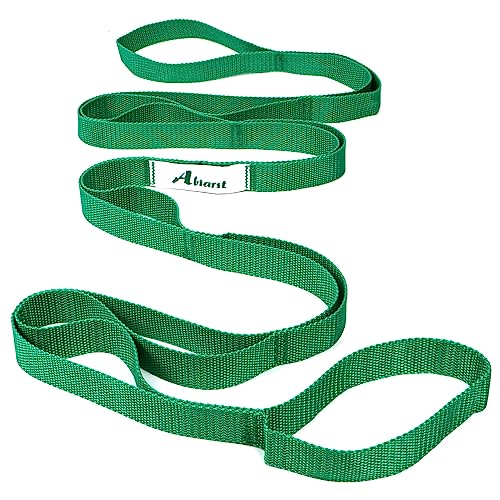
- 75-inch washable, non-elastic fabric strap
- Ten roomy loops for versatile positioning
- Lightweight design for daily use
Best For: Everyday yoga, Pilates, and mobility routines
Top Choice – OPTP Stretch Out Strap
The OPTP Stretch Out Strap is a well-established choice for anyone comparing stretching straps for yoga, physical therapy, mobility work, or post-workout recovery. Its non-elastic nylon construction and 10 loops provide controlled positioning without snap-back, while the included exercise booklet and video guide add useful instruction.
Best For: Physical therapy, yoga, mobility training, and users who want guided stretching exercises.
Pros:
- Ten durable loops support a range of stretching positions.
- Non-elastic design allows controlled tension for flexibility and range-of-motion work.
- Includes a 40-page exercise booklet and video stretching guide.
- Made in the USA and backed by extensive customer feedback.
Cons:
- The fixed, non-elastic design may feel less versatile than a resistance band for strengthening exercises.
- At 6 feet long, it may provide less reach than longer alternatives for some users.
Choose this strap if you value a proven design, clear exercise guidance, and durable loop construction. It is especially practical for structured home stretching and rehabilitation routines.
Rehab Ready – Trideer PT Stretching Strap
The Trideer Stretching Strap is a practical option for shoppers seeking stretching straps for controlled rehabilitation and daily mobility work. Its non-elastic webbing stays steady as you pull, while the evenly spaced loops help adjust hamstring, hip, calf, shoulder, and back stretches.
Best For: Home physical therapy, post-surgery mobility routines, hamstring stretching, and Pilates.
Pros:
- Non-elastic construction avoids rebound or sudden recoil.
- Multiple loops make it easier to adjust stretching intensity.
- Reinforced woven webbing is designed for repeated daily use.
- Compact 75-inch design is convenient for home, gym, clinic, or travel.
Cons:
- It does not provide elastic resistance for resistance-band exercises.
- The 1-inch width may offer less surface area than wider strap designs.
This is a sensible pick when stability and simple loop adjustment matter more than elastic resistance. It also suits users who want one strap for rehabilitation and general flexibility training.
Independence Pick – Trideer Recovery Stretch Strap
The Trideer Recovery Stretching Strap is designed for people who need stretching straps for gradual mobility work at home. Its looped, non-elastic construction supports slow range-of-motion exercises, and it can also help with leg positioning in bed or a car when flexibility or leg strength is limited.
Best For: Home recovery after knee or hip procedures, gentle leg mobility, and users tracking gradual range-of-motion progress.
Pros:
- Non-elastic material holds a chosen position without bounce or surprise stretch.
- Multiple loops provide clear hand and foot holds with adjustable depth.
- Can function as a leg lifter for bed and car transfers.
- Supports stretching for legs, hips, lower back, ankles, and feet.
Cons:
- It is intended for controlled stretching rather than elastic resistance training.
- Users with sensitive hands or skin may prefer socks or light gloves during longer holds.
Consider this model if independence and gentle progression are central to your routine. The loop layout makes it easier to repeat positions consistently while adjusting the stretch as mobility improves.
Most Customizable – Acozycoo Loop Stretching Strap
The Acozycoo Stretching Strap stands out among stretching straps by offering two size and feature configurations. The 86-inch professional version has 10 numbered loops, a pouch, and an exercise guide for more structured rehabilitation, while the 75-inch version is lighter and more streamlined for gym or travel use.
Best For: Users who want a choice between a numbered rehabilitation strap and a compact everyday stretching strap.
Pros:
- Two configurations accommodate different preferences and routines.
- The 86-inch version includes 10 numbered loops for tracking flexibility progress.
- Non-elastic nylon provides stable leverage for controlled stretching.
- Professional version includes a carry pouch and guided workout booklet.
Cons:
- The available styles differ in length, width, and features, so buyers must choose carefully.
- The 86-inch version is wider and heavier than the minimalist option.
- Non-elastic nylon is not intended to replace an elastic resistance band.
This is a flexible choice for households or routines with specific requirements. Select the professional version for numbered loop tracking and rehabilitation accessories, or the minimalist version for a lighter, simpler setup.
Adjustable Elastic Pick – Slim Panda 9-Loop Stretch Strap
If you want stretching straps with adaptable tension, the Slim Panda model combines a 55-inch base length with elastic extension up to 100 inches. Its numbered loops make it easy to adjust your grip for seated, standing, and floor stretches without tying knots.
Best For: Beginners and experienced users who want elastic assistance for yoga, Pilates, dance, gymnastics, or physical therapy routines.
Pros:
- Extends from 55 to up to 100 inches for a broader range of stretches.
- Nine numbered loops simplify grip changes and progression.
- Built-in pose guides provide useful references during stretching.
- Soft polyester-cotton fabric and double stitching support comfortable, regular use.
Cons:
- Offers one medium resistance level rather than multiple resistance settings.
- Elastic tension may not suit users specifically seeking a firm, non-elastic strap.
This is a flexible choice for users who value adjustable reach and responsive tension. The compact, lightweight design also makes it practical for home workouts, studio sessions, or travel.
Therapy-Ready Pick – 12-Loop Physical Therapy Stretch Strap
For stretching straps designed around mobility and rehabilitation, this 8-foot, 1.5-inch-wide model provides 12 reinforced loops for controlled hand and foot positioning. Its non-elastic SBR construction offers a stable platform for stretching, recovery, and therapy exercises.
Best For: Athletes, physical therapy routines, rehabilitation work, and users focused on hamstring, hip, shoulder, or lower-back mobility.
Pros:
- Twelve loops offer numerous grip and foot-placement options.
- Wide, shock-absorbing SBR material is designed to reduce digging into skin.
- Sweat-resistant surface is easy to clean after workouts or therapy sessions.
- Includes an instruction manual and storage bag for guided, portable use.
Cons:
- Its 8-foot length may be more strap than some casual users need.
- Non-elastic construction does not provide responsive stretch assistance.
This model stands out when precise positioning and a stable, clinic-oriented feel matter more than compact dimensions. The storage bag also helps maintain a regular routine away from home.
Simple Non-Elastic Pick – Oak-Sports 10-Loop Stretch Strap
Among stretching straps for straightforward mobility work, this 75-inch nylon model keeps the design simple with 10 loops and no elastic give. Its 1-inch width and lightweight construction make it approachable for beginners using it for yoga, Pilates, daily exercise, or physical therapy.
Best For: Beginners and users who prefer a stable, non-elastic strap for stretching, postoperative recovery, or everyday flexibility work.
Pros:
- Non-elastic nylon provides stable resistance and control.
- Ten loops support multiple hand and foot positions.
- At 75 inches long, it offers useful reach without the length of an 8-foot strap.
- Lightweight design and a one-year warranty add convenience and reassurance.
Cons:
- Does not offer elastic assistance for easing deeper into stretches.
- Its 1-inch width may provide less grip surface than wider models.
This is a practical option if you want an uncomplicated strap with enough length for common lower- and upper-body stretches. The 10-loop layout gives beginners room to experiment while maintaining a consistent feel.
Heavy-Duty Choice – 12-Loop Stretching Strap
If you want a durable stretching strap for progressive flexibility work, this 8-foot model combines 12 reinforced loops with a rigid, non-elastic design. Its neoprene-padded handles provide a more comfortable, slip-free grip during yoga, Pilates, physical therapy, and mobility exercises.
Best For: Physical therapy, rehabilitation routines, and users who want many loop positions for controlled stretching.
Pros:
- Heavy-duty nylon construction with reinforced loops
- Rigid zero-flex design supports controlled, deeper stretches
- Neoprene-padded handles improve grip comfort
- Eight-foot length and 12 loops offer progressive positioning
Cons:
- The rigid design may feel less forgiving than an elastic band
- Its 8-foot length may be more than some beginners need
This is a strong option when durability, multiple hand or foot positions, and structured control matter more than compact simplicity.
Guided Flexibility Pick – Loop Stretching Strap
This looped stretching strap is a practical choice for flexibility training at home, in class, or during physical therapy. The non-elastic nylon construction, numbered loops, padded handles, carry bag, and included exercise guide make it easy to monitor positions and build a consistent routine.
Best For: Beginners and active users who want numbered loops, portability, and guided stretching for yoga, Pilates, dance, or rehabilitation.
Pros:
- Numbered loops help track stretching positions
- Non-elastic nylon provides stable support
- Neoprene handles add comfort for hands and feet
- Includes a carry bag and free exercise guide
Cons:
- The listed version is 78 inches long and 1.5 inches wide, rather than the longer 96-inch option
- Only one strap is included
Among stretching straps, this model stands out for its instructional extras and easy-to-monitor loop layout, especially if you are new to structured flexibility work.
Lightweight Everyday Pick – 10-Loop Yoga Strap
For everyday stretching, this 75-inch non-elastic strap offers 10 individual loops in a lightweight, washable fabric. The longer-than-standard loop design gives you room to position your hands or feet for Pilates, yoga, gymnastics, dance, physical therapy, and general flexibility work.
Best For: Daily mobility routines and users seeking a lightweight, washable stretching strap for varied activities.
Pros:
- Durable, tight-knit fabric is designed to resist fraying and breaking
- Washable, skin-friendly material with eco-friendly dye
- Ten loops support multiple stretching positions
- Lightweight 0.1 kg design is easy to handle
Cons:
- At 1 inch wide, it is narrower than the other listed straps
- It does not include a carry bag or exercise guide in the supplied details
This is a straightforward stretching strap for users who prioritize a light, washable design and versatile loop placement over padded handles or included accessories.
How We Picked the Best Stretching Straps
We focused on features that affect control, comfort, and versatility: loop count, strap length, width, elasticity, construction, and suitability for yoga or physical therapy. Non-elastic straps are generally easier to use for precise positioning, while elastic models can provide a more forgiving feel during dynamic movements. We also considered whether each strap appears suited to beginners, rehabilitation exercises, or more advanced flexibility training.
Quick Comparison
| Feature | What to Look For | Best For |
|---|---|---|
| Loop count | 8 to 12 clearly spaced loops | Adjustable hand and foot placement |
| Material | Non-elastic webbing or controlled elastic fabric | Precision or dynamic stretching |
| Length | About 6 to 8 feet | Leg, shoulder, back, and full-body exercises |
| Width | Around 1 to 1.5 inches | Grip comfort and reduced pressure |
Key Buying Factors for Stretching Straps
Loop Design
Multiple loops let you change your grip without tying knots and make it easier to maintain a consistent position. More loops can improve adjustability, but widely spaced loops may be less useful for users with smaller hands or limited mobility.
Elastic or Non-Elastic Construction
Choose a non-elastic strap when you want stable feedback and predictable positioning, particularly for physical therapy or assisted stretches. Elastic straps may work better for warmups and movements where some give is helpful, but they can encourage overstretching if pulled aggressively.
Length and Width
A longer strap is useful for hamstring, hip, shoulder, and overhead exercises. Shorter users may find a very long strap harder to manage. Wider webbing usually distributes pressure more comfortably, especially when the strap is held tightly around the foot or ankle.
Comfort and Durability
Look for reinforced stitching, smooth edges, and loops that hold their shape. A washable or easy-to-clean material is valuable if the strap is used frequently, in a studio, or during rehabilitation sessions.
Who Should Buy Which Stretching Straps?
- For beginners: Choose a non-elastic strap with several loops and clear spacing for simple, controlled adjustments.
- For yoga and general mobility: A versatile 8-foot strap with comfortable webbing can cover most standing, seated, and reclining stretches.
- For physical therapy: Prioritize predictable resistance, secure stitching, and enough loops to accommodate limited range of motion. Follow your clinician’s instructions.
- For dynamic warmups: An elastic design may offer more flexibility during movement, provided you can control the tension safely.
- For advanced flexibility work: Select a long, durable strap with closely spaced loops so you can make small adjustments as your range improves.
Whatever style you choose, use Stretching Straps as positioning aids rather than tools for forcing a joint beyond comfortable range. Stop if you feel sharp pain, numbness, or unusual joint pressure.