If you are comparing rolling mobility aids, this Dr.
Aid Auto Brake Folding Walker review looks closely at its auto-brake control, adjustable fit, and compact folding design.
It is aimed at adults and seniors who want supported movement without giving up the ability to roll smoothly through everyday spaces.
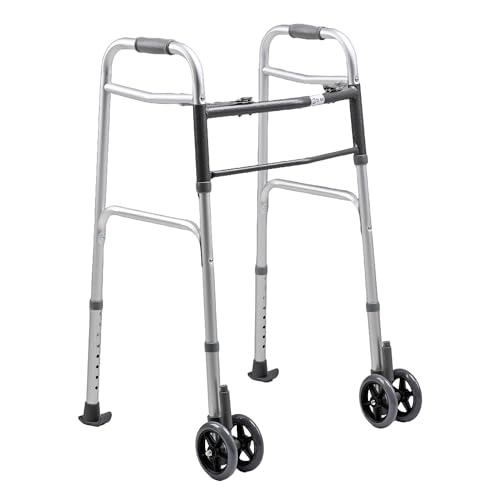
Dr. Aid Folding Walker Review Summary
The Dr.
Aid Auto Brake Folding Walker makes the most sense for someone who needs a stable adult walker but finds a fully stationary frame too cumbersome for routine movement.
Its reinforced aluminum frame, front wheels, rear ski glides, and automatic brake system are designed to balance support with easier forward travel.
The eight height settings also make fit a central part of the design rather than an afterthought.
This is a listing-based assessment, not a hands-on test.
Based on the supplied product information, it suits seniors, adults with balance challenges, and people using a walker during rehabilitation.
The strongest reason to buy is the combination of rolling convenience and weight-activated stopping control.
The main caution is that shoppers should confirm the adjusted height, walking style, and brake behavior are appropriate for their individual mobility needs.
Review Scorecard
| Category | Score | Editorial assessment |
|---|---|---|
| Stability support | 9/10 | Reinforced aluminum construction and a stated 320-pound support capacity are reassuring for a heavy-duty walker. |
| Braking control | 9/10 | The auto-brake system is designed to engage when weight is applied, including on slopes, ramps, and uneven surfaces. |
| Fit adjustment | 9/10 | Eight height settings should make it easier to find a more natural posture across different users. |
| Indoor maneuverability | 8/10 | Five-inch front wheels and a two-wheel-style layout should help with doorways and tighter spaces. |
| Outdoor versatility | 7/10 | Rubber wheels and rear ski glides are intended for sidewalks and uneven terrain, though surfaces will still affect control. |
| Storage and transport | 9/10 | The lightweight folding frame is designed to collapse for closets, car trunks, appointments, and travel. |
Key Features and Specifications of Dr. Aid Folding Walker
The Dr.
Aid Auto Brake Folding Walker is built around a practical support-and-mobility brief.
The manufacturer listing describes a reinforced aluminum frame that remains lightweight while supporting up to 320 pounds.
That combination is important for buyers who need a substantial support aid but may also need to lift it into storage or transport it in a vehicle.
Its most distinctive feature is the built-in auto-brake system.
According to the listing, the brake engages when weight is applied, helping prevent unwanted rolling.
That design is intended to add stopping confidence on slopes, ramps, and uneven surfaces.
It may be particularly useful for users who want wheels for forward movement but still need the frame to settle securely when they lean into it.
The walker has eight adjustable height settings.
A correct height can make a meaningful difference to everyday comfort: the listing positions the adjustment range as a way to support a more natural walking posture and reduce strain on the wrists, shoulders, and back.
Buyers should still make sure the selected setting allows comfortable hand placement and a stable stance.
For movement, the front uses durable 5-inch rubber wheels, while the rear uses walker ski glides.
The manufacturer presents this as a smooth-glide arrangement for indoor floors, sidewalks, and uneven terrain.
The front-wheel configuration is also described as functioning both as a standard walker and a two-wheel walker, giving it more forward mobility than a basic fixed-leg design.
Finally, the frame folds for storage and transport.
The intended use cases include closets, car trunks, family visits, and appointments.
That makes the folding mechanism more than a convenience feature: for many buyers, a walker that is difficult to store or carry is less likely to be used consistently.
Pros and Cons of Dr. Aid Folding Walker
Pros
- Automatic brake support: The weight-activated braking concept is designed to reduce unwanted rolling when the user bears down on the walker.
- Eight height settings: The broad adjustment emphasis supports a more personalized fit for seniors, adults, and rehabilitation users.
- Useful rolling layout: Five-inch front wheels and rear ski glides are intended to reduce friction across common indoor and outdoor surfaces.
- Heavy-duty stated capacity: The reinforced aluminum frame is listed to support up to 320 pounds while remaining lightweight.
- Folding construction: It is designed for compact storage and easier transport in a car or while traveling.
Cons
- Not a fully fixed walker: Buyers who want all four legs planted at all times may prefer a conventional non-rolling frame.
- Surface-dependent movement: Wheels and ski glides can improve mobility, but rough, cluttered, wet, or highly uneven surfaces can still make any walker harder to control.
- Fit still matters: Eight settings improve adjustability, but users must choose the right height and walking technique for safe, comfortable use.
- Limited supplied specifications: The available listing evidence does not provide folded dimensions, total product weight, or a detailed brake-adjustment procedure.
Who Should Buy Dr. Aid Folding Walker?
The best match is an adult or senior who wants more forward mobility than a fixed walker provides, while retaining a way for the frame to stop when weight is applied.
The combination of front wheels and rear glides should appeal to people moving around homes, appointments, rehabilitation settings, and reasonably manageable outdoor paths.
It is also a plausible choice for caregivers shopping for a walker that can be adjusted for different users or transported between locations.
The folding aluminum frame addresses the practical problem of getting a mobility aid into a closet or vehicle, and the stated 320-pound capacity may make it suitable for buyers who specifically need a heavy-duty support rating.
However, this is not automatically the right option for every mobility situation.
Someone who needs a completely stationary aid, a seat, a basket, or a rollator-style setup should look elsewhere.
Likewise, shoppers with very specific clinical requirements should confirm compatibility with a qualified healthcare professional.
The listing does not provide enough information to judge folded dimensions, exact frame weight, or individualized fit.
How the Dr. Aid Auto-Brake Design Affects Daily Walking
Rolling when you need to move
The 5-inch rubber front wheels are intended to make forward movement less effortful than repeatedly lifting a fixed walker.
That can be useful in hallways, rooms, and doorways where a user wants a controlled roll rather than a series of lifts.
Stopping under applied weight
The auto-brake system is the key distinction.
The listing says it engages when weight is applied, which is meant to limit unwanted rolling while the user steadies themselves.
Buyers should become familiar with how the mechanism responds before relying on it on a slope or ramp.
Finding a workable height
Eight height settings give the walker a better chance of matching different body sizes and walking positions.
A suitable setting should let the user hold the grips without hunching or reaching uncomfortably, supporting the posture benefits described by the manufacturer.
Folding between uses
The folding frame makes this walker more practical for homes with limited storage or users who travel to appointments.
Its usefulness will depend on how easily the individual user or caregiver can collapse, lift, and reopen it, but the intended design clearly prioritizes portability.
Alternatives to Dr. Aid Folding Walker
If you need a simpler, more traditional support aid, compare the Drive Medical Folding Walker for a conventional folding-walker approach.
It may be a better fit for shoppers who prioritize a familiar fixed-frame design over rolling mobility.
For buyers who want four-wheel movement and a built-in seat, consider a Medline Rollator Walker.
A rollator is a different category, but its seating and storage-oriented design can be more suitable for users who need frequent rest breaks.
The Carex Folding Walker is another option to investigate if compact storage and straightforward walker construction matter more than the Dr.
Aid model’s auto-brake concept.
Compare its adjustment range and wheel configuration carefully.
Is Dr. Aid Folding Walker Worth It?
The Dr.
Aid Auto Brake Folding Walker is worth considering when your priority is a folding adult walker that combines adjustable height, front-wheel mobility, rear glides, and weight-activated braking.
Its strongest supported advantages are practical: eight settings for fit, a stated 320-pound capacity, a reinforced aluminum frame, and a design intended to store and travel easily.
It is less compelling for anyone who needs a completely fixed walker or a rollator with a seat and storage.
The supplied evidence also leaves important details—such as folded dimensions and total weight—unanswered.
**For seniors, adults, and rehabilitation users who want controlled rolling support in a compact frame, the Dr.
Aid is a sensible shortlist option; confirm fit and suitability before buying.**