An arm bike for home workouts can add upper-body movement to cycling, rehabilitation, and low-impact cardio without requiring a full gym setup. The products in this roundup range from supportive recumbent bikes to compact pedal exercisers and air-resistance fan bikes.
Use the guide below to compare resistance, adjustability, stability, portability, and comfort so you can choose a model that matches your space, fitness goals, and preferred workout style.
Best 10 Arm Bike for Home Workouts Picks for 2026
Versatile Low-Impact Pick
2-in-1 Recumbent Elliptical Bike

- Cycling and elliptical modes
- 16 magnetic resistance levels
- 400-pound capacity
Best For: Quiet, low-impact full-body workouts
Classic Fan-Bike Choice
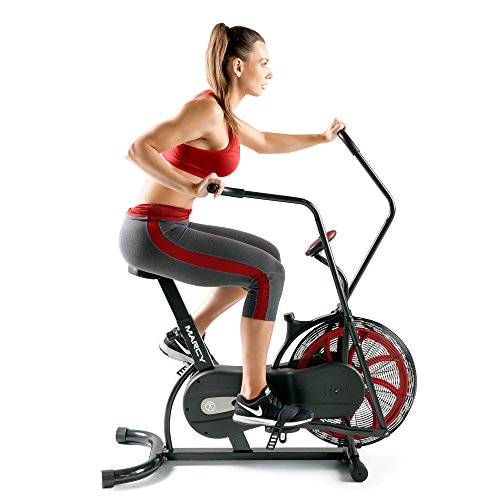
- Dual-action handlebars
- Air resistance with adjustable tension
- Tracks key workout metrics
Best For: Traditional full-body fan-bike training
Comfort-Focused Arm Trainer

- Dual-action arm exerciser
- 380-pound weight capacity
- Includes resistance bands
Best For: Seated, joint-friendly arm-and-leg workouts
Best Space-Saving Multi-Mode

- Five cardio and strength modes
- Folds for compact storage
- 16 magnetic resistance levels
Best For: Small spaces and varied home workouts
Full-Body Comfort Pick

- Moving handles and elliptical pedals train the upper and lower body.
- Reclined, low-impact design with a 400-pound weight capacity.
- Bluetooth tracking, app compatibility, and quiet magnetic resistance.
Best For: Seniors and users wanting supported full-body cardio at home
Versatile Space-Saving Pick
Folding 5-in-1 Arm Workout Bike

- Adds resistance-band rowing and toning to indoor cycling.
- Folds to a 20-by-20-inch footprint with transport wheels.
- Quiet magnetic resistance and a monitor with key workout metrics.
Best For: Small homes needing flexible, storable exercise equipment
Portable Recovery Pick
Mini Arm and Leg Pedal Exerciser

- Designed for low-intensity arm and leg cycling.
- Lightweight, portable, and suitable for home or office use.
- Five resistance levels adjusted with a manual tension knob.
Best For: Gentle recovery movement and desk-side exercise
Heavy-Duty Full-Body Pick
WFLGFT Recumbent Bike with Arm Exerciser
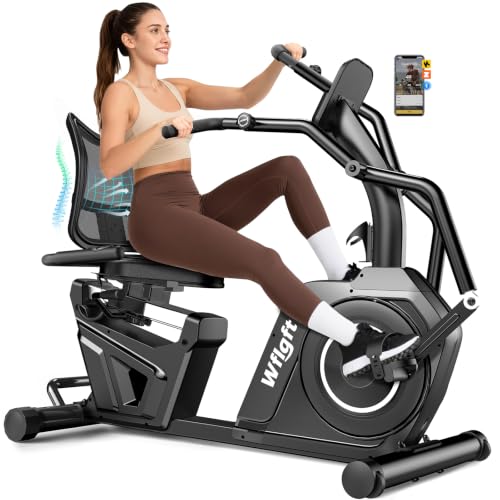
- Synchronized arm and leg movement
- 16 magnetic resistance levels
- 450-pound capacity and quiet operation
Best For: Adults and seniors wanting stable, low-impact full-body training
Comfort-Focused Choice
Kawnina 420-Lb Recumbent Arm Bike

- Wide seat and ergonomic mesh backrest
- 420-pound reinforced steel frame
- Quiet, 16-level magnetic resistance
Best For: Users prioritizing comfort, lumbar support, and stable cardio
Easy-Setup Rehab Pick
Recumbent Bike with Arm Exerciser

- 80% pre-assembled with transport wheels
- 16 magnetic resistance levels
- Low-impact motion with Bluetooth and LCD tracking
Best For: Users wanting convenient, adjustable cardio and recovery exercise
Versatile Low-Impact Pick – 2-in-1 Recumbent Elliptical Bike
This 2-in-1 machine is a strong option for shoppers seeking an arm bike for home workouts with added recumbent and elliptical functionality. Its magnetic resistance, padded seat, and backrest support comfortable, low-impact sessions.
Best For: Families, seniors, and users who want a quiet full-body cardio machine with generous weight capacity.
Pros:
- Combines recumbent cycling with elliptical motion for varied workouts.
- Offers 16 magnetic resistance levels and built-in pulse sensors.
- Supports up to 400 pounds and arrives about 85% pre-assembled.
Cons:
- Its 66-pound frame and larger footprint may be less convenient for very small spaces.
- The notes do not specify a dedicated arm-exerciser mode.
The comfortable design, quiet operation, and high capacity make this a practical choice when low-impact versatility matters more than compact storage.
Classic Fan-Bike Choice – Marcy Dual-Action Fan Bike
The Marcy NS-1000 is a straightforward arm bike for home workouts that trains the upper and lower body together. Its dual-action handlebars pair with air resistance to create a cardio-focused workout that increases resistance as you work harder.
Best For: Users who want a traditional fan bike with moving handlebars, adjustable seating, and basic workout tracking.
Pros:
- Dual-action arms and pedals support a full-body workout.
- Air resistance helps provide cooling airflow during exercise.
- LCD tracking covers time, distance, speed, and calories, with transport wheels for mobility.
Cons:
- Chain drive may not feel as quiet or smooth as a magnetic system.
- Assembly is required.
- Its 250-pound maximum user weight is lower than several recumbent alternatives.
This is a practical, no-frills fan bike for shoppers who prioritize active upper-body engagement and simple controls over advanced resistance programming.
Comfort-Focused Arm Trainer – ECHANFIT Recumbent Bike
For shoppers comparing an arm bike for home workouts, this ECHANFIT recumbent model adds dual-action handles to a joint-friendly seated design. Its sliding seat, padded backrest, quiet belt drive, and magnetic resistance suit steady cardio and lighter rehabilitation-focused exercise.
Best For: Seniors, rehabilitation users, and households wanting seated arm-and-leg training with a high weight capacity.
Pros:
- Dual-action handles work arms and legs simultaneously.
- Sliding seat accommodates users from 4 feet 9 inches to 6 feet 3 inches.
- Includes an LCD monitor, pulse sensor, transport wheels, and resistance bands.
Cons:
- Eight resistance levels provide less adjustment than some 16-level models.
- The recumbent design requires more floor space than a folding upright bike.
With a 380-pound capacity and quiet magnetic resistance, this model is well suited to comfortable, controlled workouts where support and accessibility are priorities.
Best Space-Saving Multi-Mode – GOIMU 5-in-1 Folding Bike
The GOIMU folding bike is a flexible arm bike for home workouts when storage space is limited. It offers upright and semi-recumbent riding positions, arm resistance bands, and dual leg pull cords, while its 16-level magnetic resistance supports gradual progression.
Best For: Apartment dwellers, seniors, and beginners who want compact storage plus several cardio and strength-training modes.
Pros:
- Five workout modes include arm bands and leg pull cords.
- Folds for storage and has transport wheels for repositioning.
- Provides 16 magnetic resistance levels and supports up to 330 pounds.
Cons:
- Arm training uses resistance bands rather than integrated moving handlebars.
- The supplied details do not list complete assembled dimensions or included monitor metrics.
This is the most storage-friendly and versatile option in the group, especially for users who want one compact machine for varied home workouts.
Full-Body Comfort Pick – Recumbent Arm Exerciser Bike
If you want an arm bike for home workouts that also trains your legs, the VANSWE recumbent elliptical bike offers a supported, low-impact setup. Its moving handles and elliptical-style pedals create a full-body cardio session, while the reclined seat can be more comfortable for users managing joint stiffness or seeking a gentler routine.
Best For: Seniors, rehabilitation-focused exercise, and households wanting a stable full-body machine.
Pros:
- Combines upper- and lower-body movement in one low-impact workout.
- 400-pound capacity, non-slip pedals, and a supported recumbent position.
- Quiet eight-level magnetic resistance with Bluetooth, Kinomap, and Zwift compatibility.
- Adjustable seat fits riders from approximately 5’2″ to 6’5″.
Cons:
- The recumbent design requires more floor space than a mini pedal exerciser.
- Its larger frame is less convenient to store than a folding bike.
The VANSWE is the most complete option here for combining arm work, leg exercise, and comfortable seated cardio. Choose it when stability, capacity, and low-impact full-body training matter more than compact storage.
Versatile Space-Saving Pick – Folding 5-in-1 Arm Workout Bike
The PLENY folding bike is a practical arm bike for home workouts when you want more than basic cycling. Along with riding, it includes resistance bands for rowing and toning, folds to a 20-by-20-inch footprint, and provides a cushioned seated position for home exercise sessions.
Best For: Small-space users who want multiple workout modes and easy storage.
Pros:
- Five-in-one format includes cycling, stretching, rowing, and full-body toning options.
- Folds compactly and has transport wheels for easier storage.
- Magnetic resistance is designed for smooth, quiet operation under 15 dB.
- LCD monitor tracks time, speed, distance, calories, and heart rate.
Cons:
- The arm workout comes through integrated resistance bands rather than dedicated moving bike handles.
- It has a larger assembled footprint than a mini pedal exerciser.
For apartments or multipurpose workout spaces, the PLENY offers a useful balance of versatility and storage convenience. It is a strong choice if you want arm-focused additions without committing to a larger dedicated full-body machine.
Portable Recovery Pick – Mini Arm and Leg Pedal Exerciser
For a simple arm bike for home workouts, the RYGEO mini pedal exerciser is compact, lightweight, and easy to use on a tabletop or floor. Its adjustable tension supports low-intensity arm or leg cycling, making it suitable for light movement at home, in the office, or during recovery-focused routines.
Best For: Low-intensity arm and leg movement, desk use, and portability.
Pros:
- Supports both arm and leg cycling for gentle exercise.
- Lightweight at 1.9 kilograms and easy to store under a desk or table.
- Manual tension knob offers five resistance levels.
- Reinforced steel and ABS construction is designed for stable everyday use.
Cons:
- It lacks a seat, workout monitor, and app connectivity.
- Its low-intensity format is not intended for demanding cardio sessions.
- It requires a separate stable surface or floor position during use.
The RYGEO is the most portable and straightforward option in this lineup. Pick it for gentle recovery exercise or convenient desk-side movement, but choose a full-size bike if you need higher-intensity training or more built-in tracking.
Heavy-Duty Full-Body Pick – WFLGFT Recumbent Bike with Arm Exerciser
If you want an arm bike for home workouts that also supports seated cycling, the WFLGFT recumbent bike combines synchronized arm and leg movement with a low-impact design. Its 16 magnetic resistance levels, Bluetooth app support, and 450-pound capacity make it adaptable for daily cardio, recovery, and endurance sessions.
Best For: Adults and seniors seeking a sturdy, comfortable recumbent bike for full-body home workouts or rehabilitation-focused exercise.
Pros:
- Synchronized or separate arm and leg exercise for flexible full-body training
- 16 magnetic resistance levels support recovery rides through endurance workouts
- 450-pound frame capacity with padded seating and an adjustable backrest
- LCD tracking, grip heart-rate sensors, Bluetooth app support, and quiet operation
Cons:
- Its recumbent design requires more floor space than a compact upright arm bike
- Some app features may depend on compatibility with a user’s device
This is a strong choice when stability, seated comfort, and a high weight capacity matter more than portability. The adjustable seat and quiet magnetic drive also suit shared spaces and longer sessions.
Comfort-Focused Choice – Kawnina 420-Lb Recumbent Arm Bike
The Kawnina is an arm bike for home workouts built around comfortable seated full-body cardio. Its synchronized handlebars work with the pedals, while the stepless seat, mesh backrest, quiet magnetic drive, and 16 resistance levels make it practical for regular indoor use.
Best For: Plus-size users, seniors, and active adults who prioritize lumbar support, a roomy seat, and stable low-impact cardio.
Pros:
- Dual-action handlebars engage the upper and lower body together
- Extra-wide cushioned seat and breathable mesh backrest support longer workouts
- 420-pound capacity and reinforced steel frame provide a stable riding platform
- 16 resistance levels, Bluetooth connectivity, and a magnetic drive rated below 10dB
Cons:
- At 73.8 pounds, it may take effort to move despite its home-gym design
- The product is battery powered, so display operation requires batteries
Choose this model if seating comfort and a supportive backrest are top priorities. It offers a particularly accommodating setup for users who need a wider seat and higher weight capacity without giving up arm-assisted cardio.
Easy-Setup Rehab Pick – Recumbent Bike with Arm Exerciser
For shoppers seeking an arm bike for home workouts with a simple setup, this recumbent model arrives 80% pre-assembled and includes transport wheels. It combines low-impact upper- and lower-body motion with 16 magnetic resistance levels, Bluetooth tracking, and an LCD monitor for measurable daily exercise.
Best For: Home users who want an adjustable, joint-friendly bike for general cardio, recovery sessions, or physical-therapy-style movement.
Pros:
- Coordinated arm and leg motion supports low-impact full-body exercise
- 16 magnetic resistance levels accommodate light recovery and more demanding cardio
- Sliding seat, adjustable handlebars, supportive backrest, and pedal straps improve fit
- 80% pre-assembly, transport wheels, Bluetooth app connectivity, and LCD heart-rate tracking
Cons:
- The listed product details show a 400-pound capacity, while the item highlight mentions 450 pounds; verify the current listing before purchase
- The recumbent frame may be less space-efficient than a smaller standalone arm exerciser
This model stands out for convenience and recovery-oriented use. Its pre-assembly and mobility features can simplify placement, while the adjustable seating and gentle motion make it versatile for shared household workouts.
How We Picked the Best Arm Bike for Home Workouts
We evaluated these 10 options by looking at how effectively each combines arm and leg exercise, how easy it is to adjust for different users, and how practical it is for regular home use. We also considered resistance type, frame stability, seat support, portability, weight capacity, console features, and the amount of space each design is likely to require.
Because these products serve different needs, the “best” choice depends on whether you prioritize full-body cardio, seated support, rehabilitation, compact storage, or a higher user weight limit. Always confirm the latest specifications, dimensions, and included accessories before ordering.
Quick Comparison
| Type | Best For | What to Look For |
|---|---|---|
| Recumbent bike with arm exerciser | Supported full-body workouts | Adjustable seat, backrest, stable base |
| Fan bike with dual-action handlebars | Higher-effort cardio | Air resistance, sturdy frame, smooth handles |
| Folding 5-in-1 bike | Small spaces and varied routines | Folded size, resistance range, locking mechanism |
| Mini pedal exerciser | Light recovery exercise | Low weight, nonslip feet, easy transport |
Key Buying Factors for an Arm Bike for Home Workouts
Resistance and Workout Intensity
Magnetic resistance is generally quiet and offers predictable adjustment, making it useful for indoor training and shared spaces. Air resistance increases with effort and suits users who want more demanding cardio. Compact pedal exercisers usually provide lighter resistance and are better for gentle movement, circulation, or recovery-focused sessions.
Seat Support and Adjustability
Recumbent models are often the most comfortable choice for longer workouts or users who want additional back support. Check the seat adjustment range, backrest design, pedal position, and handlebar reach. A proper fit helps reduce strain and makes it easier to maintain consistent form.
Stability, Capacity, and Footprint
Look for a wide base, levelers, and a frame that stays steady when both the arms and legs are moving. Compare the stated weight capacity with the user’s weight rather than treating it as a target. Measure the available floor area, including clearance for arm movement, and verify folded dimensions if storage is important.
Controls and Tracking
Basic displays may track time, speed, distance, and calories, while more advanced bikes may include preset programs or heart-rate compatibility. Choose features you will actually use; simple controls can be preferable for rehabilitation or shared household use.
Who Should Buy Which Arm Bike for Home Workouts?
Choose a recumbent model if comfort, back support, and stable seated exercise are your priorities. Choose a fan bike if you want vigorous full-body intervals and do not mind more operating noise. Choose a folding bike if you need multiple exercise positions and convenient storage. Choose a mini pedal exerciser if portability, desk-side use, or gentle arm and leg movement matters most.
Before buying, match the machine to your available space and intended intensity. If you have an injury, balance concern, or medical condition, ask a qualified professional whether the resistance level and movement pattern are appropriate.