Improving ankle mobility often requires more than stretching alone. The right balance board can combine controlled range-of-motion work with foot strengthening, calf flexibility, and stability training.
These 10 options cover adjustable trainers, slant boards, wobble boards, and guided rehab systems, making it easier to find a design that matches your goals, experience level, and available space.
Best 10 Balance Board for Ankle Mobility Picks for 2026
Best Adjustable Pick
Adjustable Ankle & Foot Strength Board

- Multiple adjustable training configurations
- Birch construction with non-slip surface
- Supports mobility, strength, and balance work
Best For: Progressive ankle and foot training with customizable setups
Best Multi-Mode Option
3-in-1 Slant & Rotating Balance Board
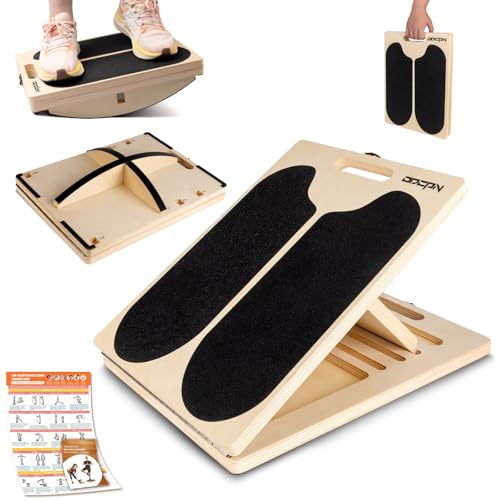
- Six adjustable calf-stretch angles
- 180° and 360° balance modes
- Folds flat and includes training poster
Best For: Versatile stretching, recovery, and balance progression
Best Progressive Set
Cork Foot & Ankle Balance System
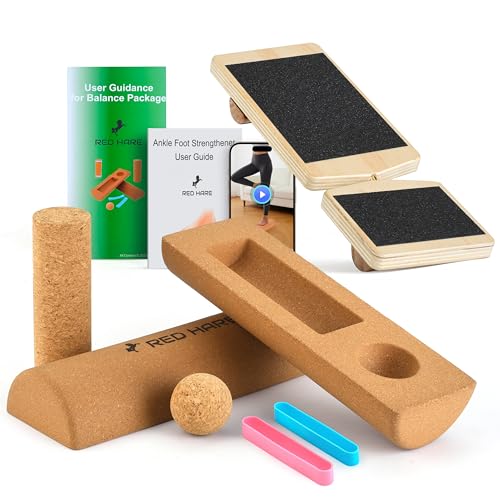
- Includes cork and wood balance boards
- Round and pointed bars adjust difficulty
- Barefoot-friendly surface for foot activation
Best For: Progressive rehab, fall prevention, and athletic balance training
Best Simple Slant Board
2-in-1 Calf Stretch & Balance Board

- Three adjustable incline angles
- Combines calf stretching and balance work
- 450-pound stated capacity
Best For: Everyday home mobility, stretching, and basic stability training
Best Single-Leg Progression

- Single-leg design for focused ankle training
- Two interchangeable difficulty levels
- Carry bag and quick-start guide included
Best For: Targeted ankle stability and mobility practice at home
Best Versatile Trainer
Amazon Basics Wood Wobble Board
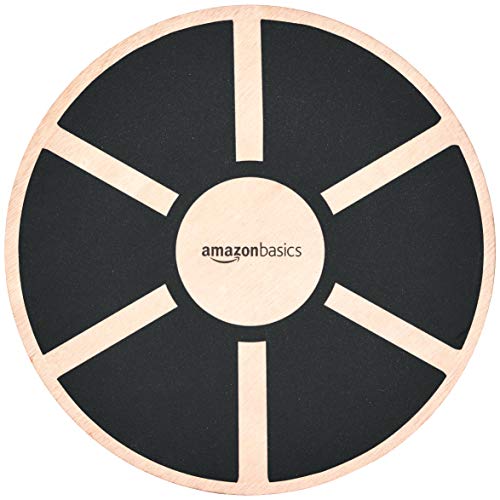
- Large 15.75-inch square platform
- Supports up to 265 pounds
- Works for balance, core, planks, and push-ups
Best For: General home, gym, and rehab-center balance training
Best Guided Rehab Set

- Single-leg bamboo design for focused control
- Two levels with quick-release adjustment
- Guide, scraper tool, QR routines, and bag included
Best For: Portable, structured ankle rehab and mobility training
Best Progressive Pick
Affinity Lyfe Ankle Balance Board
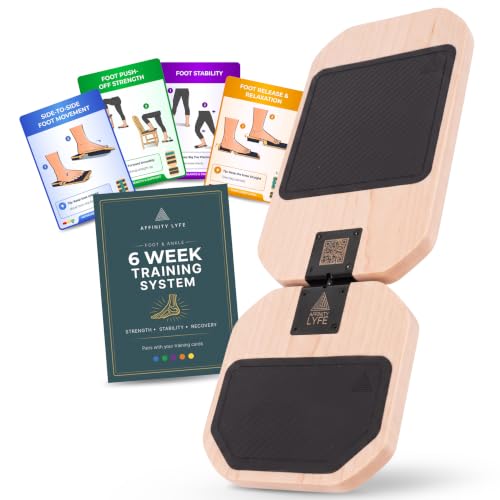
- Adjustable bars support gradual progression
- Single-leg design targets each ankle
- Includes 25 cards and a six-week plan
Best For: Structured, progressive ankle mobility and stability training
Best Guided Rehab System
AxisBoard Ankle Rehab Balance Board

- Includes lifetime access to Sidekick app programs
- Offers 900+ adjustable peg configurations
- Supports mobility, stability, and lower-leg training
Best For: App-guided rehabilitation and progressive foot training
Best Portable Wood Trainer
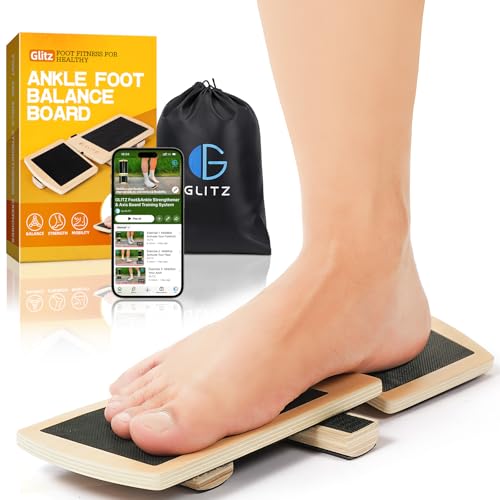
- Adjustable bars target different foot areas
- Includes a video exercise guide
- Lightweight birch wood design is portable
Best For: Portable ankle mobility and stability practice
Best Adjustable Pick – Adjustable Ankle & Foot Strength Board
If you want a balance board for ankle mobility that can adapt as your training changes, this adjustable birch-wood model offers multiple setup options for controlled ankle, foot, calf, and single-leg exercises.
Best For: Users seeking customizable ankle strengthening, foot balance, calf stretching, or progressive single-leg stability work at home, in the gym, or during rehab routines.
Pros:
- Adjustable pegs, movable panels, and three removable balance bars support varied training setups.
- Textured non-slip surface and layered birch construction provide a stable training platform.
- Supports ankle mobility, dorsiflexion, arch activation, calf flexibility, and balance work.
- Compact and portable, with a stated maximum weight recommendation of 300 pounds.
Cons:
- Its many adjustment options may require more setup than a fixed board.
- The notes do not specify a warranty or detailed dimensions.
This is the most configurable option in the group, making it useful when you want to vary difficulty and target different parts of the foot and ankle rather than perform only one type of stretch.
Best Multi-Mode Option – 3-in-1 Slant & Rotating Balance Board
This 3-in-1 balance board for ankle mobility combines adjustable calf stretching with 180-degree directional balance and 360-degree rotational training, giving you several ways to work on lower-leg flexibility and control.
Best For: Beginners and experienced users who want one board for calf stretching, ankle recovery routines, directional balance, rotational balance, and core training.
Pros:
- Six incline angles from 20 to 45 degrees allow gradual calf-stretch progression.
- Switches between slant, 180-degree, and 360-degree balance modes.
- Non-slip PVC sandpaper footing and EVA floor protection support secure use.
- Includes a training poster and folds flat for storage or transport.
Cons:
- The multiple modes may be more equipment than needed for simple ankle stretching.
- The product title states a 460-pound capacity, while the details list 300 pounds; verify the current specification before purchase.
Its broad range of angles and balance modes makes this a versatile choice for mobility sessions that progress from gentle stretching to more demanding stability and coordination work.
Best Progressive Set – Cork Foot & Ankle Balance System
For shoppers comparing a balance board for ankle mobility with a more progressive training system, this set pairs a barefoot-friendly cork board with an ankle board and two bar styles for adjustable challenge.
Best For: Rehab, fall-prevention practice, seniors, athletes, and users who want to move from smoother beginner balance work to more unstable training.
Pros:
- Combines cork and wood boards for foot, ankle, and lower-leg training.
- Round bars offer smoother movement, while pointed bars increase instability.
- Cork provides a non-slip, barefoot-friendly surface for foot and arch activation.
- Compact design is suited to home workouts, yoga, and physical therapy routines.
Cons:
- The stated fit is for approximately adult foot sizes 8–12.
- Maximum recommended weight is 200 pounds, lower than several alternatives.
- Greater instability from pointed bars may not suit beginners immediately.
This is a strong fit when progression matters: begin with the round bars for controlled stability work, then increase the challenge with the pointed bars as confidence improves.
Best Simple Slant Board – 2-in-1 Calf Stretch & Balance Board
This 2-in-1 balance board for ankle mobility is a straightforward option for calf stretching, ankle drills, squat warm-ups, and balance practice, with three incline settings and a wooden platform rated for up to 450 pounds.
Best For: Home and gym users who want a compact wooden board for routine calf stretching, ankle mobility, warm-ups, and basic stability training.
Pros:
- Combines slant-board stretching with balance training in one piece of equipment.
- Three angles—25, 30, and 35 degrees—make it easier to adjust the stretch.
- Sturdy wooden construction and a stated 450-pound capacity support varied users.
- Useful for mobility sessions, squats, warm-ups, cool-downs, and standing-desk movement.
Cons:
- It offers fewer angle settings than the six-angle model in this roundup.
- The notes do not provide separate dimensions for a dedicated balance mode.
- Its rectangular design may be less specialized for advanced multi-directional balance training.
Choose this model if you value simplicity and regular use over numerous configurations. The three incline settings cover common calf and ankle mobility needs while the second mode adds basic balance practice.
Best Single-Leg Progression – Targeted Ankle Balance Board
If you want a balance board for ankle mobility that emphasizes one-foot training, this compact wooden model offers two difficulty levels. Its interchangeable semicircular and triangular supports let you begin with gentler wobbling and progress to more challenging instability.
Best For: Adults and seniors working on ankle stability, foot strength, balance, or at-home physical-therapy-style exercises.
Pros:
- Single-leg design focuses training on one ankle and foot at a time.
- Two support styles provide beginner and advanced progression options.
- Non-slip grip pads and a smooth bonded-pine surface support barefoot or socked use.
- Includes a carry bag and illustrated quick-start guide.
Cons:
- Single-leg training may feel demanding for beginners without nearby support.
- The compact platform is designed for focused ankle work rather than broad, two-foot exercises.
Choose this model when targeted ankle practice and adjustable instability matter more than a large general-purpose balance surface. Its portable design also makes it practical for home, gym, office, or travel use.
Best Versatile Trainer – Amazon Basics Wood Wobble Board
For shoppers seeking a balance board for ankle mobility that can also support broader workouts, this Amazon Basics wood wobble board provides a larger 15.75-inch square platform. The slip-resistant top is suited to standing balance work, planks, push-ups, and targeted strengthening exercises.
Best For: Adults and athletes who want one board for balance, core, coordination, posture, and general home or gym exercises.
Pros:
- Larger platform accommodates a range of standing and floor-based exercises.
- Solid wood construction supports up to 265 pounds.
- Slip-resistant surface helps provide a secure grip during workouts.
- Backed by an Amazon Basics one-year limited warranty.
Cons:
- It does not offer the single-leg-focused design or adjustable levels listed for the specialized ankle boards.
- Must be used on a dry, non-slip surface; the instructions warn against wet or smooth surfaces.
This is the practical pick if ankle work is only one part of your routine. Its broad platform and exercise versatility make it better suited to general balance and core training than narrowly focused ankle rehabilitation.
Best Guided Rehab Set – Bamboo Ankle Strengthener
This bamboo balance board for ankle mobility is built around focused, single-foot training and quick progression. Its quick-release system offers two training levels, while the included scraper tool and photo-based guide add structure to ankle, foot, and balance exercises.
Best For: Adults seeking a portable set for ankle stability, mobility, foot strength, physical-therapy-style training, or recovery routines.
Pros:
- Single-leg format supports focused ankle and foot control.
- Quick-release system makes switching between two training levels easier.
- Smooth bamboo construction and a high-grip surface are designed for comfortable, stable use.
- Includes a scraper tool, photo-based guide, QR-linked routines, and carry bag.
Cons:
- The supplied details do not list a maximum user weight.
- Its narrow 11.42-by-4.33-inch format may be less suitable for broad, two-foot balance exercises.
Consider this set if guided progression and portability are priorities. The included training materials and quick-release adjustment make it a more structured option for users who want support while building a consistent ankle routine.
Best Progressive Pick – Affinity Lyfe Ankle Balance Board
If you want a balance board for ankle mobility that can support gradual progression, this Affinity Lyfe model combines adjustable training bars with single-leg practice. Its guided materials also make it easier to follow a structured routine instead of guessing which exercises to try.
Best For: Adults who want adjustable ankle strengthening, mobility, and balance training with a guided plan.
Pros:
- Interchangeable round and triangle bars provide multiple difficulty levels.
- Single-leg design helps isolate one foot and ankle at a time.
- Includes 25 exercise cards, a six-week plan, and QR training videos.
- Solid maple wood construction with a non-slip barefoot grip.
Cons:
- Its compact single-leg format may not suit users seeking a larger two-foot platform.
- The guided plan is designed for adults, so it may not be appropriate for every user.
This is a particularly flexible choice for buyers who want one ankle board that can become more challenging over time. The adjustable setup and included programming add practical value for progressive home training.
Best Guided Rehab System – AxisBoard Ankle Rehab Balance Board
For shoppers comparing a balance board for ankle mobility with a more structured rehabilitation system, the AxisBoard pairs adjustable peg configurations with app-based programs. It is designed to address foot and ankle stability, balance, dorsiflexion mobility, and lower-leg strength.
Best For: Athletes, rehabilitation users, and home trainees who prefer app-guided ankle and foot exercises.
Pros:
- Sidekick app includes lifetime access to structured 10-day programs.
- Stackable pegs offer more than 900 configurations for adjustable training.
- Split-board design targets stabilizing muscles in the foot and ankle.
- Anti-slip surface, portability, lifetime warranty, and HSA/FSA eligibility.
Cons:
- The large number of configurations may require time to learn.
- Its app-centered approach may be less appealing to users who prefer printed instructions.
The AxisBoard stands out when clear daily programming matters as much as the equipment itself. Its extensive setup options make it suitable for users who want to adjust exercises across different mobility and stability goals.
Best Portable Wood Trainer – Compact Ankle Balance Board
This compact balance board for ankle mobility uses adjustable Velcro-attached bars to vary foot and ankle positioning during stability exercises. Its lightweight birch plywood construction and portable design make it practical for home use, therapy sessions, work, or travel.
Best For: Athletes, patients, and anyone wanting a lightweight board for adjustable foot, ankle, and balance exercises.
Pros:
- Adjustable bars allow targeted training from the arches to the calves.
- Includes a video guide to help demonstrate exercise form.
- Birch plywood construction and black anti-slip pads provide a sturdy footing surface.
- Lightweight and compact for use at home, outdoors, or at work.
Cons:
- The small format may provide less room than a larger balance platform.
- It has fewer supplied training resources than models with extensive exercise cards or app programs.
- The listed maximum weight recommendation is unusually high, so buyers should verify suitability for their intended use.
This model is a straightforward option for users who prioritize portability and adjustable positioning. It offers a simple way to practice ankle flexibility, balance, and stability without a bulky setup.
How We Picked the Best Balance Board for Ankle Mobility
We compared these boards by looking at the features that matter most for ankle-focused training: range of motion, stability, adjustability, surface traction, construction, weight capacity, and ease of progression. We also considered whether each design supports common uses such as calf stretching, single-leg balance, foot strengthening, physical therapy, and gradual return from injury.
Because ankle needs vary, no single board is ideal for everyone. Adjustable models can accommodate changing mobility and strength, while fixed wobble or axis boards may provide a simpler and more repeatable training experience. Rehab-oriented systems earn extra consideration when they include exercise guidance or allow controlled, low-impact movement.
Quick Comparison
| Best for | Look for | Most useful design |
|---|---|---|
| Calf and ankle stretching | Angled surface and stable footing | Slant board |
| Progressive balance work | Adjustable difficulty or interchangeable bars | Adjustable or modular board |
| Rehabilitation | Controlled movement, traction, and guidance | Axis or rehab-focused board |
| General conditioning | Durable deck and nonslip base | Wobble board |
Key Buying Factors for a Balance Board for Ankle Mobility
Movement and Difficulty
Choose a board that matches your current control. Beginners and people returning from injury generally benefit from a wider, more stable platform or a model with adjustable settings. More demanding wobble, axis, and 360-degree designs are better suited to users who can already stand comfortably and maintain alignment.
Traction and Stability
A grippy deck and nonslip contact points are essential. The board should stay planted on a hard, level surface without excessive sliding. A secure surface lets you focus on ankle movement instead of bracing against avoidable instability.
Construction and Capacity
Wood, bamboo, and reinforced composite platforms can all work well, but inspect the stated weight limit and overall build quality. A higher capacity can add confidence, especially during dynamic exercises or when the board is shared by multiple users.
Portability and Storage
Compact boards are easier to use consistently. If you plan to train at home, work, or while traveling, prioritize a lightweight design that does not require permanent setup. Slant boards may be especially convenient for quick calf stretches, while larger trainers can provide more exercise variety.
Guidance and Rehab Suitability
Exercise cards, structured plans, and clearly defined difficulty levels can help users progress safely. If you are managing pain, recovering from an injury, or using the board as part of physical therapy, favor controlled designs and follow a clinician’s recommendations rather than pushing into pain.
Who Should Buy Which Balance Board for Ankle Mobility?
Choose an Adjustable or Modular Board If…
You want to increase difficulty gradually, share the board with others, or combine balance training with foot and calf work. These designs offer the most flexibility as your mobility improves.
Choose a Slant Board If…
Your priority is calf flexibility, ankle dorsiflexion, or a simple stretching routine. Slant boards are typically easier to learn than fully unstable platforms, though they may provide less balance challenge.
Choose a Rehab-Focused Axis Board If…
You need targeted single-leg control, physical-therapy exercises, or a system designed around ankle and foot rehabilitation. Guidance and predictable movement can be more valuable than maximum instability.
Choose a Wobble Board If…
You want a versatile trainer for general balance, core control, and lower-leg conditioning. Start near a wall or sturdy support, use slow movements, and progress only when you can maintain good posture.
Whichever Balance Board for Ankle Mobility you choose, consistency matters more than extreme difficulty. Begin with short sessions, keep the board on a stable surface, and stop if you experience sharp pain, numbness, or worsening symptoms.