Whether you train by heart-rate zones, track daily wellness, or want a simpler way to monitor workouts, the right device can make your data more useful.
We compared chest straps, fitness trackers, and smartwatches to help you find the best fit for your training style, comfort preferences, and budget.
Best 10 Heart Rate Monitors for Men Picks for 2026
Most Accurate Chest Strap

- Highly accurate heart-rate sensing
- Bluetooth, ANT+, and 5 kHz connectivity
- Waterproof with internal memory
Best For: Athletes who want precise, flexible chest-strap tracking
Best for Data-Driven Training

- Real-time heart rate and HRV data
- Stores workouts when a watch is unavailable
- Rechargeable battery lasts up to two months
Best For: Garmin athletes seeking detailed training metrics
Best Wrist-Worn Value

- 24/7 heart-rate and activity tracking
- 120-plus exercise modes
- Call and message notifications
Best For: Everyday fitness tracking from the wrist
Best Long-Battery Chest Strap

- Up to one year of battery life
- Real-time heart rate and HRV data
- Machine-washable, 3 ATM strap
Best For: Garmin users wanting durable, low-maintenance tracking
Best All-Around Smartwatch
MorePro Heart Rate Fitness Tracker
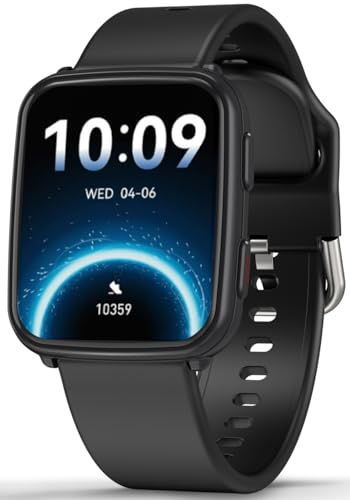
- 24/7 heart rate and wellness tracking
- 120+ sport modes and sleep monitoring
- Notifications, IP68 rating, and up to 7-day battery
Best For: Everyday fitness and smartwatch features
Best Chest Strap
COOSPO H808S Bluetooth Heart Rate Monitor
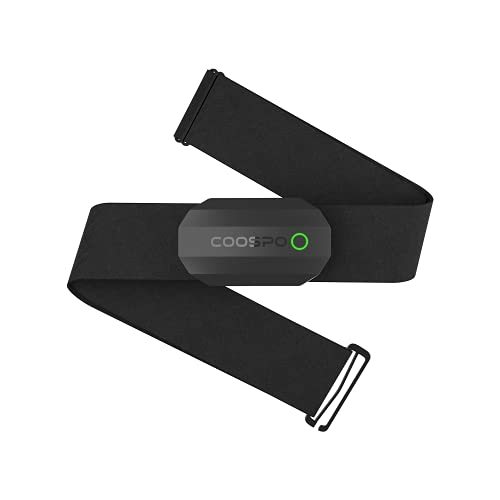
- Real-time heart rate monitoring with ±1 BPM claim
- Bluetooth and ANT+ connectivity
- IP67 rating and 300-hour replaceable battery
Best For: Dedicated workout heart-rate tracking
Best Simple Option
LIVIKEY No-App Fitness Tracker Watch

- Core tracking works without an app or phone
- Heart rate, sleep, steps, and nine sport modes
- IP68 rating and 5–7 days of use
Best For: Simple everyday activity tracking
Versatile Smartwatch Pick

- Heart rate and sleep tracking with 120 sports modes
- 1.83-inch display, calls, notifications, and music control
- IP67 water resistance with 5–7 days of active use
Best For: Everyday fitness tracking plus smartwatch connectivity
Long-Battery Tracking Pick
Amzhero D26 Health Fitness Tracker

- 24/7 heart rate, blood oxygen, blood pressure, and sleep tracking
- 5ATM waterproof design with multiple sports modes
- Up to 15 days of standby time and one-year warranty
Best For: Active users seeking broad metrics and water resistance
Compact AMOLED Pick

- 24/7 heart rate, sleep, blood oxygen, and blood pressure tracking
- Compact 1.10-inch AMOLED display with 25 sport modes
- 5ATM waterproofing and 10–14 days of regular use
Best For: Wellness tracking in a compact, swim-friendly design
Most Accurate Chest Strap – Polar H10
For shoppers comparing heart rate monitors for men, the Polar H10 is a focused chest-strap option built around accurate readings and broad connectivity. It supports Bluetooth, ANT+, and 5 kHz connections, including simultaneous Bluetooth connections for compatible equipment and apps.
Best For: Athletes who prioritize precise heart-rate tracking and flexible device compatibility.
Pros:
- Recognized for highly accurate heart-rate measurement.
- Supports Bluetooth, ANT+, and 5 kHz connectivity.
- Waterproof design with internal memory for multiple hours.
- Strap includes improved electrodes, silicone dots, and an easy-use buckle.
Cons:
- Requires a CR2025 button-cell battery.
- Chest-strap format may be less convenient than a wrist-worn tracker.
The H10 is a strong choice when dependable workout data matters more than smartwatch features. Its M–XXL strap range, 400-hour average battery life, and wide compatibility make it practical for structured training.
Best for Data-Driven Training – Garmin HRM 600
The Garmin HRM 600 is designed for men seeking advanced heart rate monitors for men with detailed training data. It sends real-time heart rate and HRV information to compatible Garmin devices, equipment, and apps, while also recording workouts when wearing a watch is impractical.
Best For: Runners, multisport athletes, and Garmin users who want expanded performance metrics.
Pros:
- Provides real-time heart rate and HRV data.
- Tracks running dynamics such as stride length and vertical oscillation with compatible watches.
- Records workouts for later syncing through Garmin Connect.
- Machine-washable strap and rechargeable battery with up to two months of life.
Cons:
- Several advanced running metrics require a compatible Garmin smartwatch.
- Shorter stated battery life than the HRM 200.
Choose the HRM 600 if training analysis is a priority. Its stored workout data, swim support, and running-dynamics features offer more than basic heart-rate monitoring, especially within the Garmin ecosystem.
Best Wrist-Worn Value – H32 Ultra Fitness Tracker
Fitness Tracker Activity Watch with Heart Rate Sleep Tracker Blood Oxygen Trackertep Calorie Counter
Check Price On AmazonUnlike a dedicated chest strap, this H32 Ultra combines heart-rate tracking with everyday smartwatch functions. It is a practical alternative for shoppers looking at heart rate monitors for men who want wrist-based monitoring, sleep tracking, exercise modes, and phone notifications in one device.
Best For: Everyday users who want broad activity tracking and health metrics from a wrist-worn device.
Pros:
- Offers 24/7 heart-rate, blood oxygen, and blood-pressure monitoring.
- Includes sleep tracking and more than 120 exercise modes.
- Tracks steps, distance, and calories throughout the day.
- Provides call and message notifications for connected smartphones.
Cons:
- It is a general fitness tracker rather than a dedicated chest-strap sensor.
- Health metrics are intended for tracking and should not be treated as medical measurements.
- Some advertised features depend on smartphone compatibility and app use.
The H32 Ultra makes sense when convenience and feature variety matter more than specialized training data. Its 1.58-inch display, IP68 waterproof rating, and stated battery life of up to seven days support regular daily use.
Best Long-Battery Chest Strap – Garmin HRM 200
The Garmin HRM 200 is a straightforward chest-strap choice for men who want reliable heart rate monitors for men without frequent charging. It transmits real-time heart rate and HRV data to compatible Garmin devices, fitness equipment, apps, and smartphones.
Best For: Garmin users who want a durable, low-maintenance monitor for regular workouts.
Pros:
- Captures real-time heart rate and HRV data.
- Offers up to one year of battery life with a user-replaceable battery.
- Machine-washable strap simplifies cleaning.
- Has a durable build with a 3 ATM water rating.
Cons:
- Requires compatible devices or apps to view transmitted data.
- Provides fewer specialized features than the HRM 600.
For users who value simplicity and battery longevity, the HRM 200 is an appealing Garmin option. Its adjustable M–XL strap, replaceable battery, and 3 ATM rating make it well suited to consistent training routines.
Best All-Around Smartwatch – MorePro Heart Rate Fitness Tracker
For shoppers comparing heart rate monitors for men, the MorePro combines 24/7 heart rate tracking with activity, sleep, blood oxygen, and blood pressure monitoring. Its smartwatch design also adds notifications, sport modes, and everyday tools for users who want more than a standalone sensor.
Best For: Everyday fitness tracking, broad activity coverage, and smartwatch convenience.
Pros:
- Tracks heart rate continuously and supports on-demand blood oxygen checks.
- Offers 120+ sport modes plus steps, distance, calories, and training time.
- Includes sleep tracking, notifications, IP68 water resistance, and up to 7 days of normal-use battery life.
Cons:
- Health readings are intended for wellness tracking and are not for medical use.
- Requires a compatible Android or iOS smartphone for its connected features.
- Its women’s health tools may be unnecessary for some male users.
This is the most feature-rich option in the group, especially for someone who wants heart-rate data alongside a full daily activity and notification experience. Choose it over a chest strap if smartwatch functions matter as much as workout monitoring.
Best Chest Strap – COOSPO H808S Bluetooth Heart Rate Monitor
The COOSPO H808S is a focused choice among heart rate monitors for men who prioritize real-time workout data over smartwatch features. Its chest-strap design supports Bluetooth and ANT+ connections, allowing it to pair with compatible training devices and fitness apps.
Best For: Exercise-focused users who want a dedicated chest-strap heart rate sensor.
Pros:
- Designed to provide real-time heart rate data with stated ±1 BPM accuracy.
- Supports both Bluetooth 4.0 and ANT+ for broad device connectivity.
- Offers IP67 water resistance and up to 300 hours of battery life from a replaceable CR2032 cell.
- Works with listed platforms including Peloton, Strava, Zwift, Wahoo Fitness, and Polar Beat.
Cons:
- Requires moistening the electrode zones before use.
- Does not include a built-in display for viewing readings directly.
- The strap is recommended for replacement after six months or 300 washes.
For training sessions where responsive heart-rate data is the main priority, this dedicated chest strap is the most specialized pick. It is less convenient than a smartwatch for daily wear, but its dual connectivity and long battery life suit structured workouts.
Best Simple Option – LIVIKEY No-App Fitness Tracker Watch
For men seeking heart rate monitors for men without a complicated setup, the LIVIKEY tracker is designed to work without an app or phone connection for core tracking. It monitors heart rate and sleep while also recording steps, calories, distance, and active time.
Best For: Users who want straightforward wrist-based tracking with minimal smartphone dependence.
Pros:
- Core fitness tracking does not require an app or smartphone connection.
- Monitors heart rate and sleep, including deep sleep, light sleep, and awake time.
- Provides nine sport modes plus steps, calories, distance, and active-time tracking.
- Offers IP68 water resistance and 5–7 days of continuous use after charging.
Cons:
- It does not make calls or send texts.
- It provides fewer sport modes than the MorePro tracker.
- Some features, such as daily step goals and manual heart-rate mode, use the app.
This tracker makes sense if simplicity is more important than advanced connectivity. It still supports phone notifications and app-based extras, but its ability to handle basic tracking without a phone is the key differentiator.
Versatile Smartwatch Pick – TG08 Heart Rate Fitness Watch
For shoppers comparing heart rate monitors for men, the TG08 combines wrist-based heart rate and sleep monitoring with a broad selection of activity modes. Its large display, Bluetooth calling, and phone notifications make it a practical choice for everyday fitness and connected use.
Best For: Men who want a feature-rich smartwatch for workouts, notifications, and general wellness tracking.
Pros:
- Tracks heart rate and sleep alongside 120 sports modes.
- 1.83-inch HD display with customizable watch faces.
- Bluetooth calling, music control, and app notifications.
- IP67 water resistance and claimed 5–7 days of active battery use.
Cons:
- IP67 protection is less suited to swimming than a 5ATM-rated tracker.
- Step recording begins after more than 20 steps.
- It relies on a connected smartphone for some features and is not presented as a medical device.
The TG08 is a strong all-around option when heart rate tracking is only part of what you want from a wearable. Choose it for its smartwatch functions and extensive activity coverage rather than for specialized clinical monitoring.
Long-Battery Tracking Pick – Amzhero D26 Health Fitness Tracker
Among heart rate monitors for men, the Amzhero D26 stands out for combining 24/7 heart rate tracking with blood oxygen, blood pressure, stress, and sleep measurements. Its 5ATM waterproofing and extended battery claim suit people who want to wear a tracker through workouts and daily routines.
Best For: Active users who prioritize long battery life, water resistance, and broad health metrics.
Pros:
- Monitors heart rate, blood oxygen, blood pressure, stress, and sleep.
- Supports multiple activities, including running, hiking, cycling, swimming, and yoga.
- 5ATM waterproof rating is suitable for swimming according to the supplied details.
- Claims up to 15 days of standby time and includes a one-year warranty.
Cons:
- The 1.47-inch display is smaller than the TG08’s screen.
- GPS is provided through a connected smartphone rather than built in.
- Health readings should be treated as wellness information, not medical diagnosis.
The D26 is a sensible fit for users who want more health metrics and stronger water resistance than a basic activity band. Its main trade-off is that location tracking depends on a phone connection.
Compact AMOLED Pick – Zeacool 5ATM Fitness Tracker
The Zeacool tracker is a compact option for shoppers seeking heart rate monitors for men with additional wellness features. It pairs 24/7 heart rate monitoring with sleep analysis, blood oxygen and blood pressure tracking, 25 sport modes, and a bright AMOLED screen.
Best For: Users who want a small, lightweight-looking tracker with detailed wellness features and swim-friendly water resistance.
Pros:
- Tracks heart rate, blood oxygen, blood pressure, temperature, and sleep stages.
- 1.10-inch AMOLED touchscreen with multiple watch faces.
- 5ATM waterproof design for activities including swimming and bathing.
- Claims 10–14 days of regular use and up to 30 days of standby time.
Cons:
- Its 1.10-inch display is relatively compact for viewing notifications and workout data.
- GPS and phone-connected functions depend on a compatible smartphone.
- Some features, such as menstrual-cycle reminders, may be less relevant to every buyer.
The Zeacool offers a balanced feature set in a smaller tracker format. It is particularly appealing if you value an AMOLED display, long stated battery life, and 5ATM protection over a larger smartwatch screen.
How We Picked the Best Heart Rate Monitors for Men
We evaluated these Heart Rate Monitors for Men by looking at sensor design, tracking features, connectivity, comfort, water resistance, battery expectations, and overall practicality. Chest straps generally prioritize workout accuracy and responsive readings, while wrist-worn trackers add convenience and broader health features such as sleep, step, blood oxygen, and activity monitoring.
We also considered whether each device supports common training setups. ANT+ is useful for pairing with compatible bike computers and gym equipment, while Bluetooth is widely supported by phones and fitness apps. For everyday wear, display quality, controls, charging needs, and app requirements can matter as much as heart-rate performance.
Quick Comparison
- Best for training accuracy: A dedicated chest strap such as the Polar H10 or Garmin HRM series.
- Best for broad compatibility: Models offering both ANT+ and Bluetooth connectivity.
- Best for everyday wellness tracking: A fitness tracker or smartwatch with heart rate, sleep, steps, and blood oxygen features.
- Best for low-maintenance use: A tracker with a built-in screen and minimal dependence on a phone.
- Best for swimming and outdoor workouts: Look for clear water-resistance ratings and a secure fit.
Key Buying Factors for Heart Rate Monitors for Men
Chest Strap Vs. Wrist Tracker
Chest straps sit closer to the heart and typically deliver faster, steadier readings during intervals, cycling, and high-intensity training. Wrist trackers are easier to wear throughout the day and can combine heart-rate data with notifications, sleep tracking, steps, and other features.
Connectivity and App Support
Check whether the monitor works with your phone, watch, training app, or gym equipment. ANT+ and Bluetooth support provide more flexibility, but some trackers rely heavily on a companion app. If you prefer independent use, choose a model with onboard readings and a usable display.
Comfort, Fit, and Durability
A chest strap should stay secure without restricting breathing, while a watch should fit closely enough for consistent optical readings. For swimming, rainy runs, or heavy sweating, verify the exact waterproof rating rather than assuming every fitness tracker is suitable for immersion.
Health Data Expectations
Heart-rate monitors are useful for training feedback and general wellness trends, but consumer blood pressure and blood oxygen features should not replace clinical equipment or medical advice. Seek professional guidance for symptoms or health decisions.
Who Should Buy Which Heart Rate Monitors for Men?
Serious runners, cyclists, and interval trainees should start with a chest strap, especially if accuracy and rapid response are priorities. Gym users and casual exercisers may prefer a wrist tracker that shows heart rate while also recording steps, calories, and workouts. All-day wellness shoppers should look for comfortable wear, sleep tracking, battery life, and a clear companion app. Swimmers and outdoor users should prioritize a secure fit and an appropriate water-resistance rating. Finally, multi-device users should choose ANT+ and Bluetooth compatibility to avoid being locked into one ecosystem.