If you want more focused shoulder work without adding a separate machine, this Mikolo Lateral Raise Attachment review examines a rack-mounted solution for lateral-delt training.
The attachment is built for squat racks with 1-inch holes and emphasizes controlled movement, rotating grips, and space-efficient upper-body training.
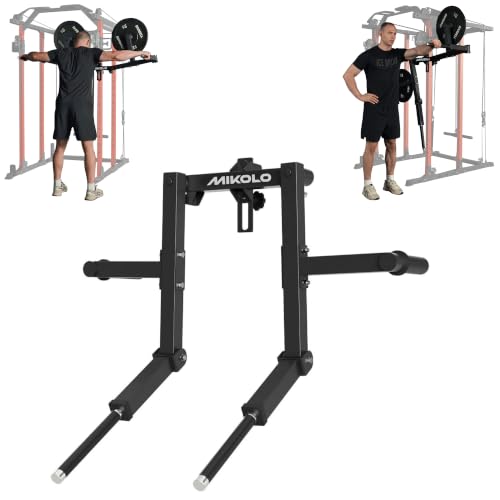
Mikolo Lateral Raise Attachment Review Summary
The Mikolo Lateral Raise Attachment is most compelling for home-gym owners who already have a compatible power rack and want a dedicated way to train the lateral deltoids.
Rather than relying entirely on free-weight lateral raises, the attachment is designed around a more guided movement pattern that can make it easier to keep the exercise focused on the target area.
It may also appeal to lifters who want to expand a rack’s exercise options without bringing in a full-size standalone machine.
The manufacturer describes the attachment as a standing lateral raise machine with a solid-steel frame, black powder-coated finish, non-slip rubber handles, and ball bearings inside the grips.
Those details point to a product designed for repeat strength-training use, although the supplied listing does not provide dimensions, weight capacity, adjustment range, or installation instructions.
That missing information is important for confirming fit before purchase.
Review Scorecard
These are editorial buyer assessments based on the supplied product information, not laboratory measurements or hands-on testing.
| Category | Score | Buyer rationale |
|---|---|---|
| Lateral-delt focus | 9/10 | The attachment is specifically designed to isolate the lateral deltoids. |
| Movement control | 8/10 | A machine-style path is intended to reduce cheating and improve consistency. |
| Handle comfort | 8/10 | Non-slip rubber grips and rotating handles are designed to support a secure hold. |
| Rack compatibility | 7/10 | It is made for squat racks with 1-inch holes, but other fit details are not supplied. |
| Construction | 8/10 | Solid steel and a black powder-coated finish suggest a durable, rust-resistant build. |
| Space efficiency | 8/10 | A rack attachment can broaden training options without requiring a separate large machine. |
| Buying confidence | 6/10 | The listing lacks key specifications such as dimensions and maximum load. |
Key Features and Specifications of Mikolo Lateral Raise Attachment
The central feature is targeted lateral-delt isolation.
The lateral deltoids help create shoulder width, but free-weight raises can become easier to “cheat” as fatigue builds.
According to the listing, this attachment uses a more controlled machine movement to help reduce improper form and keep the exercise directed toward the intended muscle group.
That makes it a specialized tool rather than a general all-purpose rack accessory.
Compatibility is based on 1-inch rack holes.
This is useful information for owners of a matching squat rack or power rack cage, but it should not be treated as universal compatibility.
Hole diameter is only one part of fit; the rack’s spacing, usable mounting area, and the attachment’s own dimensions also matter.
Since those measurements are not included in the supplied record, prospective buyers should verify the complete fit with the seller or product page before ordering.
The handles use ball bearings to allow frictionless rotation, according to Mikolo’s product description.
In practical terms, a rotating grip is intended to let the hands follow the movement more naturally instead of forcing the wrists to stay in one fixed position.
The listing also says this design can reduce strain on the wrists, forearms, and shoulders.
Those are design goals rather than independently verified results, but they are relevant considerations for anyone who finds fixed-handle raises uncomfortable.
The attachment is described as premium solid steel with a black powder-coated finish.
Steel is a sensible choice for a strength-training attachment, while powder coating is presented as providing durability and rust resistance.
The record does not include the steel gauge, weld details, finish thickness, or load rating, so the construction description supports a general durability assessment rather than a precise claim about how heavily it can be loaded.
The non-slip rubber handles are intended to provide a secure grip and reduce hand fatigue.
That could be useful during higher-repetition shoulder work, where grip comfort can influence whether the lifter maintains position through the full set.
Again, the listing does not specify handle diameter or rubber thickness, so buyers with particular grip preferences may want additional details.
The space-saving value comes from using an existing rack as the foundation.
A dedicated shoulder machine can take up substantial floor space, whereas an attachment can potentially add a narrower, more specialized movement to equipment already in the room.
The tradeoff is that the rack must be compatible and remain practical to access when the attachment is installed.
Pros and Cons of Mikolo Lateral Raise Attachment
Pros
- Purpose-built lateral-delt training: Its main movement is designed around shoulder-width and lateral-deltoid work rather than forcing a general rack accessory into that role.
- More controlled exercise path: The machine-style design is intended to discourage momentum and reduce the temptation to use improper form.
- Rotating grips: Ball-bearing handles are designed to move smoothly and support a more comfortable wrist position.
- Secure contact points: Non-slip rubber handles should help maintain control during repeated sets.
- Rack-based space savings: It can add a specialized upper-body exercise while using an existing squat rack or power rack cage.
- Durable material description: The solid-steel, powder-coated construction is appropriate for a strength-training accessory in a home gym.
Cons
- Compatibility is not fully documented: The supplied information confirms 1-inch holes but does not give the other measurements needed for a confident fit check.
- Limited published specifications: No dimensions, product weight, load capacity, or adjustment information is available in the record.
- Narrow exercise purpose: This is primarily a lateral-raise attachment, so buyers seeking a broad range of movements may get more value from a versatile cable or functional trainer.
- No hands-on evidence: The supplied job includes no personal testing notes, so smoothness, stability, assembly experience, and real-world durability cannot be confirmed here.
Who Should Buy Mikolo Lateral Raise Attachment?
This attachment makes the most sense for a home-gym owner who already has a rack with compatible 1-inch holes and specifically wants more structured lateral-raise work.
It is also a reasonable fit for lifters who prefer machine-guided movement, want to limit momentum, or find that conventional dumbbell raises do not keep the lateral deltoids engaged consistently.
The rotating handles and rubber grips add appeal for buyers who pay close attention to wrist and hand comfort.
It may suit a shoulder-focused routine particularly well, but it should be viewed as a specialization purchase.
If your rack is not confirmed compatible, the space-saving argument becomes much weaker.
Likewise, if you need cable rows, pulldowns, presses, flyes, and other movements from one addition, a cable-based system will likely be more flexible.
Buyers who require a known load rating or exact installation dimensions should wait until those specifications are confirmed.
How the Mikolo Lateral Raise Attachment Fits a Home Shoulder Routine
Isolation versus free weights
The main distinction is focus.
Free weights are simple and versatile, but the listing positions this attachment as a way to create a more controlled lateral-delt movement and reduce form breakdown.
That makes it interesting for targeted accessory work after larger compound lifts.
Why rotating handles matter
Ball-bearing grip rotation is a meaningful design choice for a raise.
It is intended to reduce friction through the hands and allow a smoother path, potentially making the movement feel less restrictive at the wrists and forearms.
The benefit remains a manufacturer claim until verified in use.
Installation and rack planning
Because the attachment depends on a squat rack, buyers should plan around access, clearance, and mounting position.
The 1-inch hole requirement is a starting point, not a complete fit guarantee.
Confirming dimensions and rack spacing is the key purchase decision.
Progression and exercise discipline
A guided station can make consistent repetitions easier to pursue, but it does not eliminate the need for sensible loading and controlled technique.
The attachment’s value is strongest when it helps the user perform lateral raises deliberately rather than simply move heavier weight.
Alternatives to Mikolo Lateral Raise Attachment
If you want a different approach, consider these credible Amazon-sold categories and product lines:
- Rogue Monster Lite rack accessories are worth considering for buyers prioritizing a broader ecosystem of rack attachments, though compatibility must still be checked carefully.
- Titan Fitness rack attachments offer another route for expanding a power rack, with the same need to verify hole size and spacing.
- Bowflex SelectTech dumbbells provide a more flexible free-weight alternative for lateral raises and other upper-body exercises, without requiring rack installation.
- CAP Barbell adjustable dumbbells are a simpler option for buyers who want basic shoulder training with minimal equipment commitment.
- Cable crossover machines are better suited to buyers who want lateral raises plus a much wider menu of upper-body movements.
Is Mikolo Lateral Raise Attachment Worth It?
The Mikolo Lateral Raise Attachment is worth considering when the buyer’s priorities are specific: a compatible 1-inch-hole rack, focused lateral-delt work, a controlled machine-style movement, and a compact way to extend an existing home gym.
Its solid-steel construction, powder-coated finish, rotating ball-bearing handles, and rubber grips are all sensible design features for that use case.
The decision is less convincing when compatibility is uncertain or when versatility matters more than shoulder isolation.
The supplied information does not establish dimensions, load capacity, or installation details, so those should be confirmed before purchase.
Overall, this Mikolo Lateral Raise Attachment review supports a conditional recommendation: it looks like a focused rack accessory for shoulder-specialist buyers, but not a universal replacement for a cable system or adjustable dumbbells.